
PSG take control against Liverpool with 2-0 first-leg win at Parc des Princes
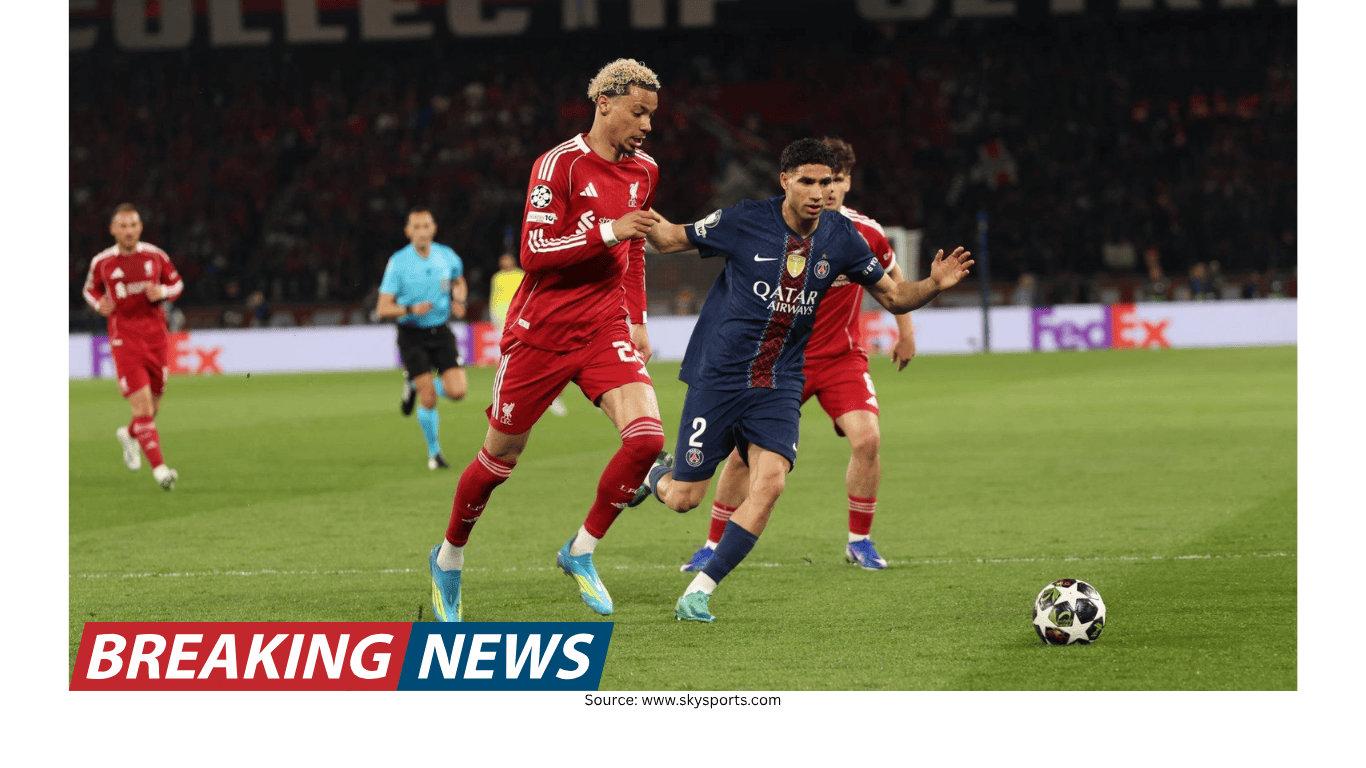
PSG 2-0 Liverpool: A one-sided first leg leaves Liverpool facing a steep climb
Paris Saint-Germain moved a step closer to the UEFA Champions League semi-finals after beating Liverpool 2-0 in the quarter-final first leg at the Parc des Princes. Goals from Desire Doue and Khvicha Kvaratskhelia settled a contest that was largely controlled by the reigning holders, leaving Liverpool with a significant task to turn the tie around in the return match at Anfield.
In front of an attendance of 47,511, PSG’s tempo and attacking variety repeatedly exposed Liverpool, who struggled to create meaningful openings. Liverpool finished the night with only three shots and none on target, a stark indicator of how little they were able to impose themselves on the game.
How the match was decided
The breakthrough came via Doue, whose opener took a deflection on its way in. While the goal itself carried an element of fortune, it reflected PSG’s sustained pressure and willingness to shoot and combine around Liverpool’s defensive structure.
PSG then doubled their lead through Kvaratskhelia, who punished poor defending with a high-quality finish. The move stemmed from Ryan Gravenberch failing to track Kvaratskhelia’s run, allowing the forward to latch onto a pass from Joao Gomes, cut inside with composure, and slot home. It was a decisive moment in a match where Liverpool were frequently forced to react rather than dictate.
Khvicha Kvaratskhelia was named Player of the Match, underlining his influence in the final third and the clinical edge he provided when the opportunity arrived.
Liverpool’s away struggles deepen
The defeat was Liverpool’s fourth consecutive away loss, a sequence they had not experienced since April 2012. That statistic added further weight to a difficult evening and provided an unwelcome backdrop to a tie that now requires a major response in the second leg.
Liverpool were fortunate the deficit was not heavier. PSG created enough chances to score more than twice, and the home side’s finishing at times lacked the ruthlessness their overall play deserved. Even so, the 2-0 scoreline still leaves Liverpool needing a significant improvement to keep their European campaign alive.
PSG’s dominance and the role of Mamardashvili
While PSG were the superior side across the pitch, Liverpool goalkeeper Giorgi Mamardashvili kept the tie from drifting even further out of reach. He produced fine saves from multiple PSG attackers, including Doue, Kvaratskhelia, Ousmane Dembele, and Achraf Hakimi.
Those interventions mattered because PSG’s control was not limited to possession alone; it extended to the quality and frequency of their chances. Without Mamardashvili’s shot-stopping, Liverpool’s prospects for the second leg would look even more daunting.
Penalty flashpoints and VAR involvement
The match also featured contentious penalty moments that left PSG aggrieved. VAR overturned the referee’s decision to penalise Ibrahima Konate for a foul on Warren Zaire-Emery. Later, PSG felt Konate should have been punished for a push on Nuno Mendes, but no penalty was awarded on that occasion either.
Those incidents did not change the overall direction of the game, yet they contributed to the sense that PSG were consistently on the front foot and spending long spells in areas where decisive calls can influence momentum.
Slot’s tactical switch: Back five, but no solution
Liverpool head coach Arne Slot made a notable tactical adjustment, setting up with a back five in an attempt to contain PSG’s threat. The change, however, did not disrupt the hosts’ rhythm. PSG continued to move the ball with speed and purpose, finding ways to play through Liverpool’s pressure or exploit space behind when Liverpool committed to man-for-man approaches.
One of the most striking selection details was the absence of Mohamed Salah from the starting line-up. Salah was an unused substitute, coming only two weeks after confirming his exit at the end of the campaign. Liverpool’s reshaped approach did not translate into attacking cohesion, and the lack of a shot on target reflected the difficulty they had progressing into dangerous positions.
PSG’s midfield and attacking balance
PSG’s performance was built on control in midfield and consistent movement in the forward line. Vitinha and Joao Neves were among those credited with strong displays, helping PSG maintain tempo and sustain pressure. Zaire-Emery also played a key role in the contest, including involvement in the penalty appeals that followed one of the night’s major officiating decisions.
In attack, Doue, Dembele, and Kvaratskhelia repeatedly asked questions of Liverpool’s defensive shape. Even when Liverpool attempted to press higher, PSG often found solutions, either playing through the press or using runs in behind to stretch the back line.
Liverpool’s difficulties: Limited threat and defensive lapses
Liverpool’s problems were twofold: they struggled to create chances and they were vulnerable when PSG attacked at speed. The second goal, in particular, highlighted a costly lapse in tracking and organisation, with Gravenberch failing to follow Kvaratskhelia’s movement before the forward finished with quality.
Slot attempted to change the dynamic by introducing Alexander Isak, who made his first appearance since December. The substitution was designed to spark a response, but Liverpool still never looked close to scoring and continued to be opened up during the closing stages.
What Arne Slot said after the match
Slot acknowledged both the scale of PSG’s superiority and the importance of keeping the tie alive. Speaking after the game, he said Liverpool were “lucky to only lose 2-0” because PSG created more chances than they converted. He also described the first goal as feeling harsh, suggesting Liverpool “didn't give anything away” in that moment.
Despite the disappointment, Slot stressed that the tie remains salvageable, pointing to the impact Anfield can have. He noted that PSG moved the ball with “incredible tempo all over the place,” making it difficult for Liverpool to build attacks. He also explained that Liverpool’s pressing had mixed success: at times it worked, but PSG frequently played through it.
Slot described the trade-offs in Liverpool’s defensive approaches. When Liverpool went man-for-man, PSG played in behind. When Liverpool dropped into a low block, they “hardly conceded,” though he pointed out the goal still came while Liverpool were set deep. He referenced a similar experience from the previous season, saying he had stood in a similar position after a 1-0 win in Paris in a game he felt was “exactly the same,” but that the match at Anfield was “completely different.” That comparison underpinned his belief that Liverpool can still compete in the second leg.
Player ratings snapshot
Individual ratings reflected the overall pattern of the match, with PSG’s top performers clustered around the higher marks and Liverpool’s defenders and midfielders generally lower.
- PSG: Safonov 7; Hakimi 7; Marquinhos 7; Pacho 8; Nuno Mendes 7; Zaire-Emery 7; Vitinha 8; Joao Neves 8; Doue 8; Dembele 7; Kvaratskhelia 8
- Liverpool: Mamardashvili 8; Gomez 5; Konate 5; Van Dijk 5; Frimpong 6; Kerkez 6; Szoboszlai 6; Gravenberch 5; Mac Allister 5; Wirtz 6; Ekitike 5
The contrast between Mamardashvili’s rating and the overall outcome captured Liverpool’s predicament: the goalkeeper performed strongly, but the team in front of him could not relieve pressure or threaten PSG’s goal.
What the result means for the second leg
PSG will take a 2-0 advantage into the return fixture, having been the better side by a clear margin in Paris. For Liverpool, the challenge is not only to score but to find a way to do so while preventing PSG from exploiting the spaces that opened up repeatedly in the first leg.
The scoreline keeps the tie alive, yet the performance level required from Liverpool at Anfield will need to rise sharply. Slot’s comments suggested belief in the difference a home atmosphere can make, but Liverpool will also need greater control in possession and more consistent attacking execution than they showed at the Parc des Princes.
Key talking points
- PSG’s control: The hosts dominated the contest and could have won by more, but were held to two goals by a combination of wasteful finishing and strong goalkeeping.
- Liverpool’s lack of threat: Three shots and none on target underlined how effectively PSG limited Liverpool’s attacking output.
- Defining moments: Doue’s deflected opener set the tone; Kvaratskhelia’s second punished a defensive lapse and showcased his quality.
- VAR drama: PSG were left frustrated by the overturning of one penalty decision and the absence of another.
- Second-leg outlook: Liverpool must improve significantly at Anfield, but the 2-0 scoreline means the tie is not mathematically out of reach.
Conclusion
PSG’s 2-0 win was a statement of control, intensity, and attacking threat, with Doue and Kvaratskhelia providing the decisive contributions. Liverpool, meanwhile, left Paris with their Champions League hopes dented and an unwanted record of four straight away defeats, but with the second leg still offering a chance—if they can transform their performance at Anfield and find solutions to the problems PSG exposed so effectively in the first meeting.