
Havertz hails Raya after late Arsenal win over Sporting in Champions League quarter-final first leg
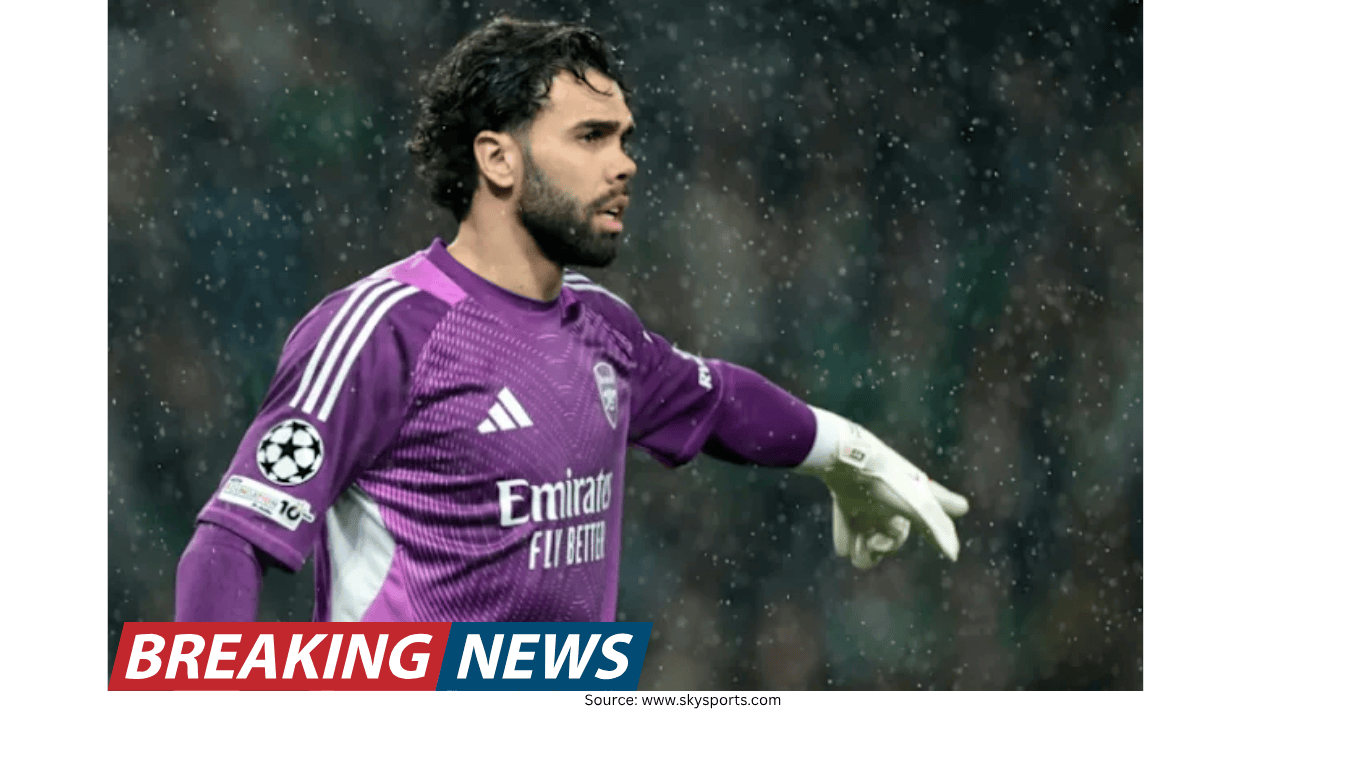
Raya’s saves set the platform for Arsenal’s narrow advantage
Arsenal left Lisbon with a 1-0 win over Sporting in the first leg of their Champions League quarter-final, but the scoreline only tells part of the story. The match hinged on moments in both penalty areas, and Arsenal’s ability to protect a clean sheet proved just as important as the late goal that separated the sides.
Goalkeeper David Raya was a defining figure throughout the night. He made five saves in total, including two that stood out even among the high standards expected at this stage of the competition. Early on, he tipped a powerful drive from Maxi Araujo onto the bar, and later he produced a sharp near-post stop to deny Geny Catamo. Those interventions kept Arsenal level long enough for the visitors to find a breakthrough in the closing stages.
In a contest where chances were limited and pressure moments were magnified, Raya’s work ensured Arsenal carried an advantage into the second leg. It was the type of performance that can reshape a tie, not through constant action, but through decisive responses at the exact moments a match threatens to turn.
Havertz delivers late, but points to the goalkeeper
Kai Havertz scored the winning goal in the 91st minute, finishing calmly after controlling a pass from fellow substitute Gabriel Martinelli. It was a composed end product in a tense game, and it gave Arsenal a valuable lead ahead of next week’s return fixture.
Yet Havertz was quick to redirect attention toward Raya’s contribution. Speaking after the match, he described the goalkeeper’s display as “unbelievable” and argued that Raya remains underestimated. For Havertz, the evidence has been building over time rather than arriving in a single night, and he went as far as calling Raya the best goalkeeper in the world over the last two seasons.
The timing of the praise was significant. Havertz’s goal will dominate the highlight reels, but his post-match comments reflected a broader reality: Arsenal’s margin for error in Lisbon was slim, and without Raya’s key saves, the late winner might not have been enough to secure victory.
Two standout moments that defined the first leg
Among Raya’s five saves, two were repeatedly singled out as the moments that preserved Arsenal’s position in the tie. The first came early, when Sporting created an opening through a quick transition. Araujo’s strike was described as ferocious, and Raya’s fingertip touch diverted it onto the bar rather than into the net.
The second was a near-post stop from Catamo, a situation that tests a goalkeeper’s reflexes and positioning. Raya’s ability to cover the angle and react quickly ensured Arsenal remained level at a stage when conceding would have changed the match’s emotional and tactical shape.
These were not routine saves. They were interventions that carry extra weight in knockout football, where a single goal can redefine the demands of the remaining minutes and the approach to the second leg. Raya’s performance, in that sense, did not merely prevent goals; it protected Arsenal’s game plan and kept the contest within reach until the late breakthrough arrived.
Arteta: Champions League ties are decided in the boxes
Arsenal manager Mikel Arteta echoed the importance of Raya’s contributions, framing them within a familiar Champions League theme: the decisive moments tend to come at either end of the pitch. He highlighted the two major saves and noted that the competition is often settled “in the boxes” because of the quality on show.
Arteta’s assessment also positioned Raya’s performance as part of a wider pattern since the goalkeeper joined the club. He described Raya as “phenomenal” and “extraordinary,” adding that Arsenal are fortunate to have him. The language was emphatic, and it underlined the trust the manager has in Raya’s influence on games that are balanced on fine margins.
In knockout football, managers often speak about controlling what can be controlled: structure, discipline, decision-making. But there are always moments when a player must deliver something beyond the system. Arteta’s praise suggested Raya has been doing that consistently, particularly in high-pressure settings.
Raya calls the Araujo save a turning point
Raya himself identified the early save from Araujo as a key moment. He described it as a turning point in the match, pointing to the speed of Sporting’s transition and the quality of the strike. His explanation was straightforward: getting a fingertip to the ball to push it onto the bar was the kind of action that can change games.
For Raya, the save was not just about reflexes. It was about being ready for the specific type of situation Sporting created—a quick break, a sudden shooting opportunity, and a shot struck with power. He framed it as part of his responsibility to help the team “in any single action,” not only through defending but also through commanding his area and contributing when Arsenal had the ball.
That broader view of the role is increasingly common at the elite level, and Raya’s comments reflected an understanding that a goalkeeper’s influence extends beyond the goal line. In Lisbon, his impact was visible both in the saves and in the way he managed moments of danger before they became clear chances.
Composure in possession and proactive defending
Alongside the shot-stopping, Raya’s performance included a calm display in possession. He completed 26 of his 28 attempted passes, a detail that matters in a match where control and territory were contested. Keeping the ball moving cleanly from the back can relieve pressure, prevent repeat attacks, and help a team reset its shape.
Raya also demonstrated anticipation outside his box, heading away a long pass near the halfway line to prevent a Sporting counter-attack. That moment illustrated the modern expectation that goalkeepers read the game as an extra defender, prepared to intervene behind the back line when space opens up.
Raya spoke about focus as an essential part of his job, whether he is touching the ball or not. He explained that he has worked on staying mentally engaged throughout games, learning from previous situations where concentration can drift. He also mentioned using “tricks” to keep his mind focused on the ball, a reminder that elite performance is often built on routines and habits as much as athletic ability.
Arteta on the evolution of the goalkeeper role
In his press conference, Arteta expanded on the demands placed on goalkeepers in the modern game. He said the position has changed rapidly in recent years, with an increased range of responsibilities. According to Arteta, it is part of a broader evolution across multiple roles, with players required to adapt to new situations and expectations.
Arteta’s comments also highlighted qualities beyond technical skill. He pointed to Raya’s courage and willingness to do certain things as factors that can take a player to another level. In the context of this match, that courage could be seen in the way Raya dealt with pressure, made high-stakes decisions, and stepped into space to cut out danger.
The implication was clear: Raya’s performance was not simply a collection of saves. It was an example of a goalkeeper fulfilling a complex, modern brief—shot-stopper, distributor, organiser, and proactive defender—while maintaining the concentration required for the few moments that truly decide a game.
Context: scrutiny, selection debate, and a response on the pitch
Raya’s display in Lisbon arrived against a backdrop of scrutiny around Arsenal’s goalkeeping choices this season. Arteta had recently faced criticism for starting Kepa Arrizabalaga instead of Raya in the Carabao Cup final loss to Manchester City. That decision became part of the wider conversation about who should be first choice and how Arsenal manage big-game selection.
While the Champions League quarter-final is a different competition and context, Raya’s performance provided a strong on-field statement. In matches where one goal can swing a tie, goalkeeping becomes especially visible, and a clean sheet away from home can be as valuable as a goal at the other end.
Havertz’s comments about Raya being underestimated also fit into this theme. The goalkeeper’s work can be overlooked when it is consistent, but in Lisbon the impact was impossible to ignore. Arsenal’s win was built on a combination of late attacking execution and sustained defensive resilience, with Raya central to the latter.
Numbers that support the “world-class” conversation
There is no shortage of competition when discussing the best goalkeepers, but Raya’s Champions League record over the last two seasons provides statistical backing for the praise he received after the Sporting match.
Since the start of last season, Raya has kept 13 clean sheets in 23 Champions League games, the most in that period. The comparison offered places him ahead of Yann Sommer, who has 11 clean sheets in 24 games for Inter over the same timeframe.
Beyond clean sheets, the underlying numbers are also striking. Raya has conceded 12 goals from shots on target worth 21.07 expected goals (xG), meaning he has prevented just over nine expected goals. That figure was described as higher than any other goalkeeper has managed in the Champions League over the last two seasons, with Thibaut Courtois next on the list with 6.12.
Statistics do not capture every aspect of goalkeeping, but they can underline patterns that match the eye test. In Raya’s case, the numbers support the idea that he is not merely benefiting from a strong defensive structure; he is adding value through shot-stopping that changes outcomes.
What the first leg suggests for the second
Arsenal will now turn their attention to the second leg, carrying a 1-0 lead and the confidence of a clean sheet away from home. The first match showed how tight the margins are likely to remain. Sporting created chances, Arsenal needed a late goal, and the goalkeepers’ actions were pivotal.
For Arsenal, Raya’s form will be central to their hopes of progressing. The first leg provided a clear example of why: even when a team is organised, moments of quality from the opposition will arrive, and the ability to survive them can determine whether a tie stays within reach.
Havertz’s winner gave Arsenal the advantage, but Raya’s saves ensured the goal had maximum value. As Arteta suggested, Champions League ties are often decided in the boxes. In Lisbon, Arsenal won both: a goalkeeper who protected the net and a forward who delivered at the last.
Key takeaways from Arsenal’s 1-0 win in Lisbon
- Decisive goal: Kai Havertz scored in the 91st minute after controlling a pass from Gabriel Martinelli.
- Goalkeeping impact: David Raya made five saves, including standout stops from Maxi Araujo and Geny Catamo.
- Manager’s view: Mikel Arteta praised Raya’s “extraordinary” impact and stressed that Champions League games are decided in the boxes.
- Modern role: Raya contributed in possession (26/28 passes completed) and acted proactively outside his area to prevent a counter.
- Supporting numbers: Raya has 13 clean sheets in 23 Champions League games since the start of last season and has prevented just over nine expected goals based on shots on target faced.
Arsenal’s supporters will remember the late finish that settled the first leg, but the performance behind it—Raya’s calm, focus, and match-defining saves—was the foundation. If Arsenal’s Champions League run is to continue, the evidence from Lisbon suggests their goalkeeper will remain a central figure in the story.