
Mainoo’s late strike seals Manchester United win over Liverpool and confirms Champions League place
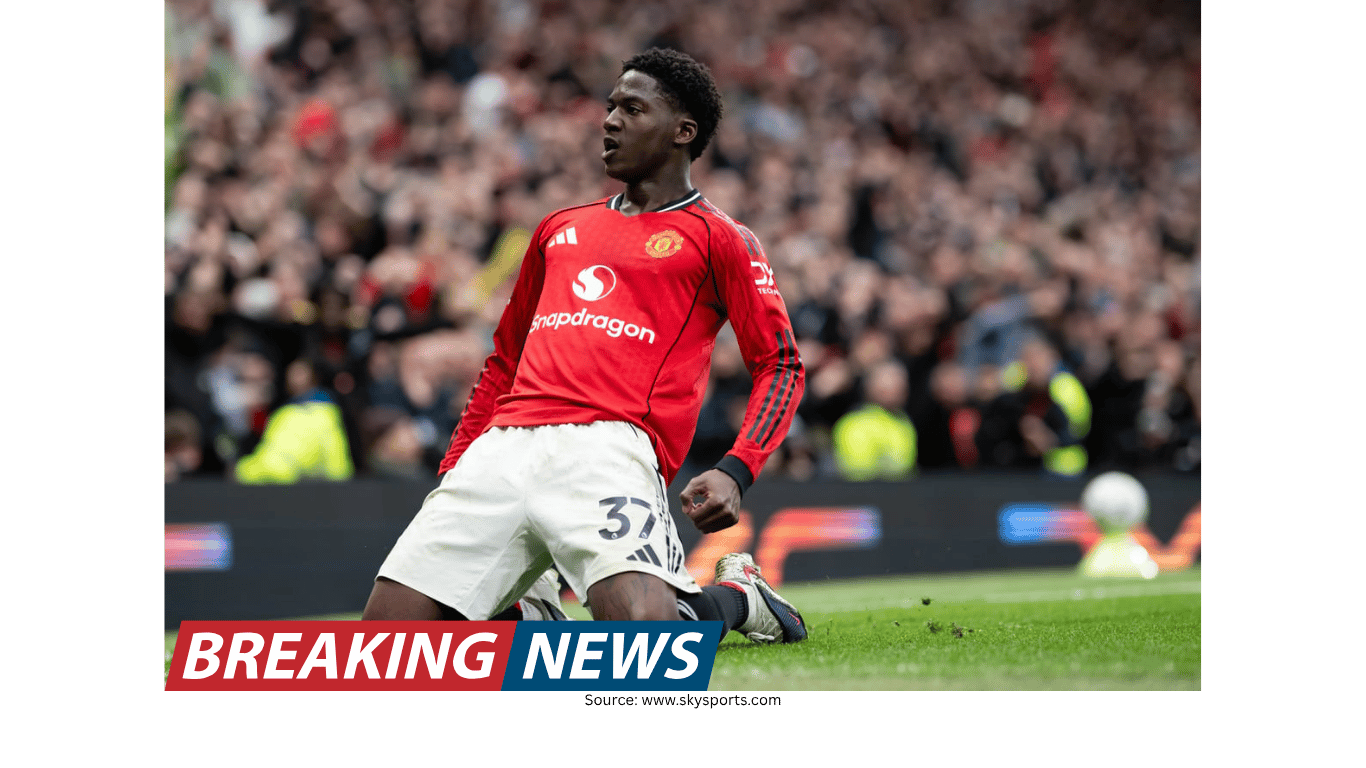
A five-goal Premier League classic at Old Trafford
Manchester United and Liverpool produced a breathless 3-2 contest at Old Trafford in front of an attendance of 74,027, with Kobbie Mainoo’s late strike ultimately deciding an encounter that swung dramatically in momentum and mood.
For United, the victory carried significant weight beyond the rivalry. The three points tightened their grip on third place and confirmed Champions League football next season under Michael Carrick. For Liverpool, the defeat left them fourth with “work to do”, and the questions around head coach Arne Slot’s direction continued to rumble on after another away-day setback.
It was a match of contrasting phases: United’s early control and two-goal advantage, Liverpool’s second-half surge to level the game, and then Mainoo’s decisive intervention when the contest felt as though it could tip either way.
United strike first and build a two-goal cushion
United’s opening goal arrived through a moment that combined intent, pressure and a slice of fortune. Matheus Cunha’s left-footed shot deflected off the back of Alexis Mac Allister and looped beyond Liverpool goalkeeper Freddie Woodman, giving the home side an early lead and lifting the stadium.
The hosts then doubled their advantage before the interval. Benjamin Sesko forced the ball home after Bruno Fernandes’ centre was pushed into his path by Woodman. At 2-0, United had the kind of cushion that can either settle a team into control or tempt them into complacency. In this game, both elements appeared at different times.
United’s approach in the first half was driven by pace and purpose, with Fernandes central to their attacking rhythm and Cunha a constant threat. Liverpool, by contrast, struggled to impose themselves early, and the scoreline reflected United’s sharper edge during the opening period.
Liverpool’s comeback: a shift in intensity and two costly United moments
The second half changed the tone. United “squandered the advantage”, and Liverpool’s route back into the match was opened by two pivotal errors that flipped the emotional balance.
First, substitute Amad Diallo, introduced to add energy, instead gifted possession to Dominik Szoboszlai. The Liverpool midfielder took full advantage, producing what was described as a fine solo goal to cut the deficit and reignite belief among the away side.
Then came another decisive mistake, this time involving United goalkeeper Senne Lammens. His poor kick was seized upon, and Cody Gakpo made no mistake to level the match at 2-2. In a matter of minutes, United’s earlier comfort was gone, replaced by a sense of vulnerability and a game that had become, as the report put it, “anybody’s”.
Liverpool’s equaliser spoke to their ability to punish errors, but it also underlined United’s lapse in concentration after building a commanding lead. With the score level, the match moved into a tense final stretch in which one clean moment could be enough.
Mainoo delivers the decisive moment
That moment came when the ball fell to Kobbie Mainoo on the edge of the box. He struck hard and low beyond Woodman to restore United’s lead and seal a 3-2 win. It was the kind of finish that carries an extra layer of significance: technically assured, taken under pressure, and delivered at a time when the match had become a test of nerve.
Mainoo was named Player of the Match, and his winner capped a performance that stood out not only for the goal but for his influence in midfield. The report also noted a personal subplot: the youngster had previously been frozen out of the team by Ruben Amorim, yet here he was “stealing the show” under Carrick.
For United, the final whistle brought both relief and celebration. For Liverpool, it was another reminder that their margin for error away from home has been thin, and that the small moments—whether in possession, in duels, or in defensive concentration—continue to decide key outcomes.
Champions League qualification confirmed for United
Beyond the drama of the comeback and the winner, the result carried a concrete reward. The victory confirmed that Manchester United will play in the Champions League next season as they strengthened their hold on third spot in the table.
The significance of that achievement was reflected in Mainoo’s post-match comments, which emphasised both unity and momentum. He credited the players and the manager for the way the team responded, and stressed that the focus remains on finishing the season strongly.
United’s win also fed into wider discussion about Carrick’s prospects. Former captain Roy Keane had suggested beforehand that the result would have “a big bearing on whether Michael Carrick will get the job”. In the context of a high-stakes rivalry match, a late winner, and Champions League qualification, the performance offered a compelling argument in Carrick’s favour.
Controversy around Sesko’s goal and VAR debate
The match was not without controversy. Slow-motion replays later suggested that Sesko may have made a slight contact with the ball using his hand in the build-up to United’s second goal. The report described it as a “feather-like touch” and noted that the close-up view did not appear to be part of the initial replays shown during the VAR process. The goal was allowed to stand, a decision that left Liverpool aggrieved.
Slot addressed the incident in his press conference, saying that if there was a touch, then under the rule it should have been disallowed. He also framed the moment as part of a broader pattern, arguing that marginal decisions have repeatedly gone against his team this season when there has been VAR involvement or an incident open to interpretation.
At the same time, Slot did not present officiating as the only explanation for the defeat. He pointed to Liverpool’s own responsibility, noting that the second goal was not conceded simply because of the handball debate, but because his side lost the ball in a “stupid position” and then failed in key moments in duels.
- Slot said the curve of the ball appeared to change, suggesting contact.
- He questioned whether such slight touches should always disallow goals, while acknowledging the current rule.
- He also emphasised Liverpool’s errors and “switching off” as decisive factors.
Slot’s wider concerns: patterns, pressure and away-day issues
Liverpool’s defeat also fed into a broader critique of their season, particularly away from home. The report described an “away-day malaise” that is becoming less of a blip and more of a pattern that Slot cannot ignore.
There was specific concern about Liverpool’s first-half approach on the road, characterised as passive and out of step with the club identity established under Jurgen Klopp. The analysis suggested that a team once built on intensity and front-foot football is now too often drifting through opening periods, waiting for the game to come to them.
One statistic underlined the point: Liverpool have scored just four goals in their last 19 first halves. The report framed this as a “staggering drop-off” for a side with attacking quality and expectation, and argued that it is not merely a finishing problem but a collective lack of urgency, with slow tempo and disjointed pressing leaving the team reactive rather than proactive.
Slot was also described as being in transition, and Liverpool were noted as being without a trio of forwards he felt could have made a difference. Yet the anxiety among supporters, according to the report, is less about transition itself and more about the direction of travel—what, exactly, Liverpool are being transitioned into.
The analysis contrasted a pressing, energetic Liverpool—something fans would accept as a tweak of the Klopp model—with the fear of a “sterile possession game” that feels like a divergence too far. In that context, the questions around Slot’s suitability were presented as ongoing rather than settled.
Carrick on Sir Alex Ferguson’s health update before kick-off
There was also poignancy around the occasion. News emerged before kick-off that Sir Alex Ferguson had been taken to hospital after feeling unwell at Old Trafford. Carrick said he had no update on Ferguson’s condition, but offered his best wishes and admitted he was affected by the news.
He added that he hoped the result could provide a boost when Ferguson heard about it. The match, already emotionally charged because of the rivalry and the stakes, took on an added layer of significance for many inside the stadium.
Key performers and match ratings
Mainoo’s winner and overall display ensured he was the standout figure, but the match featured notable contributions and costly mistakes across both sides.
- Manchester United: Senne Lammens, Diogo Dalot, Harry Maguire, Heaven, Luke Shaw, Casemiro, Kobbie Mainoo, Bruno Fernandes, Matheus Cunha, Bryan Mbeumo, Benjamin Sesko.
- Manchester United substitutes: Amad Diallo, Dorgu, Joshua Zirkzee, Yoro.
- Liverpool: Freddie Woodman, Curtis Jones, Virgil van Dijk, Ibrahima Konate, Andy Robertson, Ryan Gravenberch, Dominik Szoboszlai, Alexis Mac Allister, Jeremie Frimpong, Florian Wirtz, Cody Gakpo.
- Liverpool substitutes: Kerkez, Ngumoha, Federico Chiesa.
Szoboszlai’s impact, particularly his solo goal after winning the ball, stood out for Liverpool during their comeback. For United, Cunha’s early involvement and Fernandes’ creative role were important in establishing the initial advantage, while Mainoo’s late composure ultimately decided the outcome.
What the result means from here
United leave the match with Champions League qualification secured and a statement victory over their biggest rivals in a game that will be remembered for its twists, errors and decisive moments. The win also strengthens the narrative around Carrick’s stewardship, with the team showing resilience after surrendering a two-goal lead.
Liverpool, meanwhile, remain fourth and face renewed scrutiny over both performance patterns and direction under Slot. Even with the debate around VAR and the handball touch on Sesko’s goal, the match also provided uncomfortable evidence of the issues Slot himself highlighted: avoidable losses of possession, missed duels in key moments, and the kind of “switching off” that turns a comeback into another frustrating defeat.
In the end, the match was decided not by prolonged control but by decisive actions in the key moments: Cunha’s deflected opener, the scramble for Sesko’s finish, Liverpool’s ruthless response to two United errors, and Mainoo’s low drive from the edge of the box that ensured Old Trafford had the final say.