
Italy 2-0 Northern Ireland: Tonali and Kean settle play-off semi-final in Bergamo
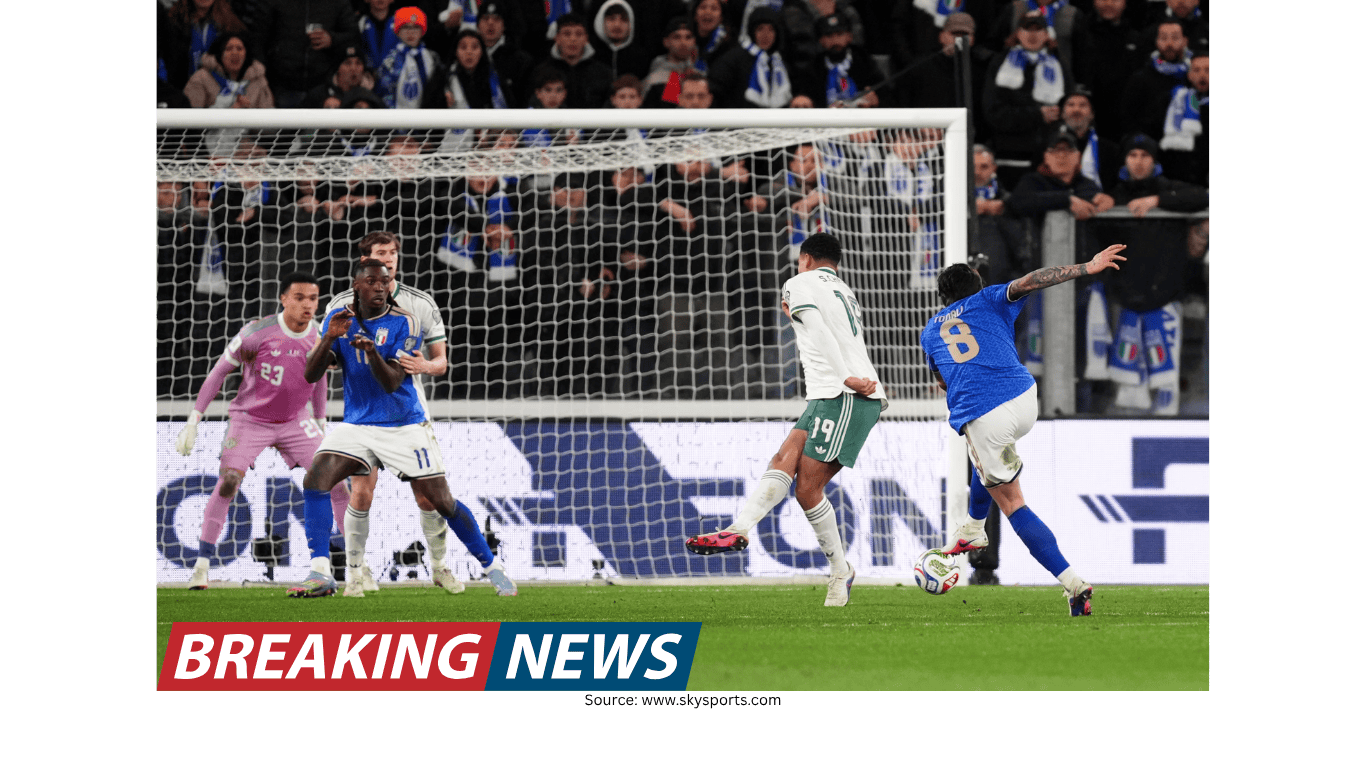
Italy end Northern Ireland’s World Cup hopes with second-half double
Northern Ireland’s attempt to keep their World Cup dream alive came to an end in Bergamo, as Italy claimed a 2-0 victory in the European qualifying play-off semi-final at the Gewiss Stadium. A disciplined first-half display from Michael O’Neill’s side kept the four-time winners at bay for long spells, but two goals after the interval—first from Sandro Tonali and then from Moise Kean—settled the tie.
The match was played in front of an attendance of 23,439. For Northern Ireland, the stakes were clear: they were aiming to reach their first World Cup since 1986. For Italy, the pressure remained intense, with the team seeking to avoid another failure to qualify after missing out in their last two attempts. The win means Italy will now travel to Bosnia and Herzegovina on Tuesday for the final, with a place at this summer’s tournament on the line.
A first half built on resistance and key saves
Northern Ireland’s plan was rooted in organisation and resilience, and it was tested immediately. Italy began with an early surge, forcing the visitors to defend their penalty area and survive a sequence of threatening moments.
In the opening stages, Italy came close when a cross struck Northern Ireland’s left post, a warning that the home side were capable of turning pressure into a breakthrough. Soon after, goalkeeper Pierce Charles was called into action, producing a strong save from Federico Dimarco inside the first 10 minutes.
Those moments framed the pattern of the first half: Italy pushing, Northern Ireland absorbing, and Charles helping to keep the contest level. The visitors did have a rare chance to break forward, offering a glimpse of what might have been possible on the counter-attack.
Ethan Galbraith drove one of Northern Ireland’s limited attacking moves, but his deflected shot was comfortably handled by Gianluigi Donnarumma. In that sequence, there was a suggestion that passing to Isaac Price may have been the better option, underlining how fine the margins can be in matches of this magnitude—particularly for a side that expected to have fewer opportunities.
By half-time, Northern Ireland had achieved what they set out to do: frustrate Italy and remain in the tie. Yet the sense persisted that the longer Italy kept probing, the more one moment—one loose clearance, one rebound, one strike from distance—could change everything.
Italy increase the tempo after the break
Italy’s pressure intensified at the start of the second half, and Northern Ireland’s defensive workload grew heavier. There were early warning signs that the home side were finding clearer routes to goal.
Mateo Retegui had a chance when clean through but failed to make it count, a miss that briefly kept Northern Ireland’s hopes intact. Soon after, Moise Kean tested Pierce Charles again, with the goalkeeper saving down low to his right. The sequence suggested Italy were beginning to create the kind of chances that had been limited in the first half.
Northern Ireland, still competing and still organised, faced a couple of tense moments before the opening goal arrived. The breakthrough ultimately came from a situation that often punishes teams under sustained pressure: a clearance that does not travel far enough and a midfielder arriving at the edge of the box.
Tonali’s return from injury delivers the opener
The decisive moment for Italy arrived when Isaac Price’s headed clearance dropped perfectly on the edge of the area. Sandro Tonali, returning from injury after missing the derby against Sunderland, met the ball first time and drove his strike into the right corner.
It was a clean, decisive finish—one that reflected both Tonali’s quality and the danger of allowing any space at the top of the box. For Northern Ireland, the goal changed the shape of the contest. A plan that had worked in the first half now had to adapt to chasing the game against opponents who had already shown they could sustain pressure.
Italy, having taken the lead, looked composed and increasingly secure. The match began to tilt further in the hosts’ favour, with Northern Ireland struggling to generate momentum in attack.
Northern Ireland struggle for a response as Italy manage the game
After going ahead, Italy never looked like surrendering control. Northern Ireland, described as toothless in attack during this phase, found it difficult to turn defensive effort into meaningful chances at the other end.
Kean continued to be involved, and Charles remained busy. The goalkeeper saved from Kean again, and the striker later attempted an overhead kick that went wide. Even without immediate reward, Kean’s persistence kept Northern Ireland pinned back and forced them to defend deep for extended periods.
For Northern Ireland, the challenge was not just tactical but psychological: playing at 1-0 down in a high-stakes semi-final demands risk, and risk can open spaces for a side like Italy to exploit.
Kean seals the tie with a composed finish
The second goal arrived as a culmination of Italy’s continued pressure. Kean controlled a high ball in the area and finished by slotting in off the left post, securing the win and ending Northern Ireland’s hopes of progressing.
At 2-0, the contest was effectively decided. Italy had turned a frustrating first half into a controlled victory, while Northern Ireland were left to reflect on a performance that contained long periods of discipline but ultimately lacked the attacking edge needed after falling behind.
What the result means for Italy
Italy’s victory keeps their qualification campaign alive and sets up a final in Bosnia and Herzegovina on Tuesday. The context surrounding the team remains significant: they are still under major pressure to qualify, having failed in their last two attempts.
This semi-final showed both the challenge and the solution Italy can bring to these play-off fixtures. Northern Ireland made it difficult, particularly in the first half, but Italy found quality in key moments—Tonali’s strike from the edge of the box, and Kean’s composed finish—to ensure the tie did not slip into anxiety or uncertainty.
Northern Ireland’s campaign ends, but O’Neill highlights positives
For Northern Ireland, the defeat brought a painful end to their World Cup ambition. Yet Michael O’Neill’s assessment focused on the performance, the development of a young squad, and the longer-term progress he believes has been made.
O’Neill said he could not ask much more from his players, pointing to a game plan that worked well in the first half and left Italy struggling to create chances. He also noted that the second half contained a couple of tense moments before Italy scored, and described Tonali’s opener as a great strike. Once behind, he acknowledged, the task became much harder.
O’Neill also emphasised the character of his group, describing courage and energy within the team. He highlighted the youth of the squad, stating their average age is around 22, and suggested the experience of playing a match like this will be important for their careers. In his view, regardless of the result, the team took a step forward in their progress.
He argued there were positives for a nation of Northern Ireland’s size fielding a team of that age, and said that when the campaign is reflected upon overall, there will be plenty to be positive about. The theme of development—rather than only disappointment—ran through his remarks.
Pierce Charles singled out after impressive performance
Among those positives, O’Neill reserved special praise for Pierce Charles. The goalkeeper, 20 years of age, was described as magnificent, with O’Neill pointing to his temperament and calling his display very strong.
Charles’ contribution was evident throughout: early on he saved from Dimarco, and later he produced multiple stops from Kean, including a low save to his right early in the second half. Even as Italy’s pressure increased, his performance helped Northern Ireland remain competitive for long stretches and ensured the scoreline remained manageable until the final stages.
O’Neill’s managerial situation and upcoming commitments
O’Neill also addressed his own immediate future, outlining his schedule and contractual position. He said that, as things stand, he will manage the game on Tuesday night and will manage the remaining seven games for Blackburn Rovers. He added that his contract is still with the IFA, that he is contracted to 2028, and that after his Blackburn Rovers duties he will revert back to the status quo, which is the national team manager.
In the aftermath of the semi-final, there was also discussion about whether next week’s friendly against Wales could be his final game as head coach, though the situation was framed as something that remains to be seen.
Reaction at full-time: disappointment, pride, and support
At the final whistle, the emotional impact on Northern Ireland’s players was clear. They looked devastated, an understandable response given the significance of the occasion and the closeness of the contest for much of the night.
However, there was also recognition of what had been achieved within the performance. The squad is young and described as being only at the beginning of its journey together, a point that helps explain why the defeat may sting while still offering lessons and momentum for the future.
The travelling supporters played their part too. The green-and-white contingent gave the players an enormous cheer as they went over to applaud them, offering a moment of solidarity at the end of a campaign that fell short of its ultimate aim but contained reasons for optimism.
Match summary
- Competition: FIFA World Cup European Qualifying Play-off Semi-finals
- Venue: Gewiss Stadium, Bergamo
- Attendance: 23,439
- Result: Italy 2-0 Northern Ireland
- Scorers: Sandro Tonali, Moise Kean
- Key context: Italy progress to a final in Bosnia and Herzegovina on Tuesday; Northern Ireland’s World Cup bid ends
Turning points that shaped the tie
Several moments stood out as pivotal in determining the outcome. Northern Ireland’s ability to reach half-time level depended on surviving Italy’s early onslaught, including the cross that struck the post and Charles’ early save from Dimarco. At the other end, Galbraith’s counter-attacking effort—comfortably saved by Donnarumma—was one of the few times Northern Ireland looked close to turning defence into threat.
In the second half, Italy’s increased chance creation signalled a shift: Retegui’s missed one-on-one and Kean’s low effort saved by Charles were precursors to the breakthrough. The opening goal itself came from a headed clearance that fell invitingly on the edge of the box, allowing Tonali to strike first time. Once Italy led, the dynamic changed, and Kean’s eventual finish off the left post provided the decisive second goal.
A night of fine margins
For Northern Ireland, the match was a reminder of how narrow the gap can be between a plan that works and a result that goes against you. For 45 minutes, they largely executed their approach and limited Italy’s clear chances. After the break, a small sequence—an imperfect clearance and a precise strike—shifted the balance.
Italy, meanwhile, demonstrated patience and the ability to find solutions under pressure. Against a well-organised opponent, they needed moments of individual quality and persistence in the final third. Tonali and Kean provided both, ensuring Italy’s qualifying hopes remain alive as they prepare for the final in Bosnia and Herzegovina.