
Wolves stun Liverpool late as Andre’s stoppage-time strike seals 2-1 win at Molineux
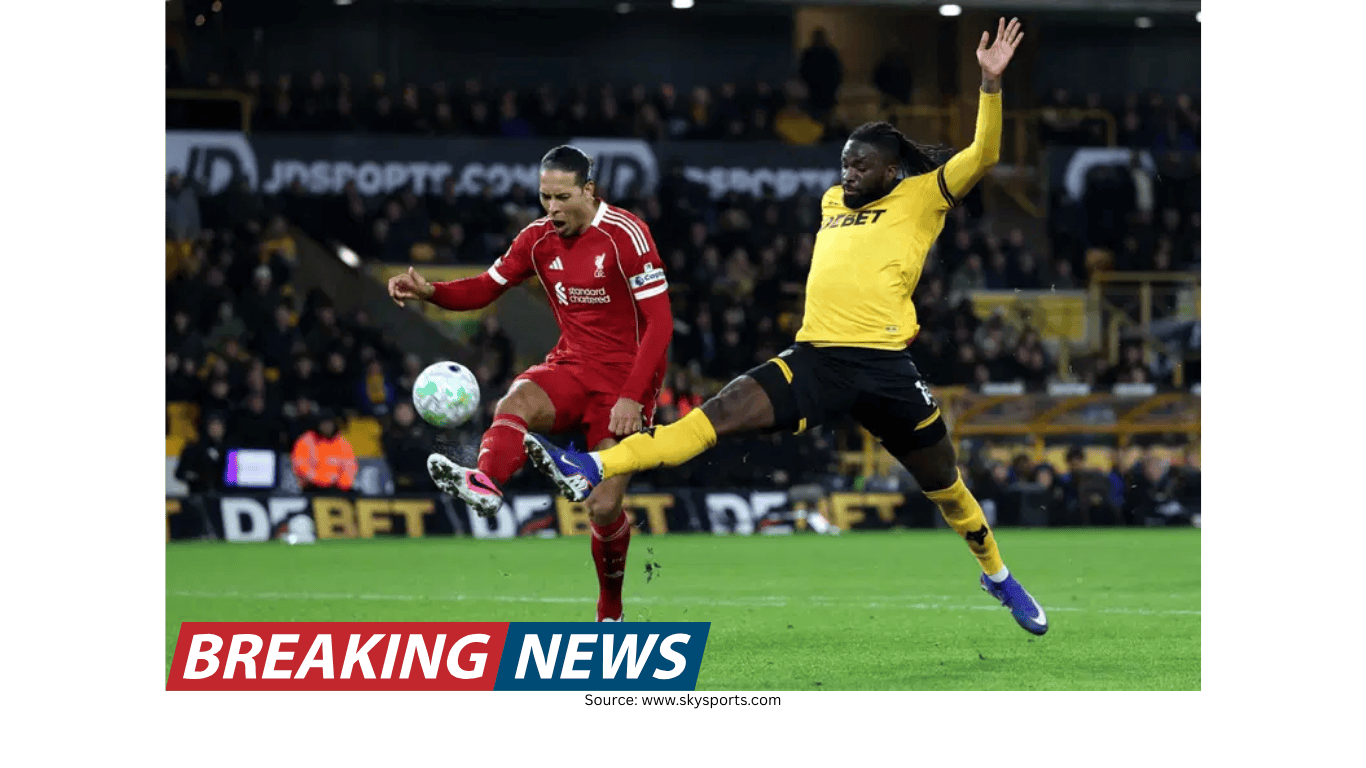
Andre’s late twist lifts Wolves and leaves Liverpool rueing another stoppage-time setback
Wolverhampton Wanderers produced one of their most significant results of the season by beating Liverpool 2-1 at Molineux, with Andre’s deflected strike in the 94th minute delivering a dramatic winner. For Wolves, a team described as the “bottom club” and with just one league win before a recent upturn, it was another timely boost. For Liverpool, the reigning Premier League champions, it was a familiar and costly pattern: a match in which they had the ball, created chances, but ultimately conceded late and left without the points.
The decisive moment came deep into stoppage time when Andre hit a speculative effort that took a deflection off Joe Gomez and found the net. The goal ensured that Mohamed Salah’s equaliser—his first Premier League goal for 122 days—proved in vain, and it underlined a statistic that is becoming a defining feature of Liverpool’s campaign: this was the fifth time this season Arne Slot’s side have conceded a winning goal in the 90th minute or later, the most ever by a team in a single Premier League campaign.
The result also had immediate consequences in the table. Liverpool, who could have moved up to third with a win, remain fifth. Wolves, meanwhile, followed up a victory over Aston Villa on Friday by making it two wins in five days, a sudden burst of momentum for a side that has had to fight for points.
How the game unfolded: a slow start, a frantic finish
The match began at a subdued pace, with Liverpool failing to impose themselves in the opening period. Wolves, buoyed by their recent win, competed aggressively and were particularly effective in dealing with Liverpool’s set-piece opportunities in the first half. A series of corners came to little, with Joao Gomes prominent in the defensive work and in Wolves’ ability to disrupt Liverpool’s rhythm.
After the break, Liverpool played with greater urgency. Slot’s side pushed higher and began to generate clearer openings, including a moment that could have changed the entire afternoon. Substitute Curtis Jones had an opportunity from close range, but the chance went begging when Cody Gakpo, on the line, toed the ball away from him in a sequence that summed up Liverpool’s frustrating lack of clinical edge from open play.
That missed chance proved pivotal. Wolves struck on the counter-attack later in the second half, punishing Liverpool’s inability to turn pressure into a lead. It was a reminder that even when a team dominates possession, a single transition can decide a game—especially against opponents prepared to defend with intensity and break with purpose.
Rodrigo Gomes breaks through on the counter
Wolves’ opening goal came through substitute Rodrigo Gomes, who finished a well-executed counter-attack “well into the second half.” The move began with Tolu Arokodare outmuscling Virgil van Dijk, a key duel that created the space and time Wolves needed to attack quickly. From there, Arokodare fed Rodrigo Gomes, who showed composure under pressure from Ibrahima Konate to lift the ball over Alisson.
The goal was notable not only for its quality but for what it represented: Wolves finding an efficient route to goal against a side that, by Slot’s own assessment, typically has “far more ball possession” than its opponents. Wolves did not need sustained spells of dominance; they needed sharp moments, physical commitment, and the conviction to take their chances when they arrived.
Salah responds, but Liverpool cannot regain control
Liverpool’s response was swift. Salah equalised soon after Wolves went ahead, providing the kind of decisive contribution that has so often rescued points for Liverpool in tight games. Yet the equaliser did not bring calm. Instead, the contest became increasingly open, with both teams sensing that the next goal would likely decide it.
Slot later reflected on how the match mirrored recent performances: Liverpool creating enough opportunities but struggling to score from open play. He pointed to the team’s reliance on set-pieces in recent weeks and contrasted that with the difficulties they have faced converting chances created during normal play. Against Wolves, he felt Liverpool had more possession and more chances, but the end result was the same: they scored one, Wolves scored two.
In the closing stages, Liverpool had moments that could have put them ahead. Slot highlighted instances where Salah was dribbling with options available, only for a defender to intercept, and a Virgil van Dijk header that came close. Those near-misses left Liverpool exposed to the kind of late swing that has repeatedly hurt them this season.
Andre delivers the final blow in the 94th minute
With the match seemingly heading for a draw, Wolves found one last opening. Andre’s shot from distance was described as speculative, but it was enough. The ball deflected off Joe Gomez and went in, turning a hopeful effort into a match-winning strike and triggering celebrations among the home side.
For Liverpool, the nature of the goal added to the frustration. Slot argued that the chance was not even a clear opening and that his side “hardly give away a chance,” yet still conceded two goals. It was an assessment that captured the sense of fine margins going against Liverpool: moments of poor execution in attack, and decisive punishment at the other end.
Still, Slot was careful to credit Wolves for their commitment, describing how they “fight from the first minute to the end” and suggesting that the bit of luck involved in the deflection was something they had earned through effort and persistence.
Team selection and key contributors
Both managers made notable choices. Wolves boss Rob Edwards changed four players from the team that beat Aston Villa, bringing in Ladislav Krejci, Matt Doherty, Angel Gomes and David Moller Wolfe. Liverpool made one change from their win over West Ham, with Jeremie Frimpong coming in at right-back for Joe Gomez, who started on the bench.
Andre was named player of the match after scoring the winner and producing an influential display. Wolves’ ratings also reflected strong performances across the back line and midfield, with Joao Gomes among those singled out for his impact, particularly in the first half when Wolves coped with Liverpool’s corners and kept the game under control.
Liverpool, by contrast, were left to reflect on a performance that improved after the break but never fully reached the level required. The missed opportunity involving Jones and Gakpo stood out, as did the difficulty Liverpool had in turning possession into clear, high-quality chances that could be finished reliably.
What Arne Slot said: ‘Same old story’
In his post-match press conference, Liverpool boss Arne Slot framed the defeat as part of a recurring narrative. He said Liverpool have recently been picking up points because of goals from set-pieces, but that a consistent issue over the last “five, six, seven games” has been the struggle to score from open-play chances.
Slot acknowledged that Liverpool did not play well in the first half and described their set-piece delivery and execution before the break as “very poor,” linking that to the overall performance. He felt the second half was better, though “still not great,” and pointed to late moments where Liverpool came close to scoring a second goal before Wolves’ winner.
He also expressed disappointment at dropping points at a stage of the season when margins are tightening, noting there are nine games left. While he suggested that if the match were played 10 times Liverpool would not lose all 10, he was clear about the need for improvement and the desire not to depend on deflections or unpredictable moments.
What Rob Edwards said: work rate, togetherness, and finding a way
Wolves boss Rob Edwards emphasised the collective effort behind the win. He said the aim was to stay in the game and improve as it progressed, putting more pressure on the opponent and taking advantage of spaces as they opened up.
Asked about the improvement in Wolves’ performances, Edwards described it as a “work rate thing,” suggesting it takes time to understand how hard a team must work to win at Premier League level. He spoke about a “stark difference” in that regard and highlighted the challenge of operating with a small squad.
Edwards also underlined the spirit within the group, describing them as “a tight group fighting for each other” and determined to show they are “not as bad as people might have thought.” While acknowledging Wolves are not playing exactly how he wants, he stressed the importance of showing the right characteristics and “finding a way.”
Late goals and the bigger picture for Liverpool
The late concession at Molineux was not an isolated incident. Liverpool have now lost five Premier League games thanks to goals conceded in the 90th minute or later this season, a record in a single campaign. Those moments have had a cumulative effect, with Slot acknowledging that such slips have “derailed their title defence” and warning they could yet affect the club’s push for Champions League football.
In the context of this particular match, Liverpool’s inability to take control early, combined with wasted chances after the break, left them vulnerable. Wolves did not dominate long spells, but they remained competitive and ready to capitalise when the match opened up.
Next meeting: FA Cup tie under the Molineux lights
The two sides will meet again at the same venue in the FA Cup fifth round on Friday evening. Edwards, reflecting on the immediate rematch, suggested Wolves may have made Liverpool “quite angry” and hinted at another intense contest under the lights.
When asked whether supporters might prefer cup success given Wolves’ Premier League situation, Edwards pushed back on the idea that it must be one or the other, saying Wolves will try to win both.
Match summary
- Final score: Wolves 2-1 Liverpool
- Wolves scorers: Rodrigo Gomes, Andre (94’)
- Liverpool scorer: Mohamed Salah
- Player of the match: Andre
- Table note: Liverpool remain fifth after missing the chance to move up to third
For Wolves, the win was built on resilience, work rate, and decisive moments in both boxes. For Liverpool, it was another afternoon of control without sufficient reward—and another late concession that left them chasing what might have been.