
West Ham 0-1 Arsenal: Disallowed stoppage-time equaliser sparks major VAR debate
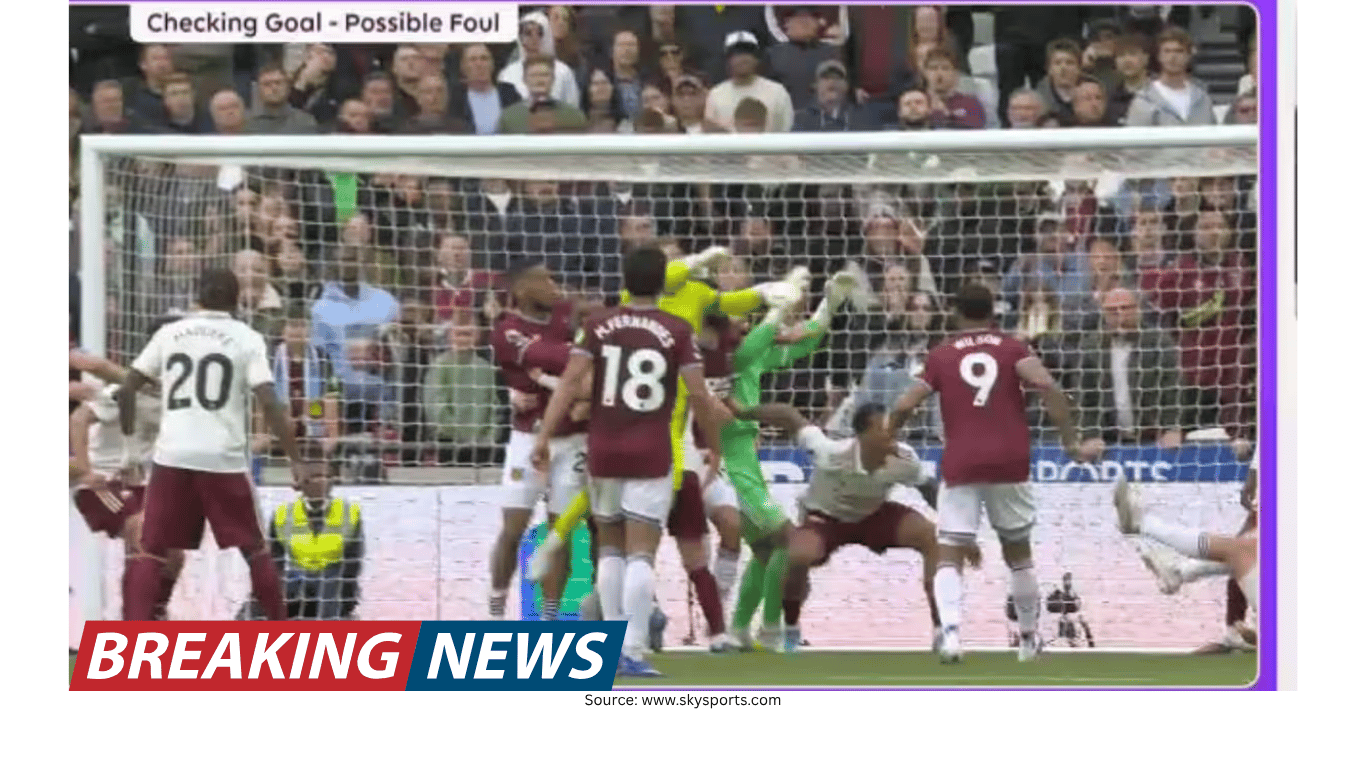
A 1-0 game decided by a late intervention
West Ham’s home match against Arsenal ended in a 1-0 defeat, but the defining moment arrived deep into stoppage time when an apparent equaliser was first awarded and then disallowed after a prolonged VAR review. The incident triggered immediate debate about consistency, pressure on officials, and the role of video technology in matches with major consequences.
Arsenal were protecting a 1-0 lead when West Ham struck what looked like a 95th-minute leveller. The ball crossed the line despite Declan Rice’s efforts to keep it out, and referee Chris Kavanagh initially signalled a goal on the field. What followed was a lengthy check that ultimately changed the outcome of the moment—and, potentially, the wider implications of the result.
What VAR reviewed and why the goal was overturned
The equaliser did not stand after intervention from VAR official Darren England. Kavanagh was sent to the pitchside monitor to review the incident, with the process involving 17 replays and a total of four minutes and 17 seconds of stoppage. After watching the footage, the referee ruled there had been a foul by Pablo on Arsenal goalkeeper David Raya, and the goal was chalked off.
The decision turned on the judgement that Raya was impeded. The review sequence became a talking point in itself: the number of replays, the time taken, and the high-stakes nature of the call all contributed to the sense that this was not a routine VAR check but a pivotal intervention in a tense match.
Gary Neville: ‘The biggest moment in VAR history’
Gary Neville reacted strongly both during commentary and later on his podcast, framing the incident as a landmark for VAR in the Premier League. On commentary at the London Stadium, he said: “This is an earthquake, a tremor of a moment.”
Neville placed the decision in the context of Arsenal’s title ambitions, adding that the outcome of the review could have enormous consequences. He suggested Arsenal’s pursuit of a first title in 22 years could hinge on moments like this, and he drew attention to the pressure on the VAR team in such circumstances.
In his later remarks, Neville returned to the scale of the decision and the scrutiny surrounding it. He described it as “the biggest moment in VAR history in the Premier League,” arguing it was exactly the type of call that tests not only the technology but the resolve of the officials operating it.
Focus on Darren England and the pressure of the review
Neville’s comments repeatedly highlighted the role of Darren England, pointing to the intensity of the situation and the need for composure. He described the moment as “all eyes on him,” and said he wondered whether England would have “the courage” and “the nerve” to recommend an on-field review that could overturn a late equaliser.
Neville also said he was impressed by the way England handled the process, describing him as composed and methodical while communicating with the referee and colleagues. He argued that, from the broadcast perspective, the ability to follow the review process gave viewers insight that supporters in the stadium did not have.
As Neville saw it, the decisive factor was the nature of the contact: he said Pablo’s arm remained across Raya for long enough that officials “have to then call it,” particularly because the player was not focused on playing the ball but on impeding the goalkeeper.
Pundit reaction: agreement that it was a foul
While the moment was dramatic, several pundits supported the final decision. Roy Keane focused on the risk of making contact with a goalkeeper in a situation that is certain to be checked. He said: “The one thing you say when you go up, VAR are going to check everything, do not put your hands on the goalkeeper! Certainly don't leave it on for three or four seconds.”
Keane added that, because the goalkeeper had a significant part to play in the incident, he believed it was a foul. In his view, West Ham made an avoidable error by giving officials something obvious to examine in such a critical moment.
Jamie Redknapp also backed the call, describing it as “a brave VAR call but it was the right one.” Former Arsenal and West Ham striker Ian Wright was similarly firm, saying it was “without doubt” the correct decision. Wright’s reasoning was straightforward: he believed Raya would have caught the ball cleanly if he had not been impeded, pointing to the pulling and the arm across the goalkeeper.
West Ham frustration: questions over consistency and the ‘line’
West Ham’s camp, however, expressed frustration—less about the existence of VAR itself than about where the threshold sits for fouls in crowded penalty areas. Manager Nuno Espirito Santo said the manner of the ending left the team upset, and he referenced a sense that similar incidents have been judged differently in the past.
Without escalating the dispute, Nuno suggested the uncertainty around what constitutes a foul creates doubt. He said: “Even the referees don't know what is a foul and what is not a foul, it creates doubt.” He also urged a broader view of the performance, adding that West Ham “made a very good match,” acknowledged Arsenal as “a tough team,” and concluded simply: “We lost the game.”
Captain Jarrod Bowen focused on the protection goalkeepers receive and the physical nature of Premier League football. He argued that there is holding in the box and questioned whether officials would apply the same scrutiny every time. Bowen said: “Goalkeepers are protected more than outfield players and there is a lot of holding inside the box. Are you going to look at those every time and give a penalty? That is the only way that is the right way to do it.”
Bowen accepted that a goalkeeper cannot be “wiped out,” but maintained that contact is part of the game and that keepers should expect it when coming to claim the ball. He also expressed a common concern about extended reviews, saying: “I just think if you look at something long enough, you will find something to give.” For Bowen, the key issue was consistency: if such contact is penalised here, he argued, it must be penalised “every week,” and he asked where the “line” and “bar” are set.
Arsenal’s view: praise for courage and clarity
Arsenal manager Mikel Arteta described the day as “a rollercoaster of emotions” and framed the match as a clash of competing pressures: West Ham “fighting for their lives” and Arsenal “trying to win the Premier League.”
Arteta also offered explicit praise for the officials. He said that when he has needed to be critical, he has been, but on this occasion he congratulated the referees for having “a lot of courage and bravery” to send the referee to review the action. In Arteta’s view, once the footage was seen, “there is no question that it is a clear foul.”
That stance aligned with the opinions of several pundits who felt the final decision matched the evidence shown during the review, even if the timing and magnitude of the moment ensured it would remain contentious.
Why the moment carried such weight
The controversy did not come from a mid-game free-kick or a marginal offside line; it came from a stoppage-time equaliser in a match that mattered at both ends of the table. Neville’s language—calling it an “earthquake” and “the biggest moment in VAR history”—captured the sense that this was a single decision with consequences beyond the final whistle.
On the title side of the equation, the result left Arsenal’s fate “in their hands,” and the win moved them to within two victories of clinching the Premier League title. That context heightened the attention on every detail of the review, from the number of replays to the final interpretation of contact on the goalkeeper.
At the other end, the defeat was described as West Ham’s 18th loss of the campaign. The ramifications were immediate: the result ensured the safety of Nottingham Forest and Leeds, leaving West Ham’s only hope of avoiding relegation dependent on Tottenham dropping into the relegation zone.
Tottenham, one point ahead of West Ham, were set to face Leeds on Monday Night Football. That fixture now carried added significance because West Ham’s path to survival had narrowed dramatically after the defeat and the disallowed goal.
The broader debate: technology, interpretation and trust
The match offered a concentrated example of the ongoing tension around VAR: technology can correct decisions, but it can also intensify debate when interpretation is involved. Here, the on-field decision was goal; the final decision was foul. Between those two points sat a long review, a pitchside monitor, and a judgement call about how much contact is too much when a goalkeeper is challenging for the ball.
From one perspective, the review process delivered what supporters of VAR expect: a significant incident checked thoroughly and corrected if necessary. From another, the length of the review and the subjective nature of the foul threshold fuelled the argument that the game’s flow and certainty can be undermined.
Neville’s comments illustrated both sides at once. He acknowledged that “there are a lot who aren't fans of VAR,” while also suggesting this was the type of moment where VAR might “get a decision right that wouldn't have been right.” His analysis also pointed to a communication gap: viewers at home could follow the process more closely than fans inside the stadium, which can shape perceptions of fairness and transparency.
Key quotes and positions at a glance
Gary Neville: Called the disallowed goal the “biggest moment in VAR history,” praising Darren England’s composure and describing the incident as decisive in a high-pressure context.
Roy Keane: Said players must avoid obvious contact with goalkeepers because “VAR are going to check everything,” and concluded it was a foul.
Jamie Redknapp: Backed the decision, calling it a brave but correct VAR intervention.
Ian Wright: Said it was “without doubt” the right call, arguing Raya would have caught the ball without being impeded.
Nuno Espirito Santo: Expressed disappointment and highlighted uncertainty around foul interpretations, while also crediting his team’s overall performance.
Jarrod Bowen: Questioned consistency and the level of protection for goalkeepers, arguing the standard must be applied every week to be fair.
Mikel Arteta: Praised the officials’ courage and said the replay showed a clear foul, describing the day as emotionally intense.
What the match will be remembered for
West Ham 0-1 Arsenal will be filed as a narrow away win for a title-chasing side, but it is likely to be remembered primarily for the stoppage-time decision that reversed a stadium’s emotions. The goal was given, then taken away, after an extended review that placed officials at the centre of the story.
For Arsenal, it was a moment of relief and a step closer to their objective, with Arteta emphasising the bravery of the decision-making process. For West Ham, it was a bitter ending that deepened relegation worries and amplified questions about consistency in how physical contact is judged in the penalty area.
For the wider league, it was another reminder that VAR is not only a tool for replaying incidents, but also a system that forces football to define—again and again—where the boundary lies between acceptable contact and a foul, especially when the stakes are at their highest.