
Tudor declines to address future as Tottenham’s losing run deepens after chaotic night in Madrid
Tudor under pressure after record-setting start
Igor Tudor’s brief spell in charge of Tottenham has moved quickly from difficult to historically damaging, with the head coach now carrying unwanted records after a chaotic defeat away to Atletico Madrid. Following a 5-2 loss in the first leg of their Champions League last-16 tie, Tudor became the first Spurs head coach to lose each of his first four games in charge. The result also extended Tottenham’s losing run to six matches in a row, a sequence described as the first of its kind in the club’s 143-year history.
After the match, Tudor was asked directly whether he deserved to continue as Tottenham’s head coach. He did not engage with the question, replying simply: “No comment.” The refusal to address his position came amid growing scrutiny of his decision-making and the mood around the club, which has been described as increasingly fraught.
A night defined by an early and unusual goalkeeper change
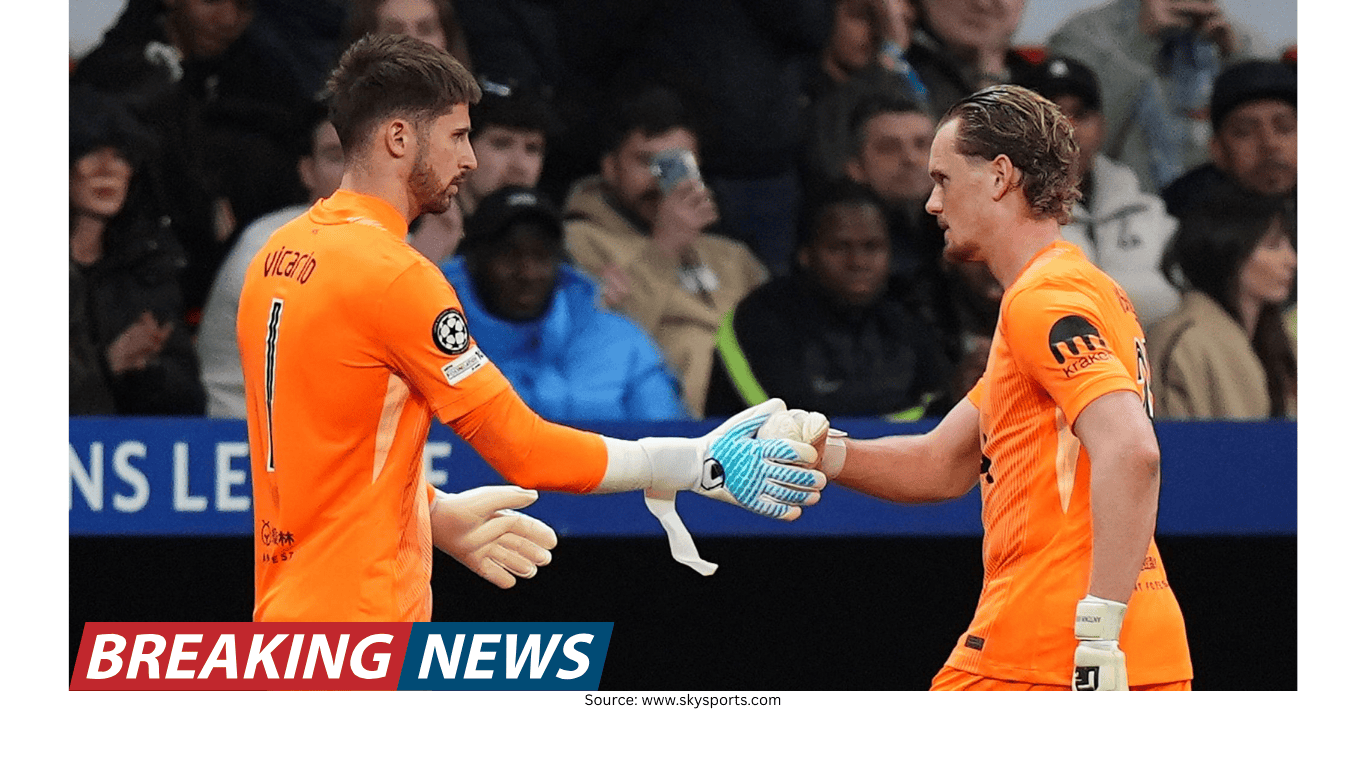
The Madrid match was notable not only for the scoreline but for an extraordinary moment inside the opening stages. Tudor opted to start 22-year-old goalkeeper Antonin Kinsky in the Champions League, leaving experienced keeper Guglielmo Vicario out of the starting XI. The choice backfired sharply. Kinsky’s mistakes contributed to two of Atletico’s three early goals, and after just 17 minutes Tudor reversed course, substituting the young goalkeeper and bringing on Vicario.
By Tudor’s own account, the decision to remove Kinsky was not one he takes lightly. “It is very rare. I have coached 15 years and never done this,” he said. Tudor framed the change as an attempt to protect both the player and the team in a moment of vulnerability. “It was necessary to preserve the guy and to preserve the team,” he explained.
He also pointed to the wider context of Tottenham’s current fragility. “The start of the game was too much for us in this moment when we are fragile, when we are weak,” Tudor said, suggesting the team’s mental state and recent results were part of what made the opening period so destabilising.
Kinsky’s reaction and Tudor’s explanation
Kinsky appeared deeply affected by the substitution, looking inconsolable as he left the pitch. The situation became a focal point of the evening, not least because Tottenham’s problems did not end with the change. Vicario conceded shortly after coming on, with Robin Le Normand scoring Atletico’s fourth goal five minutes after the substitution. At that stage, the scale of the task in the tie looked overwhelming.
Tudor said the squad was supporting the young goalkeeper, and he emphasised that blame should not be placed on a single player. “Kinsky was sorry. The team is with him. Me too. I was speaking with him,” Tudor said. “He understands the moment, he understands why he went out. He is a very good goalkeeper. It is never about one player.”
However, the substitution itself—and the way it played out—has been interpreted by some as a particularly harsh moment in a difficult evening, with attention also falling on Tudor’s interaction with the player as he came off.
Mounting concerns about the atmosphere around the squad
Post-match reporting from Madrid described a tense environment, with suggestions that the episode involving Kinsky could have repercussions inside the dressing room. It was said that some players were unhappy with how the situation unfolded, particularly given the visible distress of the goalkeeper.
In the immediate aftermath, it was observed that teammates ran to console Kinsky, with Joao Palhinha and Conor Gallagher among those seen offering support. Such moments, interpreted as concern for the player’s welfare, added to the sense that the team was dealing with more than just tactical problems or a poor run of results.
There was also discussion around footage that appeared to show defender Cristian Romero urging Tudor to remove Kinsky. Tudor denied that Romero told him to make the change, but the images prompted further debate about the dynamics on the touchline during a frantic opening period.
A defeat with consequences beyond the scoreline
Tottenham’s 5-2 loss was described as damaging in multiple ways: it was heavy, it was accompanied by a rare and dramatic in-game decision, and it pushed the club into a historically poor run. The Champions League tie, too, now looks extremely difficult. With Atletico scoring five, Tottenham face the second leg with a significant deficit and the sense that the contest may already be effectively decided.
Tudor’s tenure has been short—reported as 24 to 25 days at the time of the match—but the pace of events has been relentless. The expectation that a new coach might deliver an immediate uplift has not materialised. Instead, the team has moved deeper into crisis, and the pressure on the head coach has intensified.
“No manager bounce” as Spurs prepare for Liverpool
The schedule offers little respite. Tottenham’s next match is away at Liverpool at Anfield, followed shortly by the second leg against Atletico. The combination of a difficult domestic fixture and a daunting European return leg has heightened the sense that Tottenham’s situation could worsen before it improves.
When asked what needed to happen ahead of the Liverpool match, Tudor kept his response brief and focused on his own responsibilities. “I try to do my best. What a coach needs to do,” he said.
Yet the broader narrative around Tottenham is that the club has not experienced any immediate improvement since Tudor’s appointment. The team’s form has deteriorated into a record-breaking sequence, and the heavy defeat in Madrid provided a stark illustration of how quickly a match can unravel when confidence is low.
Supporters’ Trust calls for “emergency action”
Reaction from supporters has been severe. Tottenham Hotspur Supporters’ Trust issued a statement calling for “emergency action” after the chaotic loss at Atletico. The group described the performance and result as “a total disgrace” and said it reflected the “abysmal state of things” at the club.
The statement criticised decision-making at the club, referencing the January transfer window and management appointments, and questioned the leadership structure. It also lamented what it described as the absence of a “Spurs pedigree” in the decisions being made, using club-associated phrases to underline the sense of disconnect supporters feel from the direction of travel.
“Emergency action is needed as right now we are sleepwalking off the edge of a cliff,” the statement said, adding that supporters would not “sit by and watch the club continue to decline.”
Refund demands and a plea for pride
Among the points raised by the Supporters’ Trust was the issue of matchgoing fans who travelled to Madrid. The group said that, at the very least, those present should have their match tickets refunded. But the statement also made clear that the central demand was not financial compensation; it was a desire for the club to restore pride.
The message framed supporters as willing to play their part—being “the 12th man”—but insisted that fans “deserve so much more” than what they witnessed. In the context of Tottenham’s six straight defeats and the manner of the Madrid performance, the statement captured the depth of frustration and the feeling that the club’s decline is accelerating.
Why the Kinsky decision has become a symbol
In football, a single decision can come to represent a wider crisis, and Tudor’s handling of the goalkeeper situation risks becoming such a moment. Starting Kinsky in a high-stakes Champions League tie, then removing him after 17 minutes, placed the young player at the centre of a public collapse. Tudor insisted the move was made to protect Kinsky and the team, and he reiterated that the goalkeeper remains highly regarded.
But the episode also raised unavoidable questions about preparation, selection, and the broader stability of the team. It is one thing to make a bold call; it is another when that call unravels within minutes and contributes to an early deficit that shapes the entire night.
For Tottenham, the concern is not only the immediate impact on the tie but the longer-term effect on confidence—both for Kinsky and for a squad already described as fragile. Tudor’s insistence that “it is never about one player” points to a recognition that the problems run deeper than one error, or even one match.
What the records say about the scale of Tottenham’s slump
The numbers attached to Tottenham’s current run are stark. Tudor has lost his first four matches, an unprecedented start for a Spurs head coach. The club’s six consecutive defeats mark another historical low, described as the first time it has happened in 143 years. These are not merely statistics; they are markers of a team in a prolonged downward spiral.
Such records also intensify scrutiny because they are difficult to contextualise away. Even in transitional periods, clubs of Tottenham’s stature rarely reach such extremes. The fact that multiple records fell on the same night in Madrid underlines how quickly the situation has deteriorated.
Uncertainty ahead of decisive days
Tottenham now face a pivotal stretch: a trip to Liverpool followed by the return leg against Atletico. The first leg scoreline leaves little margin for error in Europe, while the domestic fixture offers another stern test at a time when confidence appears low.
Tudor’s refusal to comment on whether he deserves to stay keeps the focus on results and on the club’s next steps. With supporters calling for urgent intervention and reports describing a toxic atmosphere, the coming matches will be played not only under competitive pressure but amid intense scrutiny of leadership, decision-making, and the team’s resilience.
Key points from the Madrid defeat
- Tottenham lost 5-2 to Atletico Madrid in the first leg of their Champions League last-16 tie.
- Igor Tudor became the first Spurs head coach to lose his first four games in charge.
- The defeat extended Tottenham’s losing streak to six matches, described as a first in the club’s 143-year history.
- Goalkeeper Antonin Kinsky was substituted after 17 minutes following mistakes that contributed to two early goals.
- Tudor said the substitution was to “preserve” the player and the team, and insisted it was “never about one player.”
- The Supporters’ Trust called for “emergency action” and described the situation at the club as “abysmal.”
For now, Tottenham’s immediate challenge is to stop the slide. But the aftermath of Madrid suggests the club is dealing with a crisis of form and confidence, with the added complication of a growing debate about whether Tudor is the right figure to lead a recovery.