
Spain World Cup 2026 Preview: Form, Qualification, and Key Figures
Spain’s recent international context
Spain’s modern era includes one of the most dominant stretches in international football. From 2008 to 2012, the national team won UEFA European Championships in 2008 and 2012 and lifted the FIFA World Cup in 2010. That run established Spain as a benchmark for elite tournament performance and remains a reference point when assessing the team’s potential at major competitions.
In 2024, Spain added another milestone by winning the European Championship again. Alongside that title, Spain are currently the top-ranked team in the official FIFA rankings. Those two facts shape expectations heading into the 2026 FIFA World Cup: Spain are not only recent champions, but also officially recognized as the world’s highest-ranked side at this point in the cycle.
Spain’s build-up has not been without setbacks. The team lost to Portugal in the UEFA Nations League final. Even so, the wider picture described around the squad is one of balance—an established core paired with emerging talent—giving Spain a profile that can translate well to tournament football.
Qualification for the 2026 FIFA World Cup
Spain qualified for the 2026 FIFA World Cup by finishing first in Group E in UEFA qualifying, taking one of Europe’s automatic places for the expanded 48-team tournament. The campaign is characterized as consistent and high-scoring, with Spain remaining in control of the group throughout the process.
By clinching top spot, Spain finished ahead of Turkey and the other contenders in the group. That first-place finish matters not only for qualification itself, but also because it reflects a level of stability and performance across multiple matches—an important indicator for a team preparing for the demands of a World Cup.
Squad profile: youth and experience
Spain are described as having a “perfect blend of youth and experience,” with talent across positions. That mix is central to how the team is framed entering 2026: established leaders provide structure and reliability, while younger players offer dynamism and upside.
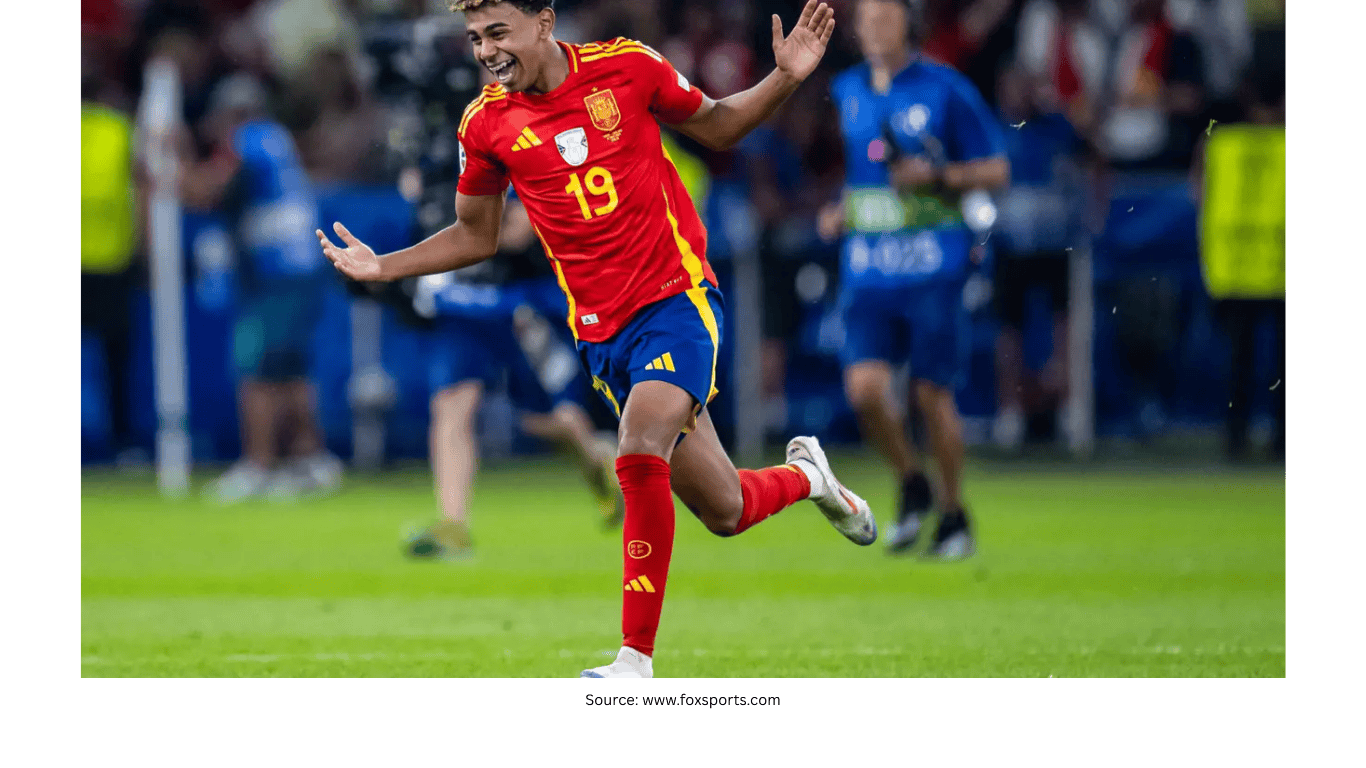
One name stands out in the current conversation: Lamine Yamal. At 18 years old, he is highlighted as a major focus for fans and observers after his impact at EURO 2024. Spain’s core also includes midfielders who have already proven themselves at the highest level for both club and country, giving the team multiple ways to control games.
Key players to watch
Lamine Yamal — A right winger for FC Barcelona, Yamal is described as one of Spain’s most productive young internationals. He became the youngest player ever to represent Spain and played a major role in Spain’s EURO 2024 title, contributing goals and assists during the tournament. His breakout season with Barcelona included consistent production in La Liga and the UEFA Champions League. He also finished runner-up for the Ballon d’Or, noted as the highest placement ever for a teenager.
Pedri — A central midfielder for FC Barcelona, Pedri has been a regular for Spain since breaking through in 2021. He won the UEFA Euro 2020 Young Player of the Tournament, was named to the Team of the Tournament, and played in the 2022 World Cup. His game is summarized through passing accuracy, ball retention, and an ability to control tempo, making him one of Spain’s most important midfield pieces.
Rodri — Spain’s first-choice holding midfielder, Rodri is also an anchor for Manchester City. His club résumé includes multiple Premier League titles, the UEFA Champions League, and several domestic trophies. He won the Ballon d’Or, placing him among the few Spanish players to capture the award. Internationally, he was central to Spain’s EURO 2024 triumph and has accumulated more than 50 caps. His role is framed around defensive coverage, distribution, and tactical stability—qualities that can be decisive in World Cup matches.
The manager: Luis de la Fuente
Spain’s head coach is Luis de la Fuente, who has led the senior national team since 2022. Before taking the top job, he managed several Spanish youth sides, including the U-19, U-21, and Olympic teams. That pathway is significant because it connects Spain’s current senior setup to a broader development pipeline, and it also helps explain the integration of younger talent into the first team.
De la Fuente guided Spain to the EURO 2024 title, becoming the first Spain manager since Vicente del Bosque to win a major tournament. His approach is described as balancing possession-based football with a more direct attacking style. Under his leadership, Spain have combined youth and experience and moved into the 2026 World Cup cycle with a stable core and proven results at both youth and senior levels.
What defines Spain’s outlook for 2026
Spain’s outlook is built on a clear set of reference points: a recent European Championship win, the top position in the FIFA rankings, and a qualification campaign that ended with first place in their UEFA group. The team also carries the memory of its 2008–2012 dominance—two European titles and a World Cup—which continues to shape how Spain are judged on the international stage.
At the player level, the combination of Rodri’s experience and tactical control, Pedri’s midfield influence, and Yamal’s emergence as a productive young attacker provides a snapshot of why Spain are viewed as a leading contender in this cycle. With de la Fuente in charge and a squad framed as deep and balanced, Spain head toward the 2026 World Cup with both recent silverware and a defined identity.