
Senegal Win AFCON Final After Extra-Time Drama as Diaz Misses Late Penalty for Morocco
A final defined by tension, VAR, and a decisive extra-time strike
Senegal were crowned champions after a dramatic 1-0 win over Morocco in an AFCON final that went to extra time and was marked by chaotic scenes, a player-led protest, and a missed late penalty. The match, played at the Stade Prince Moulay Abdallah, swung on a single goal from Pape Gueye and a pivotal moment in the 114th minute when Morocco talisman Brahim Diaz failed to convert a spot kick that could have changed the outcome.
Morocco entered the final as hosts and favourites, with high-profile players including Achraf Hakimi and Noussair Mazraoui among their star names. Senegal, however, outlasted them in a contest that became increasingly volatile as it moved into added time and then extra time. The decisive moments were not only about footballing quality, but also about composure under pressure, the influence of VAR, and a sequence of events that briefly raised fears the final might not reach its conclusion.
Morocco’s late chance: Diaz wins a penalty deep in added time
The match’s most controversial flashpoint came deep into second-half added time. As a corner was swung toward the back post, Diaz went down in the penalty area under contact from Senegal defender El Hadji Malick Diouf. Referee Jean-Jacques Ngambo Ndala did not initially award a penalty. Play continued, and for a moment it appeared the decision had been made.
VAR then intervened and asked the referee to conduct a review. After consulting the pitchside monitor, Ndala reversed his original judgement and awarded Morocco a penalty. The decision immediately sparked anger among Senegal players and staff, setting the stage for one of the most extraordinary episodes of the final.
Senegal’s protest: players leave the pitch after the penalty is awarded
The VAR decision triggered a furious confrontation between both teams on the touchline. The situation escalated quickly, and Senegal head coach Pape Thiaw instructed his players to return to the dressing room. The large majority of the squad followed that instruction and walked off, leaving the match in a state of uncertainty.
For a brief period, it looked as though the final might be abandoned. The stoppage, the visible frustration, and the absence of most of the Senegal team created a scene rarely associated with a showpiece final. Amid the tension, former Liverpool star Sadio Mane was among those attempting to persuade his team-mates to return to the pitch.
Eventually, Senegal re-emerged in full. With the players back on the field, Morocco were permitted to take the penalty, and Diaz stepped forward with a chance to deliver a winning moment for the hosts.
The 114th minute: Diaz’s Panenka is saved by Mendy
Diaz’s penalty attempt came in the 114th minute. With the match still goalless at that stage, the kick represented a clear opportunity for Morocco to take control of the final. Instead, Diaz opted for a Panenka chip—an audacious choice given the stakes and the circumstances that had preceded it.
The attempt was described as inexplicable, and it proved ineffective. Senegal goalkeeper Edouard Mendy read it comfortably and saved the penalty with ease, gathering the softly struck ball into his arms. The moment immediately became a defining image of the final: Morocco’s best chance to win the trophy slipping away, and Senegal’s resilience reinforced at the most critical time.
The penalty miss also carried an emotional weight for Diaz. After the miss, he was taken off moments later and appeared visibly emotional as he sat on the Morocco bench. The sequence of events—winning the penalty, the extended delay caused by the protest, and then the missed kick—created a narrative that was difficult to ignore as the match continued.
Commentary reaction reflects the disbelief at the decision
The nature of Diaz’s penalty attempt prompted strong reactions from observers. Former Nigeria striker Efan Ekoku, speaking while commentating on the game for E4, voiced disbelief at the choice to attempt a Panenka in such a high-pressure moment.
Ekoku said: “What is Brahim Diaz doing? What is he doing? I cannot believe he has done that. Too clever for his own good. To do that is absolutely ridiculous. He may never ever get another chance to score a winning goal in an AFCON final.”
Those remarks captured a broader sentiment around the moment: that the decision to attempt a delicate chip, rather than a more conventional strike, was a gamble that did not pay off. In a final already shaped by controversy and disruption, the miss became a turning point that Morocco could not recover from.
Extra time: Pape Gueye breaks the deadlock with a stunning strike
While the penalty incident drew much of the attention, the match was ultimately decided by a goal. Early in the first half of extra time, Pape Gueye scored to give Senegal a 1-0 lead. The goal came in dramatic fashion: Gueye fired an unstoppable shot into the top corner from just outside the box, prompting wild celebrations from Senegal.
The timing of the goal added to the sense of a final turning on fine margins. After a tense 90 minutes and a late VAR decision that nearly derailed the match, Senegal found the decisive breakthrough in extra time through a moment of quality from distance. The strike left Morocco chasing the game in the remaining minutes, with the pressure increasing as the clock ran down.
How the final unfolded: key moments in a chaotic contest
The AFCON final contained several defining sequences that shaped the outcome and the mood inside the stadium. From the late VAR decision to the protest and the missed penalty, the match was as much about managing the moment as it was about tactics or technique.
- Deep into second-half added time, Diaz went down in the box under contact from El Hadji Malick Diouf as a corner was delivered toward the back post.
- Referee Jean-Jacques Ngambo Ndala initially did not award a penalty, but VAR requested a review.
- After consulting the pitchside monitor, the referee awarded Morocco a penalty, prompting fury from Senegal’s players and staff.
- A confrontation followed on the touchline, and Senegal head coach Pape Thiaw instructed his players to return to the dressing room.
- Most of Senegal’s squad left the pitch; Sadio Mane was among those trying to bring team-mates back.
- Senegal eventually returned in full, allowing the match to continue and the penalty to be taken.
- In the 114th minute, Diaz attempted a Panenka that was easily saved by Edouard Mendy.
- Early in extra time, Pape Gueye scored a long-range goal into the top corner to put Senegal ahead 1-0.
- Senegal held on for a 1-0 win after extra time.
Senegal’s historic win and Morocco’s continued wait
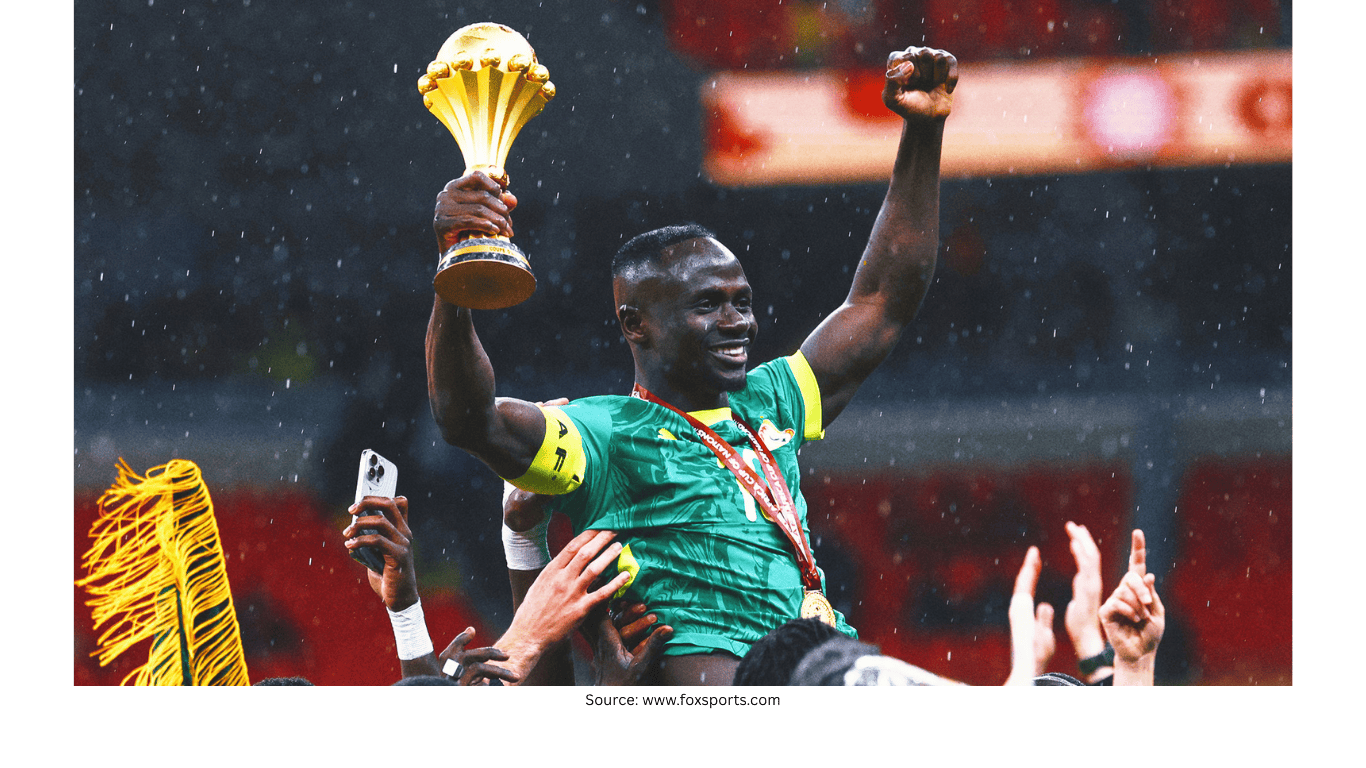
Senegal’s ability to see out the match after extra time secured a historic victory. The 1-0 result delivered their second AFCON crown, coming five years after their first triumph. Holding on in a final filled with pressure, controversy, and prolonged stoppages underlined their resilience and capacity to manage a difficult game environment.
For Morocco, the outcome extended a long wait to lift the trophy again. Their 50-year drought continues, despite hosting the final and being widely viewed as favourites. With high-profile names in the squad and the weight of expectation behind them, the defeat will be especially painful, not least because of how close they came to changing the match through the late penalty opportunity.
The personal spotlight on Diaz after the missed penalty
Finals often create heroes and villains, and the missed penalty placed Diaz firmly under the spotlight. The circumstances made the moment even more intense: the kick came after a lengthy delay caused by the protest, and after a VAR review that had already heightened emotions on both sides. By the time Diaz took the penalty, the atmosphere was charged and the pressure was immense.
Diaz’s miss was not simply a failure to score; it was a missed chance to win the trophy for Morocco. He was later taken off and appeared visibly emotional on the bench, reflecting the personal impact of a moment that may be replayed and debated for years. With the match decided by a single goal, the penalty miss stands out as one of the defining “what if” moments of the final.
A final remembered for extraordinary scenes as much as the scoreline
Senegal’s 1-0 victory will be recorded as a triumph achieved after extra time, but the match will likely be remembered for more than the scoreline. The combination of a VAR intervention, a touchline confrontation, a temporary walk-off, and a high-profile missed penalty created a narrative of chaos and tension that is unusual even in high-stakes international finals.
In the end, Senegal emerged with the trophy, powered by Gueye’s strike and reinforced by Mendy’s penalty save. Morocco, despite home advantage and a late opportunity from the spot, were unable to turn the game in their favour. The final offered a stark reminder of how quickly football’s biggest matches can pivot on a single decision, a single kick, and a single moment of composure—or the lack of it.