
Lionel Scaloni and Lionel Messi Hold Private Talks as Argentina Shapes 2026 World Cup Plan
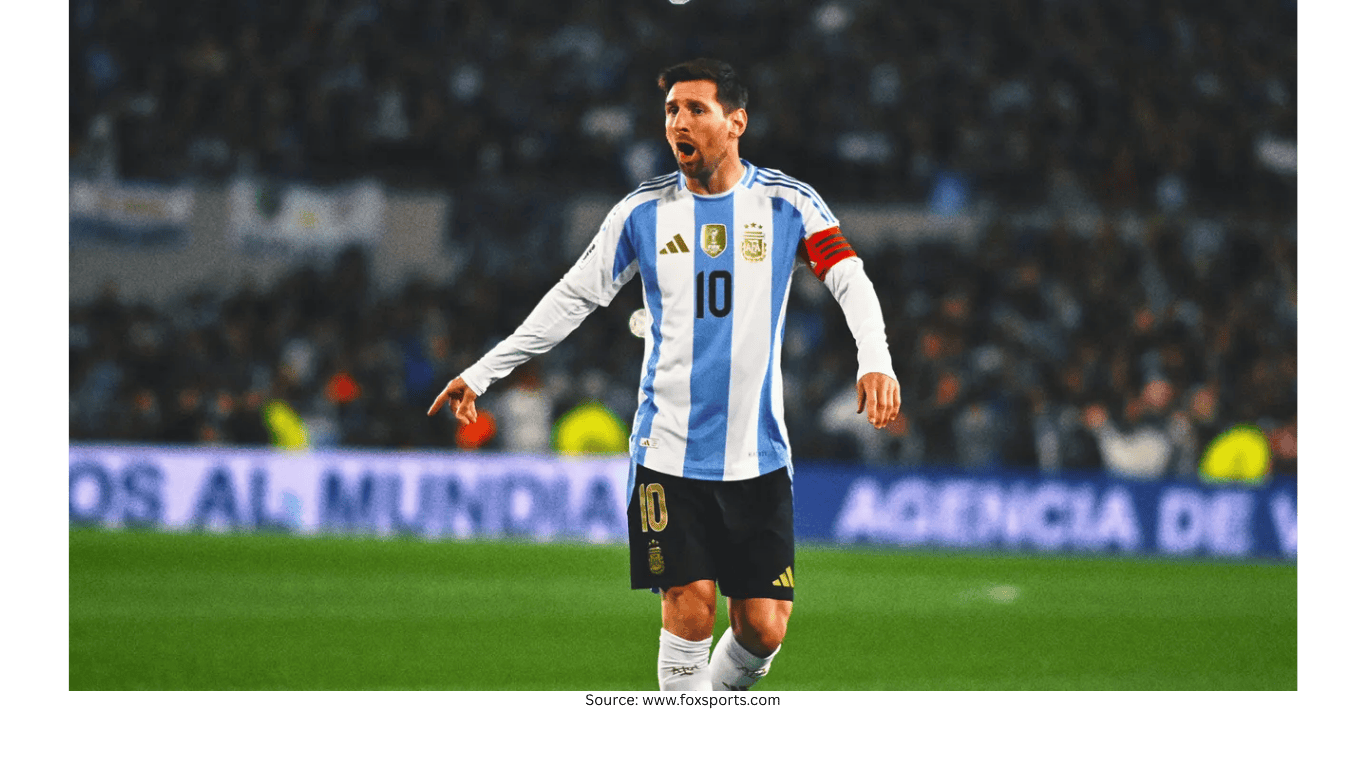
Private meeting as Argentina begins shaping its 2026 approach
Argentina manager Lionel Scaloni has confirmed that he held a private meeting with Lionel Messi, with discussions reportedly touching on plans connected to the 2026 World Cup. Argentina are working through the early stages of preparations for their title defense, and the presence of their long-time captain remains a central question as the tournament draws nearer.
Messi, widely regarded as one of the sport’s all-time greats, is expected by many observers to be part of Argentina’s next World Cup effort. At the same time, there has been ongoing talk that he could retire from international duty before the tournament. Messi has not confirmed his involvement, keeping the situation open while Argentina’s coaching staff continues to plan.
Messi’s stance: hope, uncertainty, and the pull of another World Cup
While Messi has not made a definitive announcement about playing in 2026, he has spoken publicly about the possibility and what it would mean. He indicated that he would like to be involved, even if his role ultimately ends up being as a spectator rather than a player.
“I hope I can be there. I've said before that I'd love to be there. At worst, I'll be there watching it live, but it will be special. The World Cup is special for everyone, for any country — especially for us, because we live it in a completely different way,” Messi said when discussing his World Cup plans.
The comments underline both his desire and his caution. The World Cup’s significance for Argentina, and for Messi personally, is clear in his words. Yet he also leaves room for the reality that participation is not something he is ready to guarantee at this stage.
A relationship built on trust: Messi and Scaloni’s ongoing dialogue
Messi has also described the nature of his communication with Scaloni, emphasizing a relationship that allows for frank discussion. According to Messi, the two have spoken about the future repeatedly, and Scaloni has expressed a preference for Messi to be involved in some capacity.
“The truth is, we've been talking about it. He understands, and we've discussed it a lot. He always tells me that he would like me to be there in any role. We have a relationship of great trust, and we can talk about everything,” Messi said regarding the talks he has had with Scaloni.
Those remarks suggest the conversation is not framed solely around whether Messi will start matches or even play, but also around the broader question of how he might fit into the group as Argentina prepares for another major tournament.
Scaloni confirms the meeting: coffee, competitiveness, and leadership
Scaloni has now added further detail, confirming that he and Messi met while they were near each other. Messi has been back in Argentina during the MLS postseason, and Scaloni said the opportunity to talk in person was straightforward.
“I met up with Leo because we were close by. We had coffee. Those of us who know him know he'll never relax. He's a born competitor. He always wants to be there. That's very important for his teammates — that a captain behaves that way. He always comes to play. It's a legacy he's going to leave. Those who come after him have to take it up,” Scaloni said.
Scaloni’s comments focus less on tactics and more on mentality. He portrays Messi as someone whose competitive drive remains constant, and he frames that attitude as an example for teammates and future leaders in the national team environment.
Building the player pool: a list of about 50 names
Alongside the question of Messi’s role, Scaloni is also managing the broader task of assembling the squad for 2026. He said he currently has “a list of approximately 50 players,” which will be reduced over the coming months.
The reason for such a wide net is practical. Scaloni referenced Argentina’s experience before the last World Cup, when injuries occurred close to the tournament date. That experience has influenced how he is approaching the next cycle, with an emphasis on keeping options open.
“In the last World Cup we had the experience of players who got injured very close to the date. We can't rule anyone out. That's why we have a fairly large list,” Scaloni explained.
This approach reflects a balance between continuity and flexibility. A larger list gives the staff room to respond to late changes, while still allowing time to evaluate players in different roles as the tournament approaches.
Thiago Almada’s situation: evaluation based on performance
One player mentioned as being in contention is Thiago Almada. The 24-year-old has previously been billed as a potential successor to Messi in the No. 10 role. However, Scaloni’s comments come amid a period described as difficult for Almada at Atlético Madrid since his move to Spain in the summer of 2025.
With Almada now generating further transfer talk, Scaloni made it clear that the national team will not attempt to influence his club decisions. Instead, the staff will focus on what they can evaluate directly: his performance.
“We shouldn't interfere, we never have. Once he makes his decision, we'll just analyze his footballing performance and see if he's performing at the level we believe he's capable of,” Scaloni said.
He added that the same principle applies broadly, emphasizing that selection will not be determined by the prestige of a league or club but by how a player performs.
“Thiago's case is the same; I don't know what will happen with him, but we'll evaluate whatever decision he makes, and it goes without saying that he's an important player for us. Performance will ultimately decide, not the league or the team,” Scaloni said.
In these remarks, Scaloni positions Almada as an “important player,” while also reinforcing a consistent selection philosophy: decisions will be based on form and suitability rather than external labels.
Continuity from Qatar: champions “earned” the right to go again
Scaloni also indicated that he expects the 2026 squad to look similar to the group that won the World Cup in Qatar. He said he has not been given “reasons for change,” and he suggested that the reigning champions have “earned” the right to attempt another run together.
This does not mean places are guaranteed, but it does point to a preference for continuity where possible. In international football, where teams have limited time together, familiarity can be valuable, and Scaloni’s comments imply that the existing core still holds the staff’s confidence.
Timing and form: why the decisive period begins in March
Even with a broad preliminary list and an expectation of continuity, Scaloni stressed that the most important factor will be how players arrive at the tournament in terms of form and physical condition. He suggested that the decisive stretch will come later rather than immediately.
“They need to be in top form as the matches approach. I'm not saying it's pointless to do it now, but the crucial part will be from March onwards. They need that bit of luck to arrive in peak condition,” Scaloni said.
The message is clear: planning matters, but the final shape of a World Cup squad is often determined by who is healthy and performing well at the right time. Scaloni’s reference to “luck” also reflects the unpredictable nature of injuries and fitness, particularly as players move through demanding club schedules.
Argentina’s 2026 group schedule: opening match details
Argentina have been placed in Group J at the 2026 World Cup. Their tournament is set to begin with a match against Algeria on June 26 in Kansas City. They will then go on to play Austria and Jordan as part of the group stage.
Those fixtures provide the framework for the months of preparation ahead. For Scaloni, the task is to ensure the squad is ready and balanced, while also managing the uncertainty around availability, injuries, and the final decisions of key figures.
Key themes emerging from the Scaloni–Messi talks
Although neither Scaloni nor Messi has presented the meeting as a definitive turning point, the public comments around it highlight several themes that will shape Argentina’s build-up to 2026.
Messi’s involvement remains undecided, but he has expressed hope that he can be part of the World Cup in some capacity.
Communication between player and coach is ongoing, with both describing a relationship of trust and open discussion.
Leadership and competitive mentality are being emphasized, with Scaloni pointing to Messi’s approach as an example for teammates and future captains.
Squad planning is deliberately broad, with Scaloni working from a list of about 50 players to guard against late injuries and changes in form.
Selection will be performance-based, with Scaloni stating that the league or club a player is in will not be the deciding factor.
What comes next for Argentina’s planning
Argentina’s title defense will be shaped by decisions that unfold over time rather than in a single announcement. Scaloni’s comments suggest a steady process: maintain a wide pool, monitor performance, and narrow choices as the key period approaches. Messi’s status remains a major storyline within that process, but the coach’s broader planning indicates that Argentina are preparing for multiple scenarios while keeping the door open for their captain.
With Group J opponents confirmed and an opening match date and location already set, the long runway to 2026 is now filled with practical steps: evaluating players, maintaining continuity where it makes sense, and ensuring that those selected arrive in peak condition when the tournament begins.