
Roy Keane: Manchester United’s ‘swagger’ is returning, but Carrick not the long-term answer
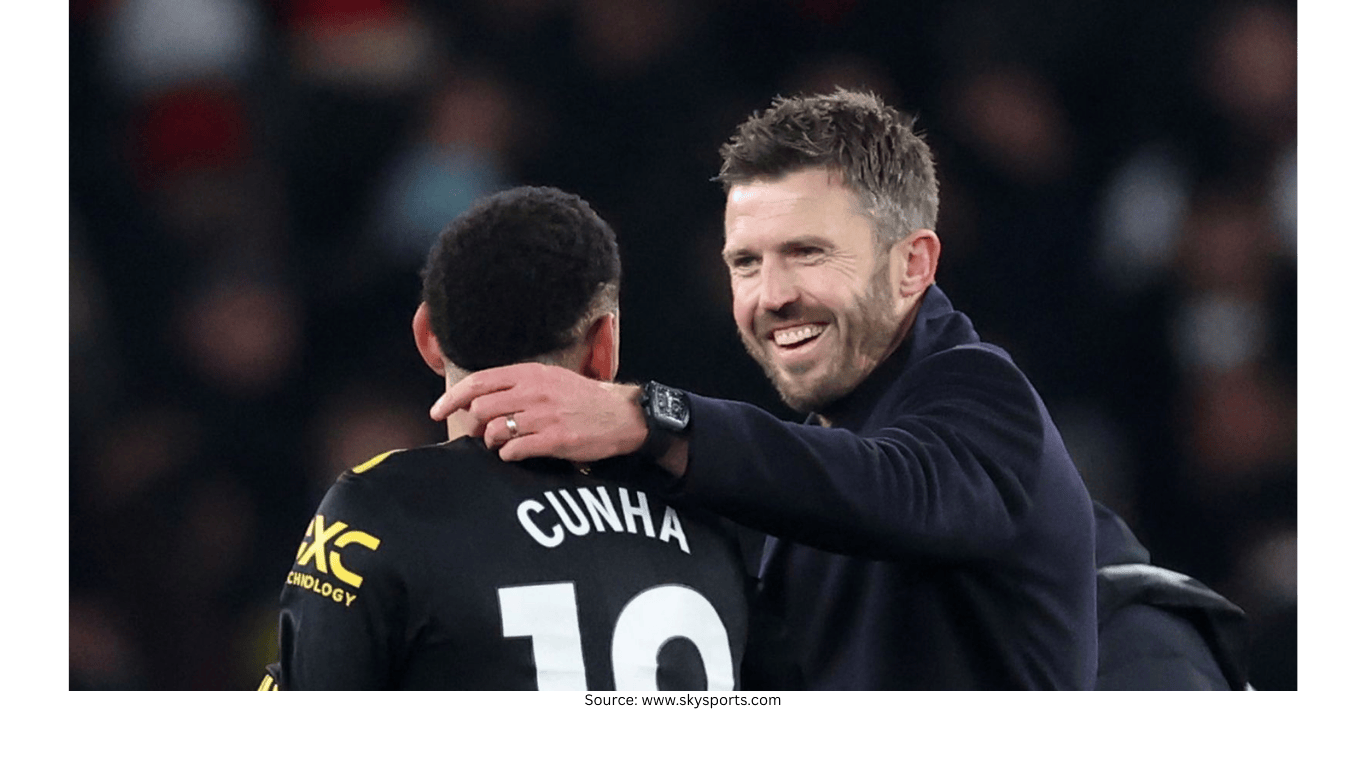
United’s momentum under Carrick draws praise — and a warning
Manchester United’s recent results have brought a noticeable shift in mood, with Roy Keane saying the team have their “swagger” back after wins against Manchester City and Arsenal. Yet even as he praised the performances, Keane was clear that he does not believe Michael Carrick should be considered the long-term head coach at Old Trafford.
Carrick has been confirmed as head coach until the end of the season, and his opening spell has delivered two high-profile victories. United followed up a win over City with a dramatic 3-2 success away to Arsenal, a match decided by a late winner from Matheus Cunha at the Emirates Stadium.
For Keane, those results are encouraging signs of a team rediscovering an identity. But he argued that short-term uplift should not automatically dictate long-term decisions at a club of United’s size.
Keane: “Anyone can win two games”
Keane’s central point was that two matches — even two major wins — should not be the basis for a permanent appointment. Speaking after the Arsenal game, he acknowledged the quality of what United have produced under Carrick, but insisted the job requires a manager with the stature to deliver league titles.
“Two great performances but anyone can win two games,” Keane said. He went further, saying that even an exceptional run to the end of the season would not change his view.
“If United win every game until the end of the season, I still wouldn’t be giving him the job. I still wouldn’t be convinced he’s the man for the job. Absolutely not,” he said.
Keane framed his argument around the scale of the challenge at Old Trafford and what United should be aiming for in the coming years. In his view, the next appointment must be judged by one key standard: the ability to win league titles.
“They need a bigger and better manager. The size of the club and the challenges they face over the next few years, you want a manager who you feel can get them winning league titles,” Keane said.
He then posed the question he believes should guide the club’s thinking: “Are we going to sit here and believe Michael Carrick can get United winning league titles? It’s not enough for me. I don’t believe he is the man to get them winning league titles.”
What changed in the Arsenal win: calmness, quality, and impact from the bench
While Keane was firm about the long-term issue, he also highlighted what he liked about United’s performance at Arsenal. The 3-2 win was not only a statement result against the league leaders, but a match in which United showed qualities Keane associates with stronger United teams of the past.
“Considering where they are and where they have been, they had a bit of swagger and calmness to their play,” he said.
Keane pointed to decisive moments and the influence of substitutions as evidence of a team functioning with greater cohesion. “Two brilliant strikes and players off the bench had a big influence,” he added.
He also referenced the travelling support, suggesting the away end reflected a renewed connection between team and fans. “You see the United fans in the corner, it’s a bit like the old days,” Keane said.
Even as he argued Carrick should not be the permanent answer, Keane acknowledged the coach’s early work. “Carrick’s done really well. Two brilliant performances. They showed real quality,” he said.
Neville agrees on the need for experience at the top
Gary Neville also expressed the view that Carrick should not be United’s long-term solution, despite being pleased with what he has seen in recent weeks. Like Keane, Neville focused on the importance of making a clear-headed decision rather than reacting emotionally to a short run of form.
Neville said United have made emotional decisions in recent years, and he stressed that the club should avoid repeating that pattern. At the same time, he described the last two weeks as positive, focusing on the style and intensity of United’s performances.
“Manchester United have acted emotionally a number of times in the last 12 years. I honestly could not be happier with the last two weeks. The familiarity in what I’m watching feels like I’m watching my team play again properly,” Neville said.
He added: “They played properly, with intensity.”
In Neville’s view, Carrick’s role should run as planned through to the end of the season, after which the club should look to a more experienced, elite-level coach. He suggested managers such as Thomas Tuchel or Carlo Ancelotti as examples of the profile United should target.
“I think it’s right that Carrick keeps the job until the end of the season and then hands the baton over to a Tuchel or an Ancelotti, someone of that world-class ilk,” Neville said.
Carrick’s measured response: “It’s only been 10 days”
Carrick himself has not been drawn into bigger narratives about his future, and he has been careful not to overstate what the early wins mean. After securing his second victory as head coach, he emphasised that the team is still in the early stages of the process.
“It’s only been 10 days, so it was never going to be perfect,” Carrick said.
He also set expectations about what United could realistically do in a difficult away match, suggesting that progress should be judged in layers rather than instant dominance.
“We couldn’t expect to come here and suddenly dominate the whole game and the ball. We’re just starting off, really. It’s a great starting point, but we need to put more layers on top, and we’ll try to do that in the coming weeks,” he said.
A collective effort: staff, players, and substitutes making a difference
One of Carrick’s key themes has been the collective nature of the response, and he credited both the staff and the players for committing to the approach in a short period. He described the early days as a shared effort rather than a quick fix driven by one individual.
“I give a lot of credit to the staff and the players for how much they’ve invested and how much they’ve bought into it,” he said.
Carrick also underlined that coaching ideas only matter if players implement them with conviction, pointing to the impact of players introduced from the bench as a visible sign of belief and unity.
“It’s alright trying to help them and say certain things, but they’ve got to live it — and you’ve seen that with the boys coming off the bench and making a difference,” he said.
That theme echoed Keane’s observations about the Arsenal match, where United’s substitutes played a significant role and the team found decisive moments when it mattered most.
Why the debate matters: short-term lift vs long-term direction
The discussion around Carrick’s future is unfolding against a backdrop of immediate improvement. Two wins against major opponents can quickly change the atmosphere around a club, especially when the performances show intensity and composure.
However, both Keane and Neville argued that United must separate the emotion of a strong fortnight from the strategic decision of who should lead the club beyond this season. Their shared view is that the next long-term appointment should be made with the highest targets in mind, particularly the ambition to win league titles.
Keane’s position is not that Carrick has failed — in fact, he repeatedly highlighted the quality of the two performances — but that the threshold for becoming United’s long-term head coach is different. For him, the question is not whether Carrick can steady the team, but whether he can take them to the top.
What United have shown in two games
From the comments made after the Arsenal win, several themes stand out in how United are being assessed during Carrick’s early spell:
Results against elite opponents: United have beaten Manchester City and Arsenal in successive games under Carrick.
Renewed confidence: Keane described “swagger” and “calmness” in the performance, suggesting a team playing with more belief.
Decisive contributions: Matheus Cunha scored a dramatic winner against Arsenal, and substitutes were praised for influencing the game.
Intensity and familiarity: Neville said the team looked like it was playing “properly” again, with intensity and a recognisable feel.
Perspective from the coach: Carrick emphasised that it is early, not perfect, and that more “layers” are needed in the coming weeks.
The immediate task: building on a “great starting point”
Carrick’s own language suggests he sees the recent wins as a platform rather than a finished product. By describing the situation as “just starting off” and calling it a “great starting point,” he set a tone of cautious optimism rather than celebration.
That approach aligns with the reality of an interim spell: the focus is on stabilising standards, improving performances, and keeping the group together through the remainder of the season. Carrick’s comments about adding “more layers” indicate a desire to develop the team’s play incrementally, rather than attempting to overhaul everything at once.
At the same time, the external debate will continue. Two major victories have naturally raised questions about what comes next, particularly given the visible shift in energy and the importance of maintaining momentum.
A positive spell — with bigger decisions still ahead
For now, the story at Old Trafford is one of renewed belief, strong results, and a squad responding quickly to a new voice. Keane’s assessment captured that dual reality: he praised the “real quality” United showed, while insisting the club must still think bigger when choosing a long-term head coach.
Neville’s view followed a similar line, welcoming the improvement but urging the club to keep Carrick in place only until the end of the season before turning to a more experienced, world-class candidate.
Carrick, meanwhile, has focused on the work in front of him: acknowledging that the team is not yet where it needs to be, crediting the staff and players for buying in, and highlighting the collective feeling that has helped United deliver in big moments.
The wins over City and Arsenal have restored a sense of swagger, but the broader question raised by Keane remains: whether that resurgence is a short-term bounce, or the beginning of something that can be sustained under a coach capable of meeting United’s highest ambitions.