
Liverpool 0-2 PSG (Agg: 0-4): Dembele double ends Reds’ Champions League run at Anfield
Liverpool’s Champions League exit confirmed at Anfield
Liverpool’s Champions League journey ended on a tense night at Anfield as Paris Saint-Germain secured a 2-0 win to complete a 4-0 aggregate victory in the quarter-finals. With Arne Slot’s side already trailing by two goals from the first leg in Paris, the margin for error was minimal. The home crowd arrived ready for a comeback, and Liverpool responded with intensity and ambition, but they could not find the goal that would have transformed the tie.
Instead, PSG’s superior precision in the decisive moments proved the difference. Ousmane Dembele scored twice in the second half to settle the contest and was named player of the match. Liverpool, for all their endeavour and periods of pressure, were left with the familiar frustration of opportunities not taken.
A spirited Liverpool display, but no breakthrough
The storyline of Liverpool’s night was not a lack of effort. Slot’s team produced a spirited performance that unsettled PSG for long spells, particularly as the second half developed. There was a tempo to Liverpool’s pressing and an edge to their approach that suggested belief in an Anfield turnaround.
Yet the tie never reached the point where PSG looked truly on the brink. Liverpool created chances and built momentum, but the crucial breakthrough never arrived. The closest they came in the first half was a Virgil van Dijk effort that was cleared from near the line by Marquinhos, a moment that encapsulated PSG’s ability to survive under pressure.
There was also a major flashpoint involving Alexis Mac Allister. Liverpool were initially awarded a penalty for a foul by Willian Pacho, only for the decision to be overturned following a VAR review. The initial award was described as soft, but debate centred on whether the VAR intervention was justified given there was some contact. For Liverpool, it became another pivotal moment in a tie where fine margins mattered.
VAR controversy and the penalty that wasn’t
Mac Allister’s overturned penalty decision became a defining talking point. From Liverpool’s perspective, it was not simply about whether the contact was enough for a spot-kick, but about the potential swing in momentum at a time when the home side were building pressure. Ibrahima Konate was clear in his view of the incident.
“For me it was a clear penalty,” Konate said. “I was behind the referee. If we get the penalty and score it would have been completely different.”
There was also support for Liverpool’s argument from pundit Tim Sherwood, who said: “I still think it was a penalty. There was contact into the back of the leg. He is entitled to go down with that contact.”
In a match where Liverpool needed goals quickly to turn the tie, the lack of a penalty opportunity felt significant. It was as close as Liverpool would come to changing the aggregate picture before PSG’s late double strike.
Dembele delivers when it matters
For PSG, the night ultimately belonged to Dembele. Liverpool had succeeded in making the contest awkward, and there were periods when PSG had to “suffer at times,” as their head coach Luis Enrique later acknowledged. But when Liverpool took risks in search of a goal, PSG found the spaces they needed.
Dembele punished Liverpool twice late in the game, both goals arriving in the second half. The finishing touch was decisive, and it underlined the difference between the sides over the two legs: Liverpool had volume and pressure, PSG had the cutting edge.
PSG’s progression means they will face Bayern Munich or Real Madrid in the last four. Luis Enrique’s side are also now on a six-game winning streak for the first time this season, a marker of form arriving at a crucial stage of the campaign.
Slot’s selection gambles and in-game changes
Slot approached the second leg with a clear intention to attack the tie. He started Alexander Isak and was forced into an early change before the break when Hugo Ekitike went off injured, prompting the introduction of Mohamed Salah. Later, Slot replaced Joe Gomez with Rio Ngumoha, a move that further fuelled the sense of Liverpool chasing a classic Anfield comeback.
The changes reflected urgency, and the crowd responded. There were moments when the energy inside the stadium suggested Liverpool might yet produce the kind of European night for which Anfield is famous. But while Liverpool’s tempo improved and PSG were unsettled, the finishing and final decision-making did not match the intensity of the performance.
Ekitike injury concern adds to Liverpool’s frustration
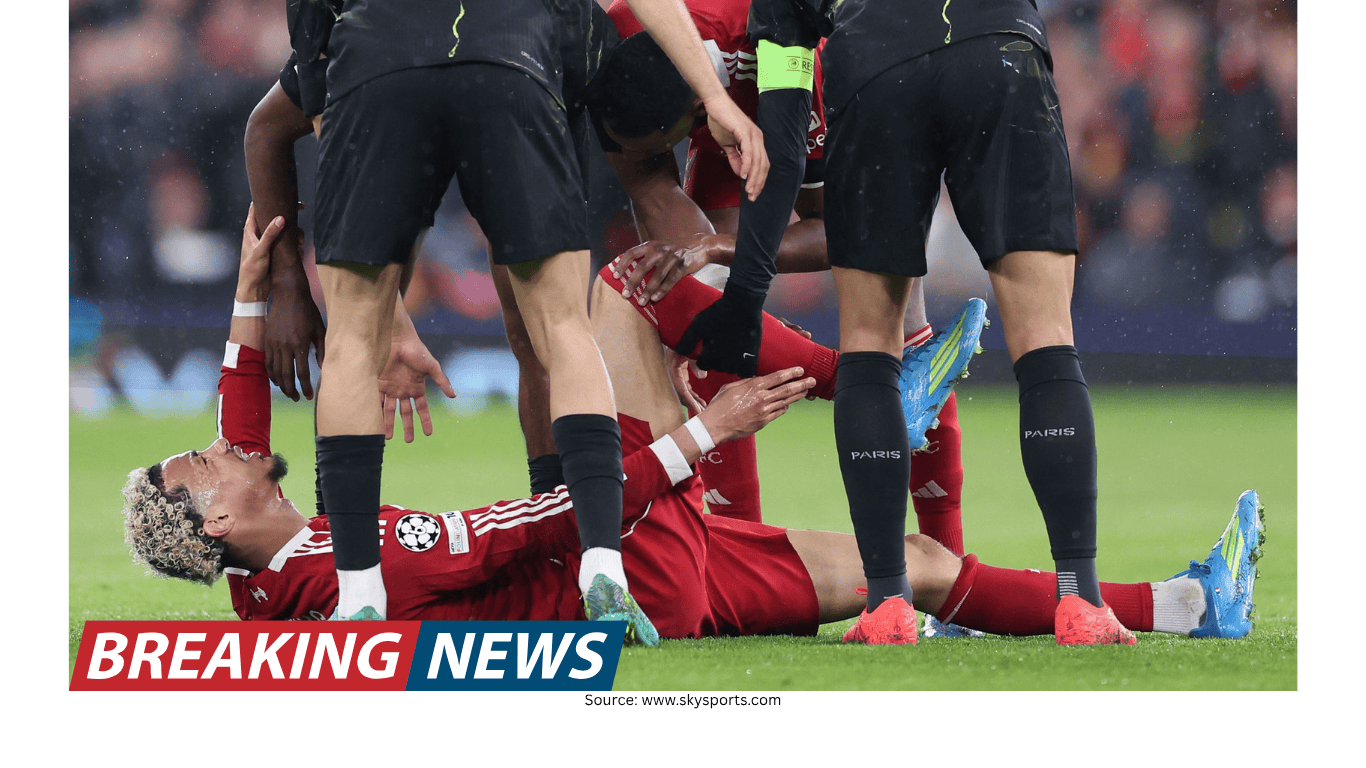
Liverpool’s evening was also overshadowed by concern for Ekitike. He went down in the first half and attempted to get up, only to go down again clutching what appeared to be his Achilles. The reaction of players on both sides suggested immediate worry, and the fear expressed was that the injury could end not only his season but also his World Cup hopes.
Slot did not offer a definitive diagnosis but made clear the initial impression was troubling. “It looks really bad but it is difficult for me to say how bad,” he said. “Tomorrow we will investigate this further how bad this is for him. Let's see but that it doesn't look good is clear.”
The injury forced Liverpool into an unwanted adjustment at a critical time, and it added another layer of disappointment to a night already defined by missed opportunities.
Luis Enrique and Slot on a demanding quarter-final
Both coaches framed the match as a high-level contest shaped by intensity and fine margins. Luis Enrique praised Liverpool’s approach and acknowledged the challenge PSG faced, particularly as the second half unfolded.
“Liverpool played a fantastic game, real intensity,” he said. “In the second half, when things turned around, things got even tougher for us. We showed what kind of team we are, Liverpool showed what kind of team they are too. It was a great quarter-final.”
He also pointed to the importance of fortune in moments that could have changed the tie. “Good luck is important. Had we conceded a goal early in this game, it would have been difficult so you need things to go your way.”
Slot, meanwhile, focused on his players’ work rate and the impact of the crowd, while returning to a theme that has run through Liverpool’s season: underperformance in front of goal.
“I have to give a lot of credit to the players, how hard they worked. I have to give a lot of credit to our fans, how they helped us tonight to execute our game plan,” he said. Slot highlighted the value of the supporters in sustaining Liverpool’s high press, describing how the crowd kept pushing the team forward.
But he also listed the factors that made the night feel like another example of recurring issues. “Unfortunately, it's one of the many examples of this season where we weren't able to score from the many chances we had,” Slot said, adding that the team had been “so far underperforming in terms of xG” throughout the season. He also referenced the injury to Ekitike and another VAR intervention that went against Liverpool.
“Then, of course, we are very disappointed because I think there were parts in the second half where you could just feel that we can score now and this is going to become a special night,” Slot added.
The numbers behind Liverpool’s missed chances
Liverpool’s inability to convert pressure into goals was not limited to this match. Entering the game, they had scored 24 goals from an expected-goals total of 27.8 in the Champions League this season, making them the biggest underperformers in front of goal among the eight quarter-finalists. The second leg followed the same pattern.
Liverpool had 21 shots against PSG but forced only five saves. The volume suggested sustained attacking intent, but the lack of accuracy and clarity in the final third proved costly. Too often, promising situations ended with a sloppy pass, a wild finish, or a poor decision at the moment when composure was required.
The assessment extended to key individuals. Salah’s effort was not questioned, but it was noted that “the mind is willing but the body is now lacking.” For Florian Wirtz, the match was framed as a missed opportunity to show he could deliver in the biggest moments. Isak, meanwhile, was described as well short of fitness, with the sense that the season had passed him by.
Player ratings and standout performances
Dembele’s influence was reflected not only on the scoreboard but also in the match assessments. He received an 8 rating and was named player of the match. For PSG, several others were rated strongly, including Safonov (7), Hakimi (7), Marquinhos (7), and Vitinha (7), with Marquinhos’ first-half clearance standing out as a crucial defensive contribution.
Liverpool’s highest-rated players included Konate (7), Gravenberch (7), and Szoboszlai (7), with Ngumoha (7) making an impact after coming on. Van Dijk was rated 6 despite coming close to scoring, while Isak received a 5 as he continued to work back toward full fitness.
- Liverpool (selected ratings): Mamardashvili 6, Konate 7, Van Dijk 6, Gravenberch 7, Szoboszlai 7, Mac Allister 6, Isak 5. Subs included Salah 6, Gakpo 7, Ngumoha 7.
- PSG (selected ratings): Safonov 7, Hakimi 7, Marquinhos 7, Vitinha 7, Dembele 8.
What the result means for both clubs
For PSG, the job was completed with authority over two legs. Even on a night when they were pushed and at times made uncomfortable, they emerged with another clean sheet and the kind of clinical edge that often defines Champions League progress. Their reward is a semi-final against Bayern Munich or Real Madrid, with a six-game winning streak now providing further evidence of momentum.
For Liverpool, the immediate reality is that their trophyless campaign has been confirmed. There was encouragement in the performance level at Anfield and appreciation from supporters for the endeavour and improved tempo. However, when the dust settles, Liverpool are left to reflect on familiar failings: chances created but not taken, and a lack of precision when it mattered most.
Attention now turns to the Premier League. With Champions League football the next target, Liverpool’s focus must shift to securing a return by finishing in the top five this season. The challenge, as this quarter-final underlined, is turning pressure and promise into goals when the stakes are highest.