
Leicester City relegated to League One after 2-2 draw with Hull City
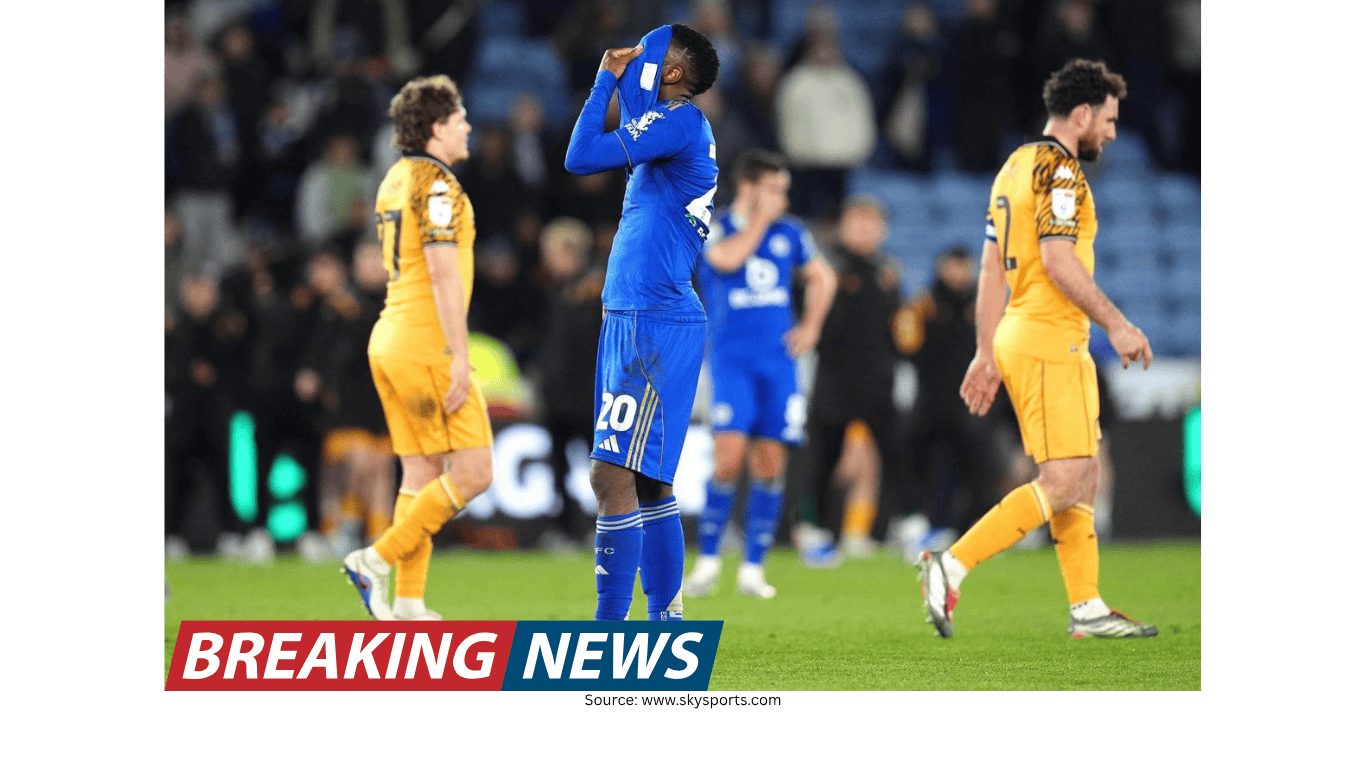
A draw that sealed Leicester City’s fate
Leicester City’s relegation from the Sky Bet Championship was confirmed on Tuesday night after a 2-2 draw with Hull City at the King Power Stadium. The result ended any remaining hope of survival for Gary Rowett’s side, who began the evening 23rd in the table and eight points from safety.
Leicester needed a victory to keep their chances alive. They managed to fight back from behind and even led the match, but a second Hull goal ensured the point that mathematically condemned the Foxes to League One.
The demotion represents a stark moment in the club’s modern history. Relegation to the third tier comes just shy of a decade after Leicester’s remarkable Premier League title win under Claudio Ranieri, a triumph achieved against 5,000/1 odds. In 2026/27, Leicester will play in the third tier of English football for only the second time in their 142-year history.
Context: a season that unravelled over time
While the decisive moment arrived with a draw against Hull, the numbers that framed Leicester’s predicament before kick-off underlined how steep the task had become. They entered the match on a run of just two wins in their last 19 league games. That form left them deep in the relegation zone and reliant on a late surge that never truly materialised.
Rowett later stressed that relegation is the product of a season’s work rather than a handful of matches, pointing to recurring issues that have undermined Leicester’s campaign. Among the most telling statistics was the fact they have kept only five clean sheets all season, a figure that reflects problems at both ends of the pitch.
How the match unfolded: mistake, response, and a final blow
The match itself followed a pattern that, in Rowett’s view, has been “symptomatic” of Leicester’s season: a costly mistake, a spell of promise, and ultimately another setback. Leicester gifted Hull the opening goal in the 17th minute. Playing out from the back, goalkeeper Asmir Begovic passed straight to Millar, who took advantage by composing himself and firing home.
Leicester’s response after the interval was immediate and dramatic. They turned the game around in just 92 seconds early in the second half. First, they were awarded a penalty when Issahaku Fatawu was tripped by Lewis Koumas. James converted emphatically from 12 yards in the 52nd minute to level the score.
Then, from the very next attack, Thomas met Bobby De Cordova-Reid’s cross to make it 2-1. For a brief period, Leicester looked capable of forcing the kind of result they needed, with the crowd sensing the possibility of a reprieve.
However, the lead lasted only nine minutes. Hull equalised in the 64th minute after Millar again caused problems down the left. He teed up Oli McBurnie, who rifled home from 16 yards to make it 2-2. That goal proved decisive not only in the match but in the wider story of Leicester’s season, sealing their relegation.
Hull’s manager Sergej Jakirovic was sent to the stands for protesting the penalty decision, adding another flashpoint to a night already heavy with consequence. Yet for Leicester, the larger narrative remained unchanged: they could not find the win they needed, and the draw was not enough.
Rowett: frustration at the pattern and the bigger picture
After the match, Leicester boss Gary Rowett spoke of both immediate frustration and longer-term accountability. He pointed to the first-half error that handed Hull an early lift, saying Leicester “didn’t match the urgency or importance of the game” before the break, even though they created moments where they “should score.”
Rowett contrasted that with what he described as an “absolutely excellent” second half, suggesting Leicester’s intensity after the interval was what had been missing in recent weeks. He also highlighted the failure to take chances and the defensive record that has left them vulnerable throughout the campaign.
“You don’t get relegated over three or four games, but over a season,” he said, adding that while missed chances have played a part, “that’s not the whole story.” The lack of clean sheets, he argued, shows that the problems have not been confined to the forward line.
Chairman’s statement: apology and a promise to rebuild
In the aftermath of relegation being confirmed, Leicester owner Aiyawatt Shrivaddhanaprabha released a statement to supporters in which he accepted responsibility for the club’s plight. “As chairman, that responsibility sits with me,” he said. “There are no excuses.”
He acknowledged the emotional weight of the moment, describing how the club has experienced “the highest highs and now the lowest lows,” and emphasised that the pain is shared across the club. He apologised directly to supporters for the disappointment caused and said the club does not take their backing for granted, “especially at moments like this.”
Looking ahead, Shrivaddhanaprabha said the focus would now shift to what comes next, promising “the necessary decisions to move the club forward” and an effort to “rebuild, improve, and restore the standards expected of Leicester City.” His message ended with a commitment to confront the challenge directly: “We will face this head-on. We will keep going. Together.”
Reaction: shock at the scale of the collapse
The relegation prompted strong reactions from pundits who struggled to reconcile Leicester’s squad profile with the outcome. Andy Hinchcliffe said he could not find another relegated club with Leicester’s “quality and experience,” describing the fall to League One as “unprecedented” given pre-season expectations that Leicester would challenge for the Championship title.
Hinchcliffe’s assessment was blunt: he argued that those on the playing side of the club need to reflect deeply because the season’s outcome is “unacceptable.”
Courtney Sweetman-Kirk, speaking on Soccer Special, described disbelief at what she had watched across the season. While she said she believed the players care “to a degree,” she argued that Leicester have not shown enough consistently. She also expressed concern for supporters and for staff behind the scenes, suggesting that relegation can have consequences beyond the first team.
Her comments also raised questions about the practical impact on the club’s infrastructure, pointing to the challenge of maintaining elite standards when revenues fall and league status changes. She said she worried about the broader state of the club and described the situation as potentially “catastrophic.”
The financial reality of dropping into League One
Alongside the sporting consequences, Leicester’s relegation brings a significant financial shift. The club is expected to take a major hit to income next season, with revenues predicted to fall by around 50 per cent compared with the Championship. The drop is even more pronounced when set against their position a year earlier, when they were in the Premier League; Leicester would be earning less than a third of what they were at that point.
The scale of the decline is particularly striking for a club that won the Premier League 10 years ago and lifted the FA Cup five years ago. The figures outlined show annual revenues of £187m in the top division, likely to be just over £100m by the end of this Championship season, and a predicted £60m per year in League One.
Even with that fall, Leicester are still projected to be by far the biggest earners in League One next season. Average revenues for a League One club are around £10m, roughly one-sixth of Leicester’s predicted level. That gap may provide some cushion, but it does not remove the need for difficult decisions.
Parachute payments: a cushion that shrinks over time
Leicester’s rapid descent will at least be softened by parachute payments linked to their relegation from the Premier League in 2025. Those payments are designed to reduce the shock of dropping out of the top flight, and Leicester’s entitlement would not change even after a second consecutive demotion.
However, parachute payments reduce year by year. Any club relegated from the Premier League receives roughly 55 per cent of their Premier League entitlement in year one, 45 per cent in year two, and 20 per cent in year three. For Leicester, that means the support will be lower next season, around £10m less than the previous year.
The longer-term implication is clear: even if Leicester were to return to the Championship at the first attempt, their parachute payments would drop further for the start of the 2027/28 season. The financial planning required is therefore not limited to the immediate campaign ahead.
Squad costs and the likelihood of major change
With income falling, Leicester’s wage bill will need to adjust quickly. The expectation is that the wage bill would have to drop by around 30-40 per cent. Some of that reduction may occur through relegation clauses in players’ contracts, but the broader picture points toward significant churn in the squad.
The logic is straightforward: many players may become unaffordable in League One, while others may be considered too high a calibre to be content playing in the third tier. That combination often forces clubs into rapid restructuring, regardless of their ambitions to return at the first attempt.
One player highlighted in the discussion around Leicester’s finances is Abdul Fatawu. Leicester could have cashed in for around £35m when they were relegated from the Premier League last summer, with a number of top-tier clubs prepared to pay that amount, according to information relayed to Sky Sports News. Now, with Leicester in League One, his market value is expected to be lower—possibly £10m-15m less—although Leicester would still be expected to seek the best possible price.
What Leicester must confront next
Leicester’s relegation is not just a change of division; it is a reset that touches every part of the club, from the matchday atmosphere to the balance sheet. The immediate sporting challenge will be to build a team capable of coping with the demands of League One while managing the psychological weight of a historic club operating outside the top two tiers.
The reactions from within and around the club suggest a recognition that this moment requires more than short-term fixes. Rowett spoke of season-long patterns that have been repeated too often. The chairman promised decisions designed to rebuild and restore standards. Pundits questioned how a squad with such perceived quality ended up in this position, and what that means for the next stage.
For supporters, the reality is stark: a club that reached the summit of English football 10 years ago will now face a very different landscape. The task ahead is to turn a painful confirmation into a coherent plan—one that addresses performance, accountability, and sustainability—so that Leicester can begin the work of moving forward again.
Key moments and themes
- Leicester City were relegated to League One after drawing 2-2 with Hull City at the King Power Stadium.
- Leicester started the night 23rd, eight points from safety, with only two wins in their previous 19 league games.
- A first-half error from Asmir Begovic gifted Hull the opener, scored by Millar in the 17th minute.
- Leicester turned the match around early in the second half through a James penalty and a Thomas goal from De Cordova-Reid’s cross.
- Oli McBurnie’s strike in the 64th minute made it 2-2 and confirmed Leicester’s relegation.
- Chairman Aiyawatt Shrivaddhanaprabha apologised to fans and said the club will take necessary decisions to rebuild.
- Revenues are predicted to fall to around £60m per year in League One, down from just over £100m in the Championship and £187m in the Premier League.
- Parachute payments remain in place but reduce over time; Leicester’s support is expected to be around £10m lower next season.
- Leicester’s wage bill is expected to need a 30-40 per cent reduction, with significant squad turnover likely.