
Hansi Flick defends Barcelona rotation as Lamine Yamal substitution debate grows
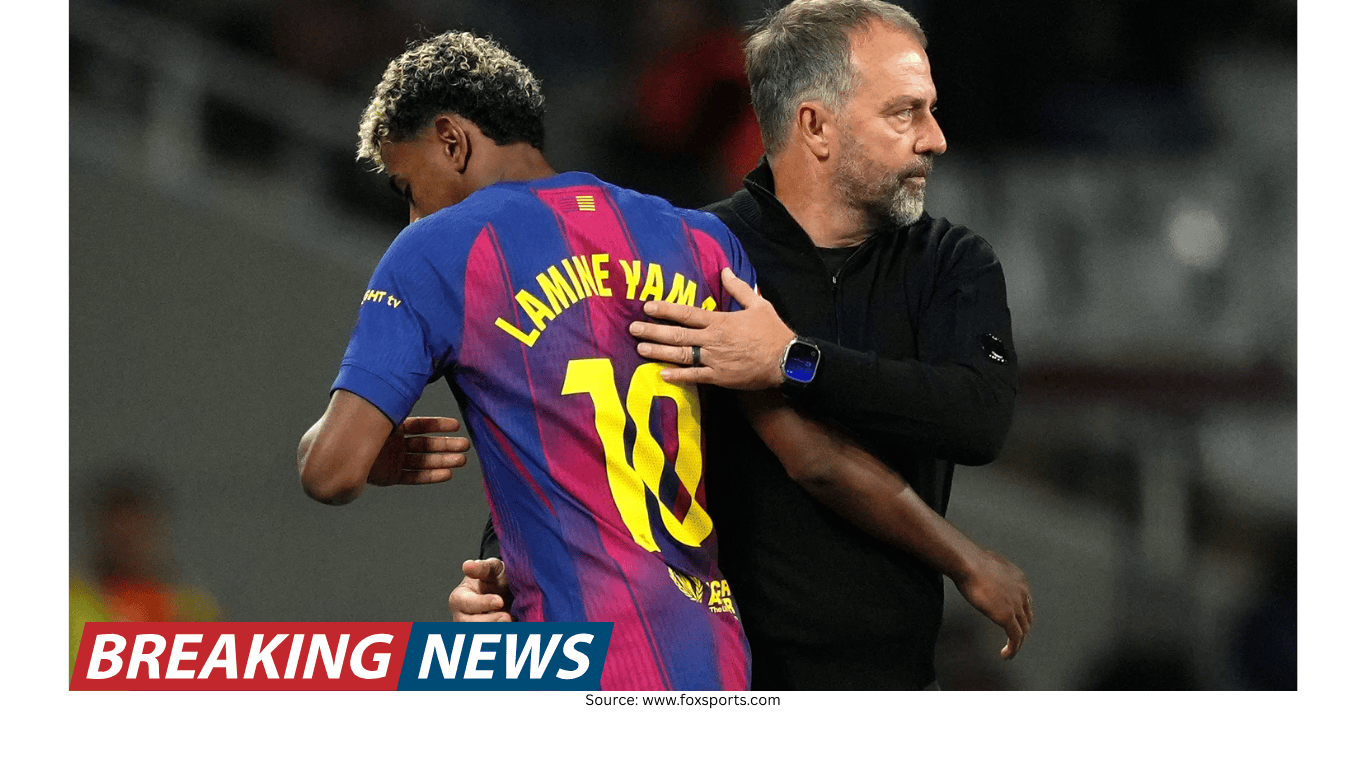
Flick answers the “noise” around his decisions
Barcelona head coach Hansi Flick has pushed back against what he described as the “noise” that follows his decision-making, after teenage winger Lamine Yamal appeared frustrated when substituted in recent matches. Flick, a German tactician approaching a personal milestone of 100 games in charge this Saturday against Villarreal, presented his stance calmly: at a club of Barcelona’s profile, every detail is magnified, and that includes the body language of a young star as he walks off the pitch.
In comments delivered through the club’s official media channels, Flick acknowledged that the attention can feel relentless, but he framed it as part of the job. The scrutiny, he suggested, is inseparable from managing a team that draws constant focus from supporters and observers alike. For Flick, the challenge is not merely to make decisions, but to make them while knowing that each one will be examined for hidden meanings.
The discussion intensified after a recent match against Levante, when Yamal’s reaction to being withdrawn became a headline in itself. Flick said the response was “normal,” and he has returned to the topic to underline the broader point: a substitution is a routine part of football, even if it becomes a talking point when it involves one of the game’s most exciting young talents.
Why substitutions become bigger at Barcelona
Flick’s argument is rooted in Barcelona’s scale and symbolism. He noted that in Barcelona, “if a player or a coach says or does anything, it generates a lot of noise outside.” In his view, this is less about any single incident and more about the environment: “That happens because everyone is watching Barca.”
He also reflected on how the tone of commentary can shape perceptions. “At the beginning it seemed as if everything was negative because of the comments,” he said, before adding a reminder of what he wants football to feel like: “And football is to be enjoyed, in a positive way.”
The coach’s message was not that analysis should disappear, but that the sport can become distorted when every gesture is treated as a crisis. In a club where expectations are permanently high, Flick appears keen to separate genuine issues from what he sees as the inevitable background noise of modern football.
Yamal’s reaction: “part of the game”
Flick was direct in defending his right to rotate his squad, even when the decision involves Yamal. He said he understands why a player might not be happy to come off, but he also stressed that substitutions must be viewed through the lens of the squad rather than the individual.
“Here at Barca we already know that if I substitute Lamine they look to see what he does, his reaction, when this is part of the game,” Flick said. He then explained the emotional reality for players: “It is normal that being a footballer when you leave the pitch you are not satisfied.”
However, Flick’s emphasis was on acceptance and opportunity. “But in the end there is also another player who deserves to play and you have to accept it. But I can understand it,” he added. The framing is important: he is not dismissing Yamal’s feelings, but he is placing them within a broader professional context where minutes must be shared and decisions must serve the team’s needs.
Rotation as a principle, not a provocation
The coach’s defence of rotation is also a defence of his authority. At elite clubs, the management of star players is often treated as a storyline, and Flick appears determined to avoid setting a precedent where a substitution automatically becomes controversial.
His comments suggest he sees squad management as both practical and philosophical. Practically, it allows other players to contribute. Philosophically, it reinforces the idea that Barcelona’s identity should not be reduced to one individual, regardless of talent or age.
Flick’s position also implies that reactions, while understandable, are not the final word. A player’s frustration can be human and immediate, but the coach’s responsibility is to the bigger picture: the match, the season, and the collective standards of the group.
La Masia unity and a young core
Beyond the headlines around substitutions, Flick spoke with clear enthusiasm about the composition of his squad, particularly the prominence of players who have come through La Masia. He highlighted the unity he sees among young talents such as Yamal, Pau Cubarsí and Marc Bernal, describing their behaviour as team-first.
“The most important thing are the players and the coaches are here for them, to help them do better, to grow, so that there is competition on a daily basis,” Flick said. In his telling, the training ground is where standards are built, and competition is not a threat but a tool for development.
He added: “You can see how Lamine, Cubarsí, Bernal ... act in the same way, as a team, which is the most important thing and is what makes Barca different.” The comment points to a value Flick believes distinguishes Barcelona: not simply the presence of talented youngsters, but their shared approach and cohesion.
Training intensity and match-day standards
Flick described a culture of commitment that he wants to see every day. He spoke of “being a single unit, training at 100% to play at 100% when the match arrives.” It is a simple formula, but it reflects the expectations at a club that measures itself by trophies and by style.
He also said he enjoys working with this group, describing the blend of youth and experience and the desire to improve. “I love seeing such a young team, with some expert footballers, with the desire to be better,” he said, pointing to a spirit he believes is visible in the way the squad responds to success.
A small detail that surprised Flick
Among his reflections, Flick mentioned a habit that caught his attention: the team taking photos together after wins. He said it surprised him, but he interpreted it as meaningful.
He described how the players “celebrate every trophy or even after a won match: they take a photo; that surprised me.” For Flick, it is not a trivial social-media moment but an expression of the group’s character: “It describes these players, that they like to compete and celebrate when they compete well.”
The detail matters because it aligns with his broader theme: Barcelona’s strength, in his view, is not only tactical or technical, but also the unity and shared motivation of the squad.
Copa del Rey challenge: overturning a 4-0 deficit
While the debate over substitutions continues, Flick is also focused on a major competitive task: attempting to overturn a 4-0 deficit against Atletico Madrid in the Copa del Rey semi-finals. The scale of the challenge is obvious, but Flick’s language was deliberately optimistic.
“It’s difficult, but not impossible,” he said. “We have to believe, that's the first thing.” Flick insisted Barcelona are “capable of coming back and giving everything for 90 minutes or more.”
His emphasis was on full commitment and collective purpose. “We have to fight for the team, for the club, for the fans and, of course, have the fans on our side, all going together,” he said, before describing what success would mean: “Reaching the Cup final would be almost a dream.”
Camp Nou and the importance of connection
Flick placed particular importance on the atmosphere at Camp Nou for the second leg on March 3. He called for a connection between the stands and the pitch, suggesting that unity off the field can help fuel belief on it.
“That's why Camp Nou is so important,” he said. “We haven't lost and we want to continue like this. Try the comeback. Playing at home everything is possible.”
He returned repeatedly to the idea of togetherness. “When there is a connection between the team and fans it is great. We will need it on 3 March. For that they have to come and enjoy. Everything is possible if we are together.”
In Flick’s framing, the comeback attempt is not only a tactical mission but also an emotional one, dependent on belief, intensity and the shared energy of a home crowd.
Approaching game 100: living day by day, planning long term
Flick’s upcoming 100th match in charge provides a natural moment for reflection, and he used it to outline how he balances immediate demands with longer-term planning. He said he prefers to work “match by match, day by day,” calling it “the best thing you can do as a coach.”
At the same time, he made clear that Barcelona are thinking beyond the next fixture. “We play in all competitions and we want to win titles,” he said, before adding: “But it is also important that in this club we are looking ahead to next season and for everything that will come.”
Flick also referenced his collaboration with sporting director Deco, signalling that planning is already underway. “I really appreciate the work of Deco, of my staff,” he said. “For me it is important to look positively at the future. For me it is important to feel the confidence.”
Laporta’s message: winning matters, but so does how
Flick ended by recalling what Barcelona president Joan Laporta told him when he arrived. The instruction, as Flick presented it, was about more than results: it was about identity and style.
“You must know what FC Barcelona means, its identity, its style of play,” Flick said. He added that Laporta’s message was clear from day one: “you don't just have to win, it also matters how you win and that is what I believe.”
That closing thought ties together the themes Flick addressed: the scrutiny that comes with the job, the management of young talents like Yamal, the emphasis on unity and development, and the demand to compete for trophies while reflecting Barcelona’s footballing philosophy.
Key points from Flick’s comments
- Flick says the attention around his decisions is amplified because “everyone is watching Barca.”
- He considers player frustration at being substituted “normal,” but stresses that other players also “deserve to play.”
- He praised the unity of La Masia graduates and the team’s commitment to training and competition.
- Barcelona face a difficult Copa del Rey task after a 4-0 first-leg deficit, but Flick insists it is “not impossible.”
- He highlighted the importance of Camp Nou and the connection between fans and team for the March 3 second leg.
- Flick says he works day by day while also planning ahead with Deco, and he reiterated Laporta’s emphasis on identity and style.