
England held 1-1 by Uruguay as Ben White’s return becomes the night’s defining storyline
A friendly that felt like an audition — and a verdict
England’s 1-1 draw with Uruguay at Wembley was billed as an international match with an obvious subtext: a chance for players to strengthen their case for future selection under Thomas Tuchel. In front of an attendance of 80,581, the evening delivered a late twist, a loud crowd reaction, and a performance that left as many questions as answers.
The headline, however, was not simply the scoreline. It was the return of Ben White to the international stage — and the complicated reception that followed him throughout the match. White scored England’s goal on 81 minutes, his first for the national team, but he was booed by sections of the home support. Then, in stoppage time, he was penalised for a foul after a VAR check, allowing Uruguay to equalise through a 94th-minute spot-kick converted by Fede Valverde.
For England, the draw ended a night that had already felt flat and short on momentum. For White, it became a personal drama played out in real time: a moment of achievement, immediately undercut by jeers, followed by an incident that directly cost England the win.
Ben White’s comeback: goal, boos, and a late penalty
White’s selection had been controversial before kick-off. He was called up as a replacement for Jarell Quansah, and Tuchel had acknowledged that the defender would need to “clear the air” with team-mates after leaving the 2022 World Cup early for personal reasons. White later rejected a call-up under Gareth Southgate following a disagreement with then assistant coach Steve Holland. His return to the squad under Tuchel ended what had been described as a self-imposed international exile.
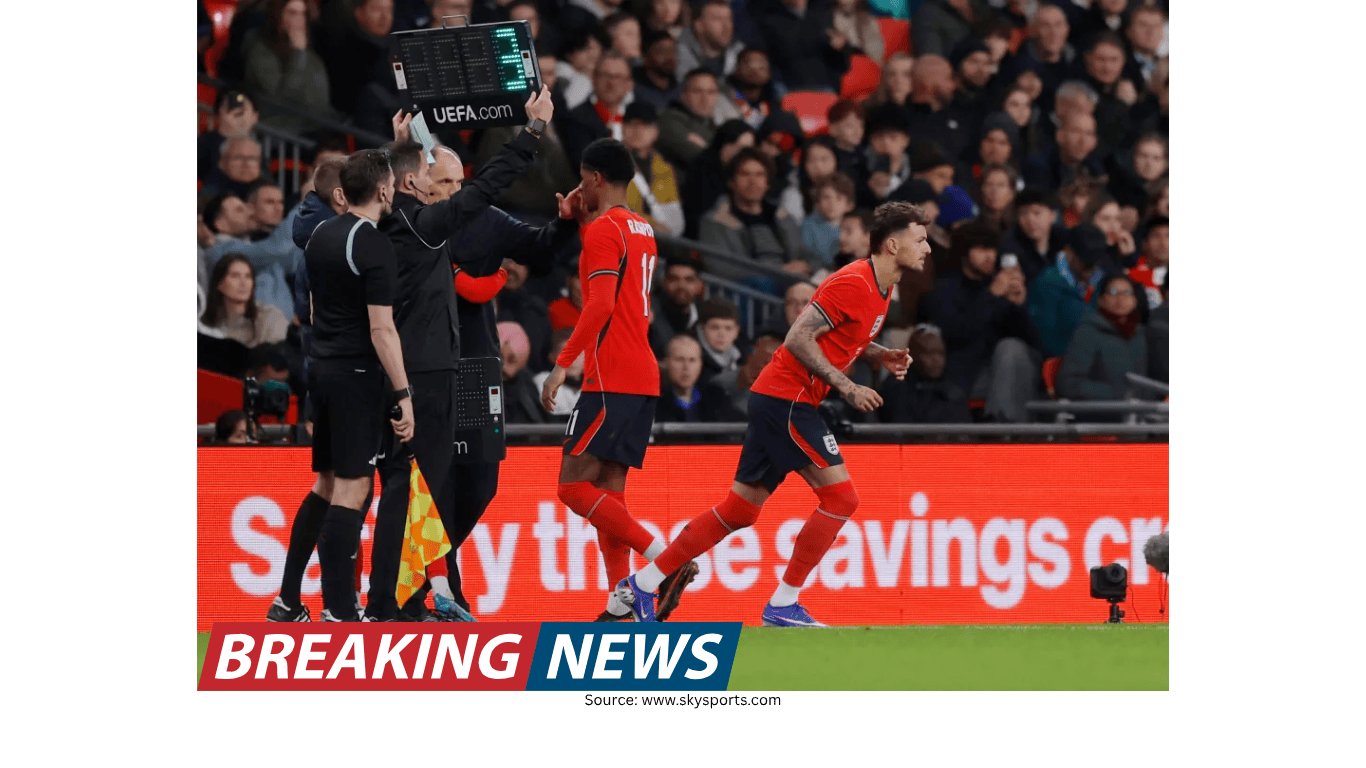
That context mattered at Wembley. White was booed when he came on as a second-half substitute, a reaction that did not fade with time. When he arrived at the back post to tap in from close range for his first England goal, the moment should have been uncomplicated — a defender scoring at Wembley on his return. Instead, the celebration was met with jeers, and the boos intensified again when the stadium announcer read his name.
The late penalty incident compounded the mood. White’s outstretched boot arrived a fraction of a second after Federico Viñas went for what was described as a 50-50 challenge. After a VAR check, the referee judged it a foul. Valverde converted from the spot in the 94th minute, levelling the match and sending home unhappy those fans who had already voiced their displeasure at White’s involvement.
In a single friendly, White experienced the extremes: the high of scoring and the low of being directly involved in conceding the equaliser. It also placed Tuchel in the middle of a sensitive situation, balancing the need to reintegrate a player with the reality of a divided crowd response.
Tuchel’s response: disappointment at the reception, focus on moving forward
After the match, Tuchel said he had heard White was booed, although he did not hear it clearly during the game because he was focused on substitutions. He described the reception as mixed and said he was disappointed, adding that “we protect our players.”
Tuchel also suggested White would need to accept the reaction and move on. In his view, the defender should “take it on the chin,” and the coach expressed hope that White could put the episode behind him, saying he was ready to “write some new chapters.”
Yet the atmosphere at Wembley indicated this will not be a simple reset. The crowd’s reaction felt like a message not only to White, but also to Tuchel: that some supporters have not forgiven the circumstances of White’s earlier exit from international duty and do not believe he should be part of the conversation for future tournaments.
Officiating controversies add to the frustration
The match also featured several contentious moments involving the officials, which became part of the post-match discussion. Uruguay’s Ronald Araújo escaped a red card for a bad tackle on Phil Foden, a challenge that left Foden limping. Another confusing episode involved Manuel Ugarte, who appeared to be shown two yellow cards but was not sent off.
Harry Maguire later explained the confusion, saying England were told Ugarte had been shown two yellow cards and that the second was rescinded, before being told the first yellow was actually for José María Giménez. The end result, as Maguire described it, was that rather than Ugarte receiving two cautions, Ugarte ended up with no yellow cards.
The penalty awarded against White was also a focal point. Maguire called it “ridiculous,” while Tuchel described it as a “very soft penalty.” The England manager argued that while there was contact, it was obvious what the striker was trying to do. He also questioned the consistency of VAR involvement, saying he was surprised the system was in place given other incidents he felt were not checked — including the tackle on Foden and a heavy first-half challenge that forced Noni Madueke off.
Tuchel’s assessment of the officiating was blunt: he did not think it was a good performance from the officials and called it “a bad day at the office.”
A performance that underwhelmed despite late drama
Beyond the controversies and the White storyline, England’s overall display was met with audible dissatisfaction at full-time. The match had been framed as an opportunity for players to impress in a tactical environment and strengthen their position in Tuchel’s thinking. Instead, England were described as underwhelming both individually and as a unit.
The home crowd had little to shout about before White’s goal, which came from what was described as a messy set-piece. The match lacked sustained attacking rhythm, and even with England leading late on, there was not a sense of control or inevitability. The late penalty and equaliser only sharpened the sense that England had not done enough to turn the evening into a convincing step forward.
Tuchel, however, offered a more positive internal view of his team’s approach. He said he liked the “positivity, the attitude, the performance,” and called it a “very tactical game.” He suggested England were good in moments but did not get the goal that might have given them more freedom, and said the “boost was missing” even though the team kept trying.
That contrast — the coach’s measured optimism versus the crowd’s frustration — captured the tension of the night. England were not outplayed for long spells, but they also did not look like a team brimming with confidence or clarity, especially given the supposed stakes of selection.
Individual notes: who helped themselves, who left doubts
Several players had moments that stood out, though not always for the right reasons. Maguire’s return after an 18-month absence was described as assured, and he even wore the captain’s armband for the final 30 minutes. One late defensive intervention, a “magnificent block” deep into injury time, was highlighted as a key action that helped avert an England defeat.
James Garner’s debut was also viewed positively, described as neat and unfussy, with his all-round attributes on show. In a match where England struggled to generate clear opportunities, that kind of dependable performance in midfield offered a small but notable plus.
At the other end of the pitch, England’s forward options came under scrutiny. Dominic Solanke was described as bright and busy but did not receive chances to score. Dominic Calvert-Lewin, trying to make an impression, endured a particularly painful moment: a miscued header with the goal gaping, a miss that was framed as the kind of chance that can linger in a manager’s memory when selection decisions are being made.
Foden again failed to deliver in an England shirt, despite looking busy and teasing before being affected by Araújo’s heavy tackle. Madueke’s night ended early after a first-half challenge, another incident that fed into England’s frustration with the lack of intervention from officials.
Starting line-up and the shape of the night
England’s listed players for the match included Dean Henderson in goal; defenders Dan Burn, Marc Guéhi, Ezri Konsa and Nico O’Reilly; midfielders Elliot Anderson, Declan Rice and Morgan Rogers; and forwards Anthony Gordon, Harry Kane and Bukayo Saka.
Even with recognised names on the teamsheet, the game did not develop into a showcase of attacking fluency. England’s breakthrough arrived late and scrappily, and Uruguay’s equaliser came even later, from the penalty spot. The pattern reinforced the sense that this was a match where the narrative was driven by incidents rather than sustained quality.
What the draw means for Tuchel’s decision-making
The match was supposed to provide clarity for Tuchel as he assesses his options. Instead, it left him with uncertainty. The evening’s defining moments — White’s goal and penalty, the contentious refereeing calls, and a generally subdued team performance — did not offer many straightforward conclusions.
Tuchel may take encouragement from aspects of England’s attitude and tactical adaptability, as he suggested afterwards, but he will also recognise the broader issue: few players looked as though they had emphatically seized their chance. In that sense, the match functioned less as a platform for decisive claims and more as a reminder of unresolved questions.
For White specifically, the night underlined the difficulty of returning to the fold under intense scrutiny. The boos were not a minor background detail; they were a constant soundtrack to his involvement. The fact that he both scored and conceded the decisive penalty ensured he could not escape the headlines, and it placed his international future under a harsher spotlight than any friendly appearance would normally generate.
Next fixtures: Wembley again, then warm-ups
England’s schedule continues quickly. They host Japan in another friendly at Wembley on Tuesday, with kick-off at 7.45pm. That match is described as the final chance for Tuchel to look at his players on the international stage before he announces his World Cup squad at the end of the season.
After that, England have World Cup warm-up matches with New Zealand and Costa Rica, before their tournament opener against Croatia on June 17.
Those dates add weight to every performance and every decision. Against Uruguay, England did not collapse, but they did not convince either. And in a night shaped by one player’s turbulent return and a late VAR intervention, Wembley delivered a reminder that selection debates can be as much about emotion and perception as they are about form.
Key moments at a glance
Ben White returned to England duty and was booed by sections of the Wembley crowd after coming on as a second-half substitute.
White scored his first international goal on 81 minutes, tapping in at the back post, but his celebration was met with jeers.
A VAR check led to a stoppage-time penalty against White for a foul on Federico Viñas.
Fede Valverde scored the 94th-minute penalty to secure a 1-1 draw for Uruguay.
England and Tuchel criticised the officiating, including incidents involving Phil Foden, Noni Madueke, and confusion over cautions.
England’s overall performance was described as underwhelming, with limited standout auditions ahead of upcoming selection decisions.