
Crystal Palace progress to Conference League semi-finals despite 2-1 loss to Fiorentina in Florence
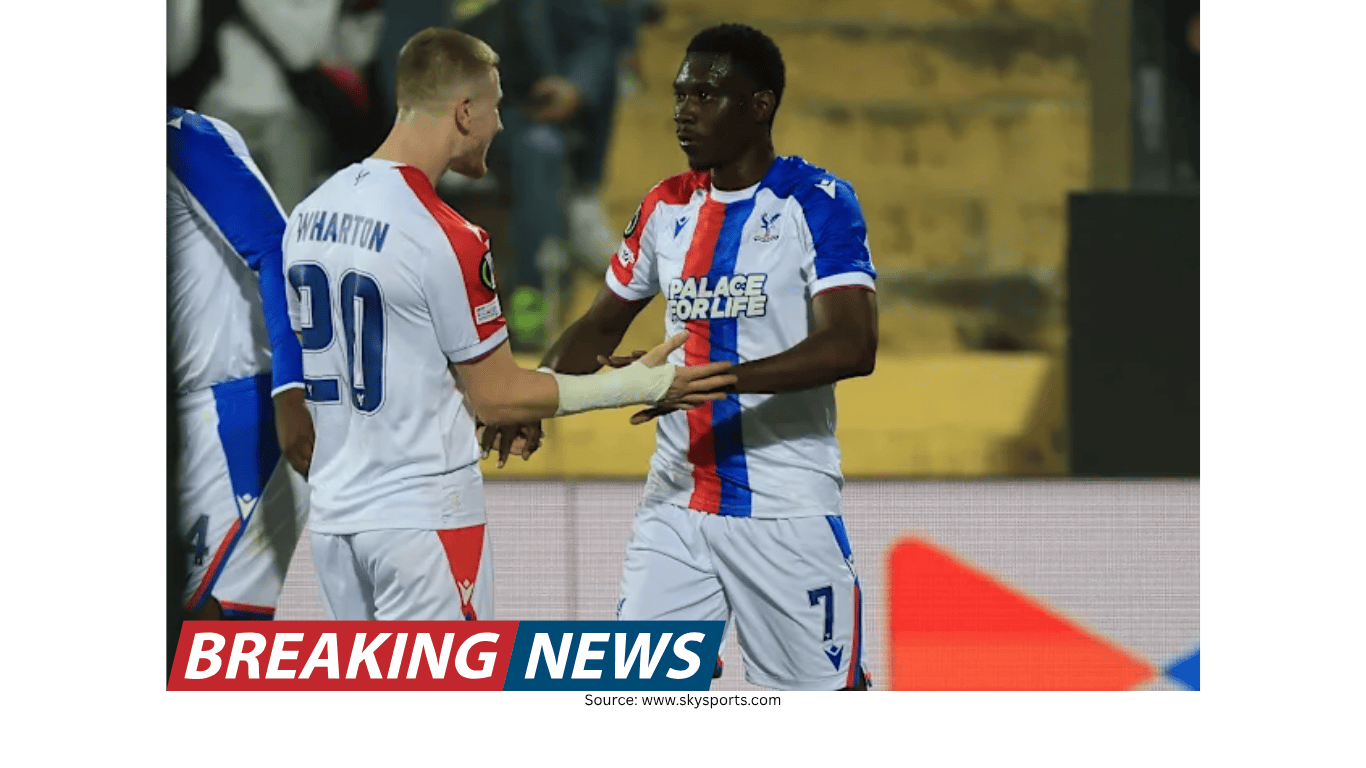
Palace’s European run continues, even in defeat
Crystal Palace are into the UEFA Conference League semi-finals for the first time after completing a 4-2 aggregate victory over Fiorentina, despite losing 2-1 in the second leg in Florence. The Eagles arrived in Italy with a 3-0 advantage from the first leg at Selhurst Park, a cushion that ultimately proved decisive even as Fiorentina produced a far more competitive display on their own ground.
The tie had moments that suggested Palace might cruise through, particularly when Ismaila Sarr headed the visitors in front early on. But it also had phases that underlined how quickly a knockout match can shift, with a penalty changing the mood and injuries forcing Palace into an unplanned reshuffle before half-time. In the end, Palace did enough across the two legs to progress, setting up a semi-final meeting with Shakhtar Donetsk.
An early Sarr header and a reminder of Palace’s first-leg control
Palace’s approach in Florence was shaped by the commanding work they had done in the first leg. The 3-0 win in London meant Fiorentina needed a big response, while Palace could afford to be pragmatic if necessary. Yet the visitors started in a way that suggested they were not interested in simply protecting what they had.
When Sarr powered in an early header, the aggregate picture became even more favourable for Palace. With that goal, the Eagles’ advantage looked overwhelming, and the match briefly carried the feel of a tie that might be settled long before the final whistle. Sarr’s impact was reflected in his recognition as the standout performer on the night.
Fiorentina’s route back: a penalty and belief
Fiorentina’s first real opening came through a costly moment from Jaydee Canvot. The Palace defender brought down Rolando Mandragora in the penalty area, catching him late and giving the referee a clear decision to make. Albert Gudmundsson converted from the spot, sending Dean Henderson the wrong way and giving the home side a lift.
The timing of the penalty incident added to the tension. As it was awarded, play had been stopped with Adam Wharton down in discomfort after no apparent contact. It was an unsettling moment for Palace in more ways than one: a goal conceded, a key midfielder in pain, and the sense that the match could become more complicated than the early minutes had suggested.
Injuries disrupt Palace’s plan before half-time
Wharton’s issue quickly became significant. The England international, who has dealt with injuries this season, was unable to continue and limped off after around 30 minutes. Jefferson Lerma replaced him, a change that was not part of Palace’s preferred script in a high-stakes away leg.
There was further disruption before the interval. Maxence Lacroix also went off, with manager Oliver Glasner opting not to take chances and introducing Chadi Riad close to half-time. Two first-half substitutions in a European quarter-final can dramatically alter how a team manages the rest of the match, reducing tactical options and limiting flexibility if the game state changes later.
After the match, Lacroix posted an image captioned “No problem, thank you Lord” in reference to his injury as he celebrated the overall victory, an indication that the immediate mood in the Palace camp was one of relief and optimism.
Half-time adjustment: Mateta unable to continue
Palace’s personnel issues did not end with the first half. Jean-Philippe Mateta did not return for the second period, with Jorgen Strand Larsen coming on in his place. Glasner later explained that the decision was linked to managing Mateta’s ability to complete the full match.
By that stage, Palace were already operating with reduced room for manoeuvre. With multiple changes forced by fitness concerns, the second half became less about expressing attacking intent and more about controlling risk, staying organised, and ensuring Fiorentina did not find the sequence of goals required to overturn the tie.
Ndour’s long-range strike wins the night, but not the tie
Fiorentina continued to push and were rewarded with a stunning goal from range by Cher Ndour. The strike came during a promising spell for the Italian side and put Palace behind on the night. With the score at 2-1, the match carried a different edge: the home crowd had something tangible to rally around, and Palace had to manage the final stages with composure.
However, while Fiorentina kept working to test Henderson, the victory on the night was ultimately in vain. Palace’s aggregate advantage held firm. The visitors focused on defending well, limiting clear chances, and seeing out the moments that could have turned a difficult evening into a damaging one.
Glasner: resilience mattered more than style
Glasner’s post-match assessment framed the contest as a typical quarter-final challenge: rarely straightforward, often decided by a team’s ability to navigate adversity. He pointed to Palace’s strong start—highlighting an early chance for Daniel Munoz—before noting how the penalty changed the dynamic by giving Fiorentina renewed belief.
He also emphasised the impact of being forced into two first-half substitutions, which reduced Palace’s options to react later. The half-time change involving Mateta was another decision shaped by physical limitations rather than tactics alone.
When Fiorentina went 2-1 up after Ndour’s strike, the match entered a phase where Palace were not focused on playing expansive attacking football. Instead, Glasner highlighted the team’s defensive discipline and collective resilience—qualities that can be decisive in knockout football even when a side is not at its most fluent.
In his view, Palace managed the final stages effectively and did not allow Fiorentina a major chance after falling behind on the night. Over the two legs, he said, Palace deserved their place in the semi-finals.
Henderson: ‘Who cares’ about the second-leg scoreline
Dean Henderson’s comments captured the broader feeling around Palace’s achievement. The goalkeeper described the moment as “unbelievable” for the club, pointing to the significance of continuing to “write a new chapter” and crediting supporters for staying with the team during difficult periods this season.
Henderson also acknowledged the psychological danger of defending a 3-0 first-leg lead, calling it a “dangerous scoreline” because of the uncertainty around how a second leg can develop. For him, the key point was simple: Palace got through. “So who cares,” he said, reflecting a results-first mindset that often defines successful European campaigns.
He added that the group’s ambition is to win the competition and stressed the importance of sticking together during what he called “business time” of the season.
Wharton and Lacroix: early details on the injuries
Glasner provided initial information on the injuries that forced his hand. Wharton, he said, felt pain in his adductor—an issue that had also led to him leaving the England camp the previous week. The manager indicated the club would assess how serious it is.
On Lacroix, Glasner said the defender suffered a medial ligament injury in his knee, while expressing hope that it would not be “too serious.” With the semi-finals approaching, Palace will be keen to understand the timeline for both players, particularly given the way injuries have affected the squad at different points of the season.
Player ratings and standout performer
Palace’s night in Florence featured a mix of strong contributions and difficult moments, as reflected in the match ratings from the team. Sarr was named Player of the Match after his early goal and overall influence.
- Dean Henderson 5
- Daniel Munoz 6
- Maxence Lacroix 5
- Jaydee Canvot 5
- Chris Richards 6
- Tyrick Mitchell 6
- Adam Wharton 5
- Daichi Kamada 6
- Ismaila Sarr 7
- Jean-Philippe Mateta 5
- Pino 5
- Substitutes: Jefferson Lerma 6, Will Hughes 6, Jorgen Strand Larsen 5, Chadi Riad 6
What the result means: a semi-final with Shakhtar Donetsk
By progressing, Palace set up a UEFA Conference League semi-final against Shakhtar Donetsk. Shakhtar reached the last four after beating AZ Alkmaar 5-2 over two legs. For Palace, the reward is not only a place in the semi-finals but also the structure of the tie: they will have a second-leg advantage, hosting the return match at Selhurst Park.
The first leg will be played on April 30, with the second leg on May 7. Palace will travel to Poland for the opening match because Shakhtar play their home games there due to Russia’s invasion of Ukraine.
A milestone for Palace and a familiar landmark for English clubs
Reaching the last four places Palace in notable company. They are the fifth English club to make the Conference League semi-finals, following Chelsea, West Ham, Leicester and Aston Villa. For Palace specifically, it marks their first European semi-final, a landmark moment regardless of how the second leg in Florence unfolded.
The quarter-final also illustrated how European progress can come in different forms. Palace were dominant in the first leg, then had to absorb pressure and manage setbacks in the second. The overall performance across both matches was enough to move on, even if the final 90 minutes were uncomfortable at times.
A season shaped by workload and setbacks
Palace’s European story has unfolded against a backdrop of challenges. The club were not initially supposed to be in this competition, but after being moved into the Conference League due to UEFA ownership rules, they have continued to advance and make history.
The campaign has not been smooth. Glasner has spoken about a period when, in his words, he felt abandoned, with the squad not ready for the workload after losing key players in the summer and again in January. Injuries also played a part, contributing to domestic form that “wilted” as the strain of competing on multiple fronts took effect.
Yet the quarter-final in Florence offered a snapshot of how Palace have kept their European momentum. Even when the match turned awkward—through the penalty concession, the forced substitutions, and the second-half pressure—they found a way to protect what mattered most: the aggregate lead and the place in the next round.
Next steps: managing fitness and building momentum
With a semi-final on the horizon, Palace’s immediate priorities are clear from the events of the second leg. They will monitor Wharton’s adductor issue and Lacroix’s knee problem, while also balancing the demands on players such as Mateta, who was withdrawn at half-time in Florence.
On the pitch, the tie with Fiorentina reinforced the value of flexibility. Palace showed they can strike early, as they did through Sarr, but also that they can defend under pressure when circumstances demand it. That combination—along with the experience of navigating a tense second leg—will be central as they prepare to face Shakhtar over two matches with a place in the final at stake.
For now, the headline remains simple: Palace are in the semi-finals, and their European dream is still alive.