
Barcelona File Formal UEFA Complaint After Controversial Champions League Loss to Atletico Madrid
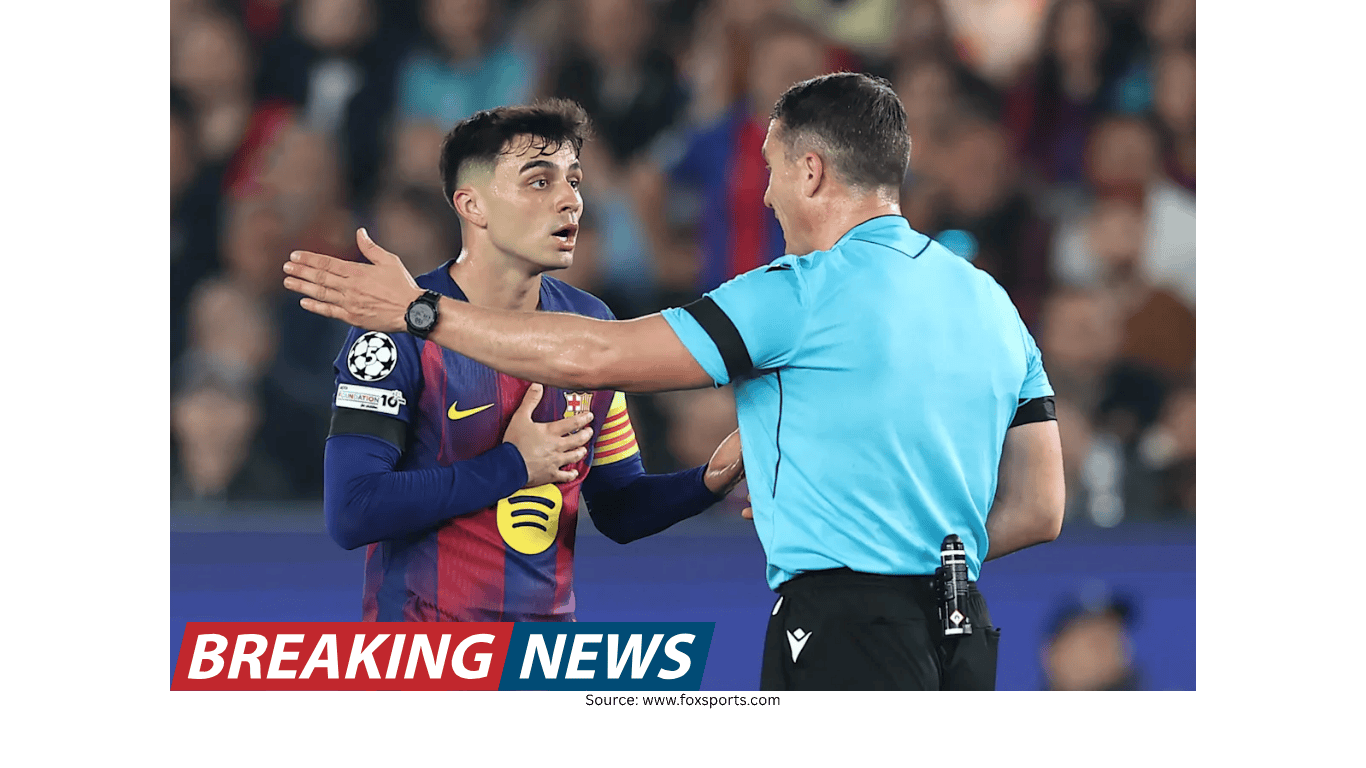
Barcelona escalate refereeing dispute with formal UEFA complaint
Barcelona have taken the unusual step of filing a formal complaint to UEFA following their controversial 2-0 defeat to Atletico Madrid in the first leg of their UEFA Champions League quarterfinal. The club say they are outraged by what they describe as “incomprehensible refereeing” and believe key decisions directly influenced both the flow of the match and its outcome.
The complaint has been confirmed by Barcelona in an official statement, marking a significant escalation after a night dominated by debate over a handball incident that went unpunished and the absence of intervention from the video assistant referee (VAR). The Catalan side argue that the officials failed to apply the laws correctly in a moment they consider decisive.
The club’s statement: request for investigation and referee communications
In their statement, Barcelona said their legal department had formally approached UEFA regarding the events of the match. The club’s position is that the referee’s performance was “contrary to the regulations in force,” and that this had a direct impact on the match itself.
Barcelona’s complaint focuses primarily on a specific incident in the second half. According to the club, in the 54th minute, after play had properly restarted, an Atletico player handled the ball inside the penalty area and no penalty was awarded. Barcelona further argue that VAR’s failure to intervene represented a serious error.
As part of their filing, Barcelona have requested several measures from UEFA, including an investigation into the incident, access to the referee’s communications, and, if needed, official recognition of errors and the implementation of what the club described as “appropriate measures.”
Barcelona also used the statement to widen the context beyond a single match, saying they believe this is not the first time in recent editions of the Champions League that “incomprehensible refereeing decisions” have harmed them. They claimed such decisions have created a “clear comparative disadvantage” and prevented them from competing on equal terms with other clubs.
The incident at the centre of the complaint: a handball after play restarted
The flashpoint that has prompted Barcelona’s formal action came in the 54th minute and involved Atletico substitute Marc Pubill. The sequence, as described, began after goalkeeper Juan Musso played a short goal-kick. Barcelona argue that the ball was technically in play, meaning the restart had been completed under the laws of the game.
In that moment, Pubill deliberately stopped the ball with his hand and rolled it back to his goalkeeper. The action appeared to be based on his belief that the ball had not yet been live. Barcelona’s view, however, is that play had already restarted correctly, making the handball a clear infringement inside the penalty area.
Despite the apparent nature of the offence, referee Istvan Kovacs allowed the goal-kick to be retaken without further sanction. No penalty was awarded, and Barcelona contend that VAR also failed to intervene despite the significance of the decision.
Flick’s reaction: questions over VAR and the laws
Barcelona head coach Hansi Flick was visibly angry on the touchline, and later made his frustration clear when speaking after the match. His criticism was directed not only at the on-field decision but also at the lack of VAR involvement.
“I don't know why VAR didn't intervene... it's unbelievable,” Flick said. “We all make mistakes but with this type of situation... Why do we have VAR? It should be a penalty and a second yellow for the player.”
Flick’s remarks underline Barcelona’s core argument: that this was not a marginal call but, in their view, a fundamental misapplication of the rules at a moment when the ball was already in play. The club’s complaint suggests they believe the incident met the threshold for VAR review and correction, yet no such correction occurred.
More than one controversy: Barcelona reduced to ten men
The handball was not the only major talking point from the match. Barcelona played the majority of the contest with ten men after Pau Cubarsi was dismissed just before half-time. The red card altered the balance of the tie, shifting momentum toward Atletico and forcing Barcelona to manage the second half a man down.
Flick remained sceptical about the dismissal, but he indicated that the missed handball decision was the more serious issue. From Barcelona’s perspective, the combination of the red card and the unpunished handball created a match environment in which they felt heavily disadvantaged.
While the club’s formal complaint is centred on the 54th-minute incident, the wider context of the match has contributed to the intensity of the reaction. Barcelona’s statement frames the issue as part of a broader pattern of decisions they believe have gone against them in the Champions League.
The scoreline: Atletico take a 2-0 advantage
On the pitch, Atletico Madrid emerged with a 2-0 win, giving Diego Simeone’s side a strong advantage heading into the second leg. The goals came from Julian Alvarez and Alexander Sorloth, leaving Barcelona with a significant deficit to overcome in the return fixture.
With a two-goal margin to overturn at the quarterfinal stage, the task is steep. Barcelona acknowledge, implicitly, that history is against them in such situations. Still, the club’s response indicates they intend to fight on two fronts: attempting to turn the tie around in sporting terms, while also seeking accountability for what they see as a decisive officiating failure.
What Barcelona say they want from UEFA
Barcelona’s complaint outlines a clear set of requests. They are not simply disputing a decision in public; they are asking UEFA to formally examine what happened and to provide transparency around the officiating process.
Based on the club’s statement, their requested outcomes include:
- An investigation into the incident and the referee’s performance in relation to the relevant regulations.
- Access to the referee’s communications, which would include the exchanges that informed the final decision-making.
- Official acknowledgment of errors if UEFA concludes mistakes were made.
- The implementation of “appropriate measures” if errors are identified.
Barcelona’s emphasis on communications is notable because it points to the role of VAR and the decision-making chain. The club’s argument is not only that the on-field referee made the wrong call, but that the VAR process failed to correct it.
VAR under scrutiny again after a high-stakes decision
Flick’s post-match comments crystallised a question that often follows controversial incidents in major competitions: what is VAR for if it does not intervene in moments that appear clear to players, coaches, and supporters?
Barcelona’s position is that the handball occurred after the ball was back in play, and therefore should have been treated as an offence inside the penalty area. In their view, the officials effectively treated the moment as if play had not restarted properly, allowing a retake rather than punishing the handball.
The club’s complaint suggests they believe this distinction is crucial. If play had restarted correctly, then the handball could not be dismissed as a pre-restart technicality. That is why Barcelona describe the decision as a fundamental error in applying the laws of the game.
Looking ahead: a hostile second leg and a defiant stance
Barcelona now face a difficult second leg in Madrid, where they expect a hostile atmosphere as they attempt to overturn the 2-0 deficit. The club’s statement and Flick’s comments indicate a determination to ensure the return match is officiated under heightened scrutiny.
While the complaint cannot change the first-leg result, Barcelona appear to be seeking two things: recognition of what they believe went wrong, and reassurance that similar incidents will be handled differently in the future. Their language suggests they see the issue as affecting competitive balance, not merely one isolated call.
On the field, Barcelona must find a way to respond to Atletico’s advantage and the challenge posed by Simeone’s side. Off the field, the club have made clear they will pursue their case through UEFA’s formal channels, insisting that the events of the first leg warrant examination.
Key points from the controversy
- Barcelona lost 2-0 to Atletico Madrid in the first leg of their Champions League quarterfinal.
- The club have confirmed they filed a formal complaint to UEFA, describing the refereeing as “incomprehensible.”
- The complaint focuses on a 54th-minute incident in which Barcelona say an Atletico player handled the ball inside the penalty area after play had restarted.
- Referee Istvan Kovacs allowed the kick to be retaken and did not award a penalty; Barcelona also criticise VAR for not intervening.
- Hansi Flick said he did not understand why VAR did not act and argued it should have been a penalty and a second yellow.
- Barcelona also played much of the match with ten men after Pau Cubarsi was sent off just before half-time.
- Atletico’s goals were scored by Julian Alvarez and Alexander Sorloth, leaving Barcelona with a two-goal deficit for the second leg in Madrid.
For now, the tie remains alive but tilted heavily in Atletico’s favour. Barcelona’s formal complaint ensures, however, that the debate over the match will continue beyond the final whistle, with UEFA now asked to review the incident, the decision-making process, and the role VAR played in a moment Barcelona believe should have changed the game.