
Arsenal held at Wolves as late Edozie equaliser dents title momentum
A cold night, a costly draw
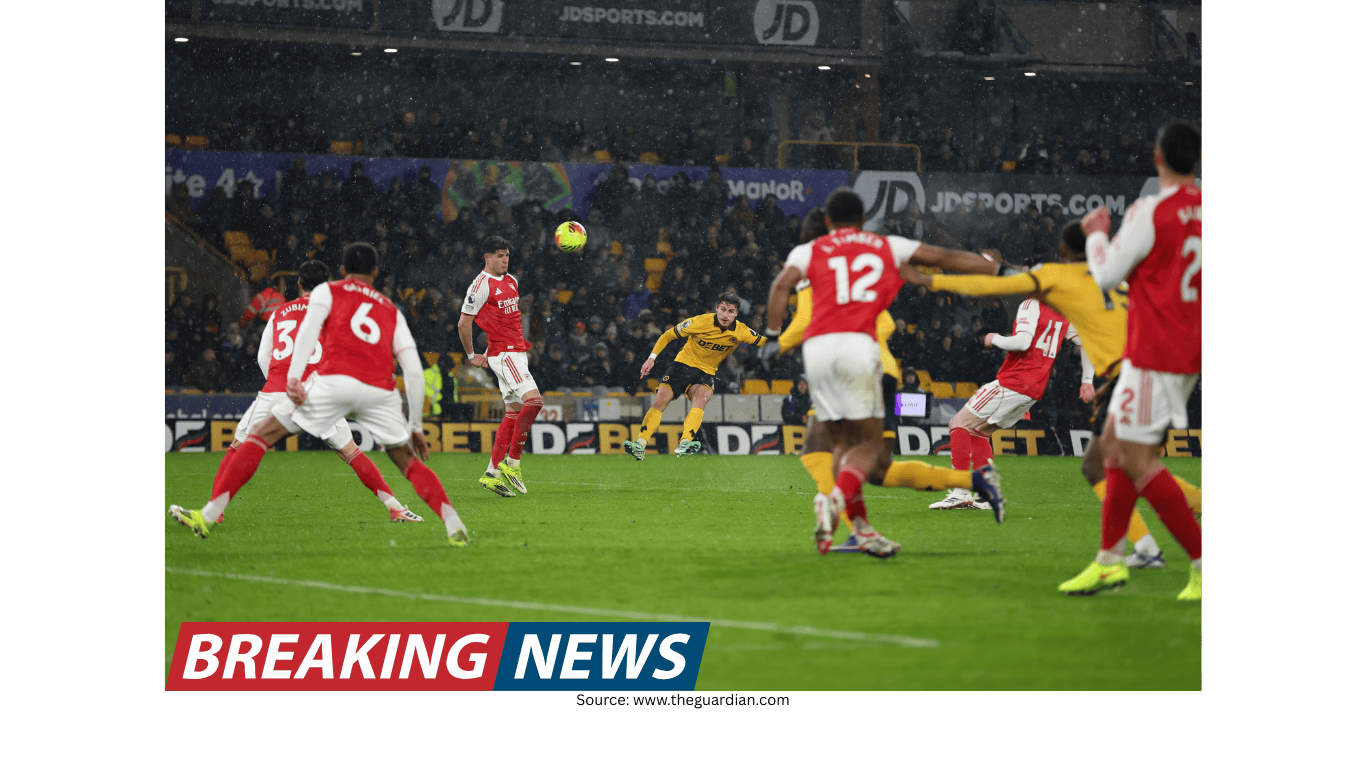
Arsenal left Molineux with a 2-2 draw that felt heavier than a routine dropped pair of points. In difficult conditions of rain, sleet and even snow, the Premier League leaders twice had the game in a position of control and still failed to finish it. Wolves, described on the night as the league’s worst team, produced a spirited comeback that was capped by Tom Edozie’s late equaliser — his debut goal — which went in off Riccardo Calafiori after striking the post.
The result adds to a run that has not matched the standards expected of champions. Arsenal are five points clear of Manchester City, but have played a game more, and the pressure of the chase is tightening after they have won only twice in their past seven matches. This was framed as the kind of fixture title winners negotiate: away from home, against struggling opposition, in poor weather, with the expectation of professionalism rather than spectacle. Arsenal did not pass that test.
Fast start: Saka strikes early
The opening minutes suggested the night might follow a familiar pattern. Arsenal scored in the fifth minute when Bukayo Saka headed in from a Declan Rice cross. Saka, operating in a more central role as a No 10, again underlined his versatility with a well-timed run and a composed finish with his head. The goal quietened Molineux and appeared to drain Wolves of what little early belief they had.
With Wolves passive and sitting deep, Arsenal were given time on the ball. The home side adopted a low block and, in the first half, did not press aggressively. The space and possession Arsenal enjoyed should have translated into clearer chances and a more decisive lead, but their performance began to dip as the temperature dropped.
Control without cutting edge
Despite their dominance of possession, Arsenal struggled to turn control into threat. Wolves’ goalkeeper José Sá was not seriously worked for long periods, even as Arsenal moved the ball around the final third. Noni Madueke did force an awkward moment when Sá spilled a shot, but the danger was cleared before Gabriel Martinelli could capitalise.
Up front, Viktor Gyökeres led the line after arriving with a £64m price tag, yet he was largely isolated. With limited service, he was reduced to peripheral involvement, a detail underlined by the narrative of the night: Arsenal had the superior names and resources on the pitch, but not the sharpness or intensity to turn that into a comfortable win.
Wolves, for their part, offered almost nothing early on. They failed to register a shot in the opening half-hour, fitting for a contest described as the league’s worst attack against the best defence. Still, as the rain turned to snow and the match settled into a slower rhythm, the home crowd began to find encouragement in the fact the deficit remained only one goal.
Wolves show signs of life as Arsenal lose duels
The resistance grew gradually. Tolu Arokodare, introduced from the bench, brought physicality and competed with William Saliba, giving Wolves a focal point and the sense of a fight that had been missing. The shift was felt in the stands before it was fully visible on the pitch, but it mattered: Arsenal began to lose duels, and their attacks were more frequently disrupted.
As half-time approached, Wolves played with more aggression and began to make the match uncomfortable. Adam Armstrong, a January signing from the Championship who started for Wolves, produced a reminder that Arsenal were not entitled to a straightforward night. He turned smartly and fired a rising shot over the bar — a chance that did not trouble the scoreboard but did increase the noise inside Molineux.
That moment captured the change in mood. The home supporters, spread around the stadium, responded as if they sensed their side needed them. Arsenal, who had looked unconcerned early on, suddenly had to reassert themselves.
Hincapié doubles the lead — and Arsenal look safe
When Arsenal did find their second, it came from an unexpected source and a slightly different pattern. Piero Hincapié, starting at left-back, moved up into a more advanced position and slipped between Wolves defenders to meet a precise pass from Gabriel Magalhães into the channel. He finished by slotting past Sá for his first Arsenal goal.
There was a brief delay and confusion as the assistant referee raised a flag, but the video assistant referee overturned the decision and the goal stood. For Arsenal’s travelling support, it was a welcome moment of warmth in bitter conditions and, on the surface, the kind of two-goal cushion that should settle a match.
Yet even at 2-0, Arsenal were not playing at their maximum. Wolves were making the night difficult, but Arsenal’s own level had fallen short of what their position in the table demands. The sense that they were not fully in command lingered, and it proved significant.
Bueno’s stunning strike changes the game
If Hincapié’s goal was meant to close the contest, Hugo Bueno had other ideas. Popping up on the right wing, he cut inside and produced a curling shot into the top corner. It was described as a stunning strike and it changed the feel of the match instantly, surprising almost everyone inside the stadium.
More than simply reducing the deficit, the goal unsettled Arsenal. Wolves, now with belief and a crowd behind them, found ways to hurt the leaders. Arsenal, who had been comfortable in possession earlier, looked less secure as the game became more open and more emotional.
Arteta’s urgency, Wolves’ pressure
Mikel Arteta’s behaviour on the touchline reflected the importance of the result. He spent the night exposed to the elements, collecting a mix of rain, sleet and snow, and the urgency of his presence underlined that Arsenal could not afford another slip. With Manchester City in pursuit and Arsenal’s recent form uneven, the need for a win was clear.
Wolves, meanwhile, grew in confidence. Their earlier passivity was replaced by pressure and intent. The match no longer looked like a routine fixture for the league leaders; it looked like a contest where momentum could swing on a single moment.
Edozie’s debut goal delivers a late twist
That moment arrived late, and it belonged to Tom Edozie. Introduced with six minutes to play for his first senior action, he might have seemed an unlikely figure to decide the narrative of the night. Arsenal could not cope with the pressure that built in the closing stages, and Edozie’s impact was immediate.
His shot struck the post and then went in off Riccardo Calafiori, who had been introduced as a late substitute. The goal was officially recorded as Edozie’s, a debut strike that will live long in his memory and one that served as a sharp punishment for Arsenal’s inability to manage the game from a winning position.
Why the draw felt like a warning for Arsenal
This was not framed as a match Arsenal lost through a single error or an isolated lapse. The assessment was broader: Arsenal did not produce a performance worthy of champions. They started brightly, scored early, and later established a two-goal lead, yet their overall level did not match the opportunity in front of them.
In matches like this — against struggling opponents, in difficult conditions — title contenders are expected to show control, patience and ruthlessness. Arsenal had control for long spells, but lacked the cutting edge to turn dominance into a decisive scoreline. When Wolves began to compete more aggressively, Arsenal lost too many duels and allowed the game to become chaotic.
The contrast in the teams’ line-ups only sharpened the focus on Arsenal’s performance. Wolves started with Armstrong, a recent signing from the Championship, while Arsenal fielded Gyökeres at the front of their attack. On paper, the difference in resources and quality was obvious. On the pitch, it was hard to tell.
What Wolves can take from the comeback
For Wolves, the night offered a different kind of statement. They were described as rock-bottom and carried the label of the league’s worst team, yet they found a way back from two goals down. The comeback was not built on sustained dominance, but on resilience, a rising intensity, and moments of quality.
Bueno’s strike was the catalyst, and Edozie’s late equaliser was the reward for a team that refused to accept the match was over at 2-0. The substitutions also mattered: Arokodare provided a physical presence, and Edozie delivered the decisive contribution off the bench.
Key moments
- 5 minutes: Bukayo Saka heads Arsenal in front from a Declan Rice cross.
- Second Arsenal goal: Piero Hincapié finishes a move after a pass from Gabriel Magalhães; VAR overturns an offside flag.
- Wolves pull one back: Hugo Bueno cuts inside from the right and curls a shot into the top corner.
- Late equaliser: Tom Edozie scores his debut goal as his shot hits the post and goes in off Riccardo Calafiori.
Title race context
The draw leaves Arsenal still top, five points clear of Manchester City but having played a game more. With only two wins in their past seven matches, the sense of security that comes with leading the table is being replaced by tension. This was a game that began with the feel of a comfortable away win and ended as a reminder that the margin for error at the top is thin.
For Arsenal, the challenge now is not simply to score first or even to build a lead, but to sustain performance levels and manage matches when conditions and opponents make the contest messy. At Molineux, they did not do that, and Wolves — through Bueno’s brilliance and Edozie’s late intervention — made sure the leaders paid for it.