
Tyson Fury returns with points win over Arslanbek Makhmudov as Anthony Joshua rivalry reignites
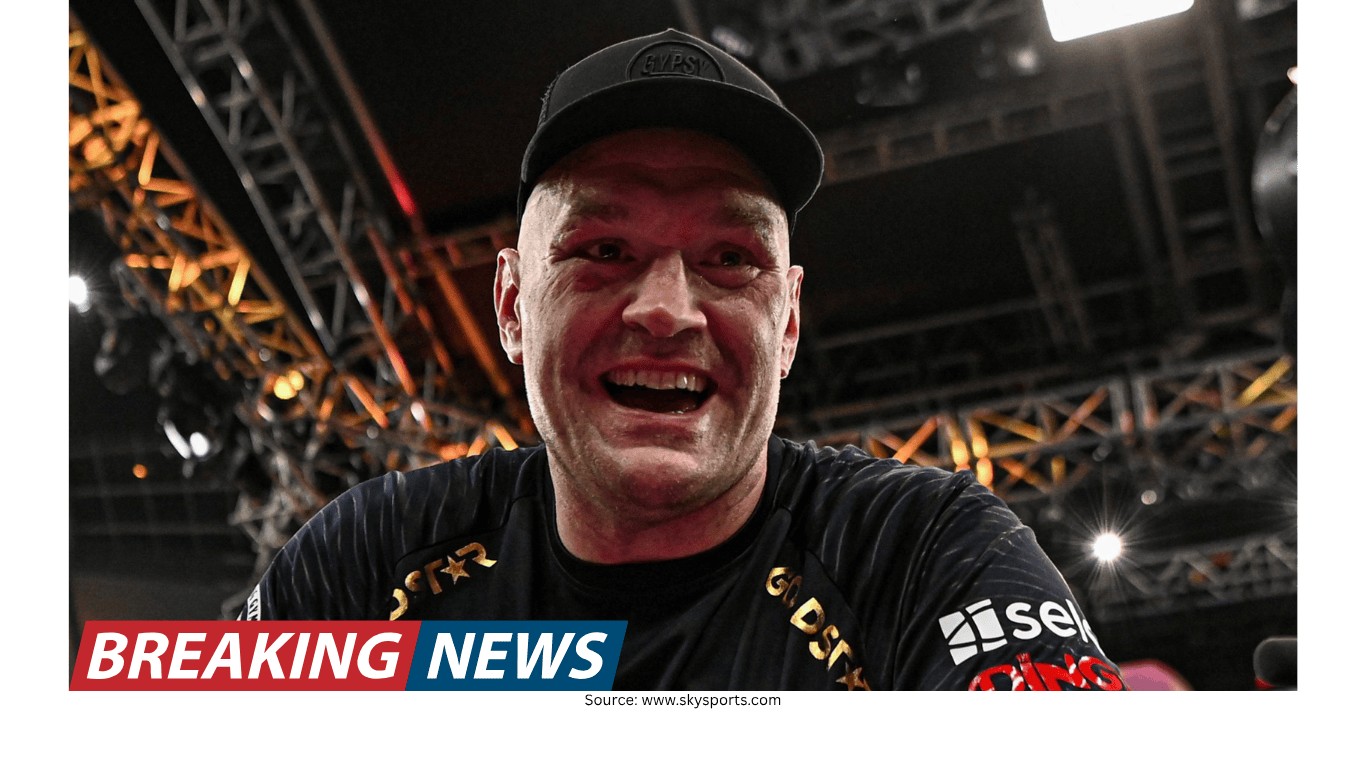
Fury returns after 16 months away
Tyson Fury’s long-awaited return to boxing ended with a clear unanimous decision victory over Arslanbek Makhmudov at Tottenham Hotspur Stadium in London, a result that immediately pushed attention back toward the rivalry that has defined much of British heavyweight conversation for the past decade.
Fury had been absent from the sport for 16 months, having retired after two losses to the reigning world champion Oleksandr Usyk. At 37, he arrived with the awareness that his time in the ring is finite, yet the scale of the occasion and the reaction inside the stadium underlined why he was drawn back.
Makhmudov, described as strong but predictable, was selected as the opponent for Fury’s comeback. The contest provided a test of timing, rhythm and control rather than a straightforward showcase, and it ended with scorecards that reflected near-total command: 120-108 on two cards and 119-109 on the third.
A tribute-filled entrance and a stadium atmosphere
Fury’s first contest in a British ring since 2022 began with an emotional tribute to Ricky Hatton, the British boxing figure who died last year. Fury used Hatton’s signature “Blue Moon” music for his walkout and wore shorts styled in Hatton’s fashion, a moment that set a sombre tone before the stadium erupted.
As fireworks and flames burst around him on a raised platform, the mood shifted from reflective to celebratory. Fury danced, grinned and visibly fed off the energy from the crowd, an atmosphere that framed the night as something bigger than a routine return.
That sense of occasion was heightened by the presence of Anthony Joshua at ringside. Earlier in the evening, Saudi financier Turki Alalshikh, who was staging the event, suggested that “the biggest fight in the history of England” between the two heavyweights was close to being made. Fury’s performance, and what followed after it, ensured the talk did not fade into background noise.
Makhmudov starts fast, forcing early adjustments
Makhmudov entered with a reputation for being dangerous early, and he acted on it from the opening bell. He charged at Fury immediately, trying to turn the fight into a physical, high-pressure contest before Fury could settle into his preferred rhythm.
For a spell, Fury moved back in straight lines and allowed Makhmudov to drive him toward the ropes. The Russian swept his right hand toward Fury in the opening exchanges, and while the attacks were described as frantic and clumsy, they were enough to demand respect and concentration.
The early rounds therefore became about Fury taking a measure of the threat—absorbing the initial rush, reading the angles and then beginning to impose structure on a fight that Makhmudov wanted to keep chaotic.
Fury finds range and begins to control the centre
In the second round, Makhmudov overcommitted after a wild attack and drifted out of position. Fury responded with sharp punches that drew a huge roar from the crowd, then followed with another thumping shot that brought a second wave of noise. At the end of the session, Makhmudov was left shrugging his head and neck, attempting to shake off the effects.
The third round offered another sign that Fury was taking control. He lashed a one-two and began to move onto the front foot behind a fierce jab. Fury also landed a right hook as Makhmudov threw at the same time, and for a moment the Russian’s legs appeared to buckle. Fury smiled as he leaned on him, a brief flash of confidence that suggested the comeback nerves had eased.
By the fourth, the fight had settled into a clearer pattern. Makhmudov caught Fury with a left, but in lunging forward he again stranded himself on the ropes. Fury took advantage by lining up a crunching right cross that slammed into the side of Makhmudov’s head, the kind of clean, deliberate shot that contrasted with the challenger’s less controlled rushes.
Clinches, jabs and inside work in the middle rounds
As they moved into the second half of the contest, the fighters touched gloves, a small gesture that came at a moment when Fury had clearly “found the measure” of his opponent. Makhmudov continued to trundle forward, but Fury’s left jab became a reliable tool for marking him out and interrupting his momentum.
There were heavy clinches as the two big men came together, and Fury was effective on the inside. He bounced Makhmudov’s jaw aside with a tight left hook, showing that he could work at close range as well as from distance.
In the eighth round, Fury picked out a long lead hook and pressed Makhmudov back, but he did not rush. The approach felt calculated: keeping control, landing the cleaner work, and limiting the opportunities for Makhmudov to land something dramatic in a messy exchange.
Late exchanges and a slip as Fury closes strongly
The tenth round ended with a fierce trade, and Makhmudov wearily lost his footing, slipping down to the canvas. It was not described as a knockdown, but it added to the sense that the fight was slipping away from him as Fury’s accuracy and timing continued to tell.
Just before the bell, Fury shook Makhmudov with a right hand and then a left hook to the chin, a final punctuation mark on a round that had already swung in his favour.
In the eleventh, Fury briefly switched southpaw. He flicked his jab into Makhmudov, attacked the body and then brought an uppercut through to the head. He turned Makhmudov into a corner but could not find a finishing touch. A hard left hook from the southpaw stance drew another audible reaction from the crowd, yet Makhmudov remained upright and lasted the distance.
When the final bell sounded, the scorecards reflected how comprehensively Fury had outboxed his opponent across the 12 rounds, with two judges awarding every round to Fury and the third giving Makhmudov just one.
Joshua watches, then exchanges words with Fury
Joshua’s presence at ringside ensured that every significant moment carried extra meaning. Fury was not only fighting to extend his career; the night was also framed as a step toward what could become the richest prize of his career later in the year, with the all-British heavyweight clash looming in the background.
No sooner had the decision been announced than Fury turned his attention to Joshua directly. Addressing the stadium, he said: “Next, I want to give you the fight you’ve all been waiting for.” He then bellowed down to his rival: “I want you, AJ, Anthony Joshua. Let’s give the fight fans what they want - the Battle of Britain. I challenge you Anthony Joshua to fight me the Gypsy King next.”
Joshua responded in kind, rejecting the idea that Fury could dictate terms and leaning into the long-running friction between them. “Tyson, you are a clout-chaser,” Joshua said. “I’ve never had no problem getting in a ring with you, I punched you up as kids [when they sparred]. Watching you tonight I’ll punch you up again.”
He added: “With all due respect, tonight is your night. You won’t tell me what to do. I’ve been chasing you the last 10 years, when you’re ready you come and see me and tell me your terms and conditions.”
Joshua then finished with a blunt statement of status: “I’m the boss, you work for me. I’m the landlord. You work for me.”
What the win means for Fury’s next move
Fury’s return was built around two parallel storylines: whether he could still perform at a high level after retirement, and whether the path was being cleared for a long-discussed showdown with Joshua. Against Makhmudov, he showed he could handle early pressure, adjust as the fight developed, and then control the later rounds with jab-led discipline and well-timed power shots.
The opponent’s early aggression created moments of tension, particularly when Fury found himself moving back toward the ropes, but the pattern shifted as Fury began to land cleaner punches and punish Makhmudov’s positional mistakes. By the middle rounds, Fury was dictating where the fight took place and which exchanges mattered.
Just as importantly, the post-fight exchange removed any doubt about what Fury wanted next. By calling out Joshua immediately—and by doing so in front of a stadium crowd with Joshua in view—Fury framed the night as a launchpad rather than a standalone comeback.
Key moments from the fight
- Fast start from Makhmudov: He charged from the opening bell, trying to force Fury backward and into the ropes.
- Fury’s second-round response: After Makhmudov overcommitted, Fury landed clean punches that lifted the crowd and signalled a shift in control.
- Third-round jab and one-two: Fury moved forward behind a fierce jab, landing a right hook that briefly appeared to buckle Makhmudov’s legs.
- Fourth-round right cross: With Makhmudov caught on the ropes, Fury delivered a crunching right cross to the side of the head.
- Late-round authority: A slip to the canvas in the 10th and sustained pressure in the 11th underlined Fury’s dominance, even without a stoppage.
- Unanimous decision: Fury won 120-108 on two cards and 119-109 on the third.
A rivalry pushed back to the forefront
The fight itself provided the necessary sporting foundation for the bigger narrative that surrounded it. Fury’s win over Makhmudov was decisive, and the setting—Tottenham Hotspur Stadium, a tribute-laden entrance, and Joshua watching from close range—made it feel like a public statement as much as a competitive return.
Talk of a major all-British heavyweight meeting later in the year had already been teased on the night. Fury’s immediate callout, and Joshua’s pointed reply, ensured that the conversation now has fresh fuel, with both men making clear—publicly and directly—how they see the terms of any potential “Battle of Britain.”