
49ers Upset Eagles in Wild Card Thriller, Set Up Divisional Round Trip to Seattle
A road win that reshaped the Wild Card weekend
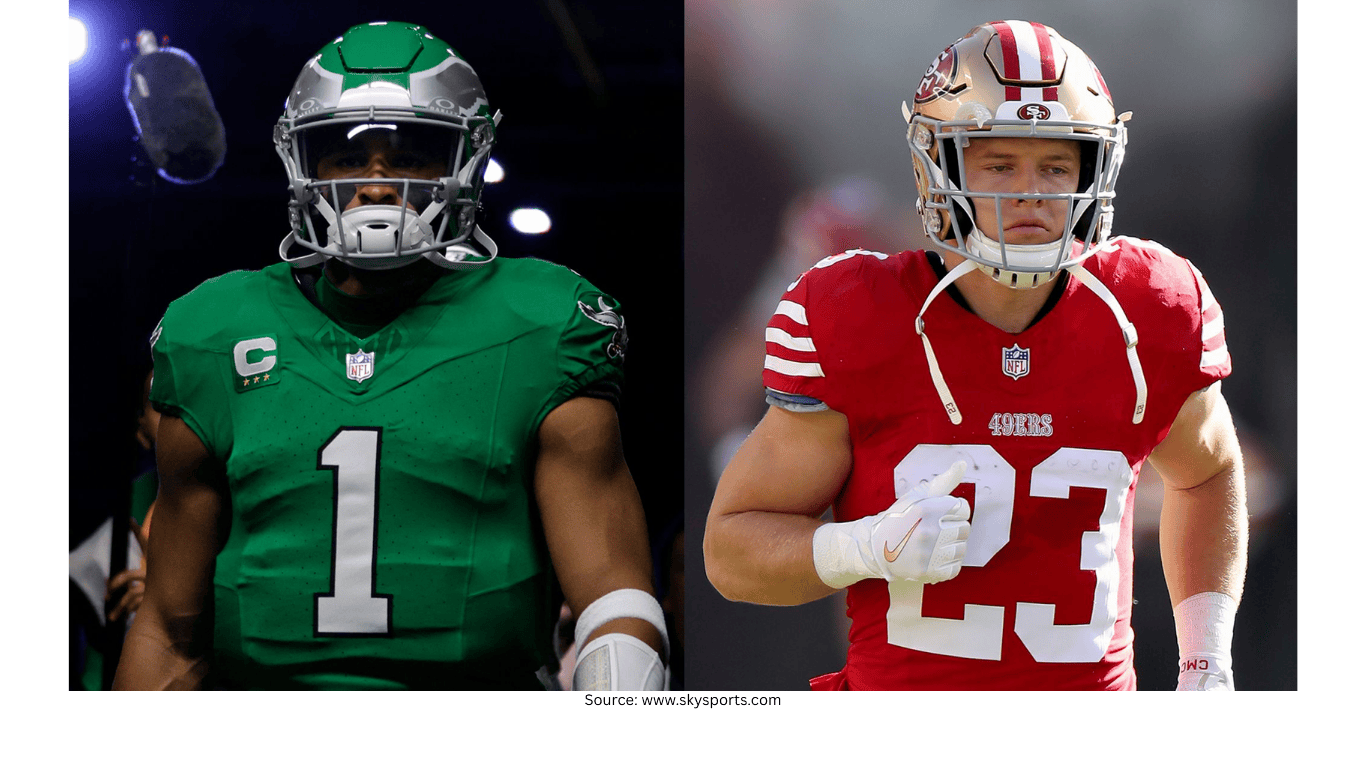
The San Francisco 49ers produced one of the standout results of the NFL playoffs, beating the defending Super Bowl champion Philadelphia Eagles 23-19 on the road in the Wild Card round. The victory sends San Francisco into the Divisional Round, where they will travel to face the NFC No 1 seeds, the Seattle Seahawks, next week.
It was a game defined by momentum swings, key injuries, and late-game execution. San Francisco entered the contest already short-handed and then lost one of their most important players early, yet still found a way to close out a tense finish in Philadelphia. The Eagles, meanwhile, led for long stretches and had opportunities to put the game away, but their offense struggled to sustain production in the second half as the 49ers rallied.
Injuries test San Francisco’s depth
San Francisco’s win came despite significant personnel challenges. The 49ers were already without key players including Fred Warner, Nick Bosa and Ricky Pearsall due to injury, among others. The situation worsened in the first half when tight end George Kittle suffered a torn Achilles. The injury ended Kittle’s season, removing a central part of San Francisco’s offense for the remainder of their playoff run.
Kittle’s exit had an immediate impact on the flow of the game. After an explosive opening drive, the 49ers’ offense began to stall, and the contest shifted into a more grinding, possession-by-possession battle. Still, San Francisco’s ability to respond in critical moments ultimately proved decisive, even as they navigated the loss of a “talismanic” player and managed the game with a roster missing multiple starters.
Fast start: 49ers strike first, Eagles answer back
The 49ers began the game with a burst of offensive energy. On their opening series, Demarcus Robinson made an immediate impact, following up a 61-yard reception on the second play from scrimmage with a five-yard touchdown to finish the drive. That sequence gave San Francisco an early lead and signaled an aggressive approach from the visitors.
Philadelphia responded quickly. Dallas Goedert scored the first of his two first-half touchdowns, running in from close range near the goal line. Later, he added a second score with a nine-yard reception in the end zone, helping the Eagles move in front in the second quarter and reassert control after San Francisco’s early punch.
As the first half progressed, the game’s complexion changed. The 49ers’ offense, so sharp on the opening possession, became inconsistent amid Kittle’s injury and the Eagles’ defensive adjustments. San Francisco went three-and-out twice during that stretch, a stark contrast to the opening drive that had set the tone.
San Francisco keeps it close, but misses a late first-half opportunity
Even with the offense stalling, the 49ers remained within striking distance. Eddy Piniero converted a field goal to reduce the Eagles’ advantage to 13-10, keeping the contest tight heading toward halftime.
However, San Francisco did not maximize the final minute of the half. Poor clock management prevented the 49ers from mounting a drive to tie the game before the break. The half ended with a Brock Purdy fumble out of bounds as time expired, a sequence that left San Francisco trailing but also feeling they had missed a chance to enter the locker room level.
The first half also featured a notable sideline incident for Philadelphia. Despite holding the lead, wide receiver AJ Brown had to be separated from head coach Nick Sirianni by chief security officer Dom DiSandro late in the second quarter. Brown ripped off his helmet in frustration and yelled in Sirianni’s direction after the Eagles punted to end a drive in which Brown had a couple of drops on back-to-back plays.
Second half: turnovers and stalled drives shape the middle quarters
The third quarter opened with a major moment for Philadelphia’s defense. Purdy was intercepted on the 49ers’ first possession of the second half, with Quinyon Mitchell coming down with the pick. It was the first of Mitchell’s two interceptions on the day, and it offered the Eagles an opportunity to extend their lead.
Yet the Eagles’ offense did not fully capitalize. As the game moved deeper into the second half, Philadelphia struggled to generate consistent yardage. The offense became increasingly ineffective, and at one point was limited to just 23 yards in the second half up to that stage of the contest. That lack of production kept San Francisco alive, even as turnovers and stalled drives threatened to swing the game away from them.
Philadelphia did add points in the third quarter. A Jake Elliott field goal late in the period stretched the Eagles’ advantage to 16-10. The score reflected a game in which the Eagles had been able to take advantage of field position and key stops, but had not been able to break free on the scoreboard.
The fourth quarter turns: trick play sparks the comeback
San Francisco entered the fourth quarter down by six, facing the challenge of scoring without Kittle and while dealing with the cumulative effects of injuries across the roster. What followed was the defining sequence of the game.
On the very first play of the quarter, the 49ers produced a “magnificent” trick-play touchdown. Wide receiver Jauan Jennings threw a 29-yard scoring pass to Christian McCaffrey, flipping the game instantly and giving San Francisco the lead. The play was not only a highlight moment but also a statement of creativity and urgency, demonstrating the 49ers’ willingness to take calculated risks in a high-pressure situation.
The touchdown changed the emotional tone of the contest. It also underscored McCaffrey’s central role in the outcome, as he became the focal point of San Francisco’s scoring drives in the final period.
Eagles respond after a second interception, but fail to finish
Philadelphia did not fold after losing the lead. With eight minutes remaining, the Eagles regained the advantage at 19-17 following a field goal that came after Purdy threw his second interception of the game, again to Quinyon Mitchell. In a contest where points were hard to come by, the ability to turn a takeaway into a lead late in the fourth quarter appeared to put Philadelphia in a favorable position.
Still, the Eagles’ offense continued to struggle to find rhythm. The inability to sustain drives and generate yardage in the second half meant that even with the lead restored, the margin for error remained slim. San Francisco, despite the interceptions, stayed composed and had time to mount another response.
Purdy answers back: the winning touchdown drive
After the Eagles moved ahead 19-17, Purdy delivered his most important sequence of the afternoon. He led a scoring drive that ended with a touchdown pass to McCaffrey, putting San Francisco back in front 23-19 with just under three minutes remaining. The drive provided the final change in the lead and became the decisive moment in the 49ers’ upset.
For San Francisco, the late touchdown was also a reminder that, even on a day with two interceptions and a key fumble sequence before halftime, Purdy was able to execute when the game demanded it. McCaffrey’s presence in both the trick-play touchdown and the game-winning score made him the central figure in the final quarter.
Final stand: 49ers defense closes out a tense finish
Philadelphia had one last chance to respond. The Eagles converted a 4th and 5 from their own 45-yard line, keeping the game alive and pushing into San Francisco territory. The drive advanced to the 49ers’ 21-yard line, setting up a potential winning opportunity.
But the Eagles could not complete the comeback. Jalen Hurts threw three straight incompletions to end the contest. The key moment came on fourth down, when recently acquired 49ers linebacker Eric Kendricks broke up Hurts’ pass intended for Dallas Goedert. The breakup sealed the 23-19 victory and completed San Francisco’s upset of the defending champions.
The closing sequence reflected the broader story of the second half: Philadelphia’s offense, after doing enough in the first half to build a lead, could not consistently convert opportunities when it mattered most. San Francisco, meanwhile, found timely plays on both sides of the ball, including a crucial defensive stop at the end.
Key moments that defined the game
Opening-drive touchdown: Demarcus Robinson capped the 49ers’ first possession with a five-yard touchdown after a 61-yard reception earlier in the drive.
Goedert’s two first-half touchdowns: Dallas Goedert scored twice in the first half, including a goal-line rushing touchdown and a nine-yard touchdown catch.
Kittle’s season-ending injury: George Kittle left in the first half with a torn Achilles, ruling him out for the remainder of the season.
Mitchell’s interceptions: Quinyon Mitchell intercepted Brock Purdy twice, including a pick to start the second half and another that helped set up a late Eagles field goal.
Trick-play touchdown: Jauan Jennings threw a 29-yard touchdown pass to Christian McCaffrey to give San Francisco a fourth-quarter lead.
Game-winning touchdown: Purdy connected with McCaffrey for the decisive score with under three minutes remaining.
Last defensive stop: Eric Kendricks broke up Hurts’ fourth-down pass intended for Goedert, ending Philadelphia’s final drive.
What the result means: Seattle next, but without Kittle
The 49ers’ reward for eliminating the defending champions is a Divisional Round trip to face the Seattle Seahawks, the NFC’s top seed. The matchup will come with added difficulty for San Francisco because Kittle’s torn Achilles ends his season, removing a key offensive option at the most important stage of the year.
Even so, the Wild Card win demonstrated the resilience of a team that entered the game already “banged up” and still found enough offense in the fourth quarter to win on the road. San Francisco’s ability to produce two touchdowns in the final period, including one via a trick play, was the difference in a contest where neither side consistently dominated.
For Philadelphia, the loss ends the title defense in the Wild Card round. After leading 13-10 at one stage and later holding a 19-17 advantage in the fourth quarter, the Eagles could not generate the late offensive execution needed to answer San Francisco’s final touchdown. The second-half struggles, combined with missed opportunities to capitalize fully on turnovers, proved costly in a game decided by four points.
A playoff upset built on late-game nerve
San Francisco’s 23-19 win will be remembered for its late twists: the sudden trick-play touchdown, the response after a costly interception, and the composed final defensive stand. It was a performance that mixed mistakes with timely brilliance, and it was enough to eliminate the defending champions in their own stadium.
As the 49ers prepare for Seattle, the storyline will inevitably include the challenge of moving forward without George Kittle. But the Wild Card round offered clear evidence that San Francisco can still find solutions under pressure, even when the roster is stretched and the game appears to be slipping away.